Expert Oral Surgery Services
Extractions, wisdom teeth, and implant placement, carried out in our own treatment rooms in Vienna — minutes from Tysons Corner — by the dentist who already knows your mouth. Dr. Julia Lokitis completed a hospital residency with advanced training in oral surgery, implant surgery, and dental trauma management, and she is direct about which cases belong with a specialist.
What oral surgery means in a general practice
Oral surgery covers a range that runs from a straightforward extraction to reconstruction that belongs in a hospital, so what matters is where a particular practice sits on it. Here it means a defined set of procedures — extractions, wisdom teeth, and implant placement — carried out in our own treatment rooms in Vienna by Dr. Julia Lokitis.
That keeps surgical work with the dentist who already knows your mouth and how the rest of your treatment fits together. It also has a limit, and naming the limit is part of the same promise: some cases belong with an oral and maxillofacial surgeon or a periodontist, and Dr. Lokitis will say so rather than attempt something better done elsewhere. There is no on-site specialist here.
Our oral surgery procedures
Three areas, each with a page of its own that goes further into the detail.
Tooth extractions
Performed under local anesthesia, with a firm bias toward preserving natural teeth wherever they can be preserved. Bone grafting at the time of the extraction is often part of the conversation.
More on extractions →Wisdom teeth removal
Assessed from X-ray analysis before anything is recommended, and removed in-office in many cases. Reasons range from pain and impaction to crowding, damage to the neighbouring molar, or gum disease.
More on wisdom teeth →Dental implants
A titanium post placed into the jaw, later restored with a crown, bridge, or denture. Dr. Lokitis completed advanced training in implant surgery during her hospital residency.
More on implants →
What to expect during your oral surgery
Surgical appointments here follow a predictable shape, and knowing the shape takes a good deal of the weight out of the day.
1. Consultation and imaging
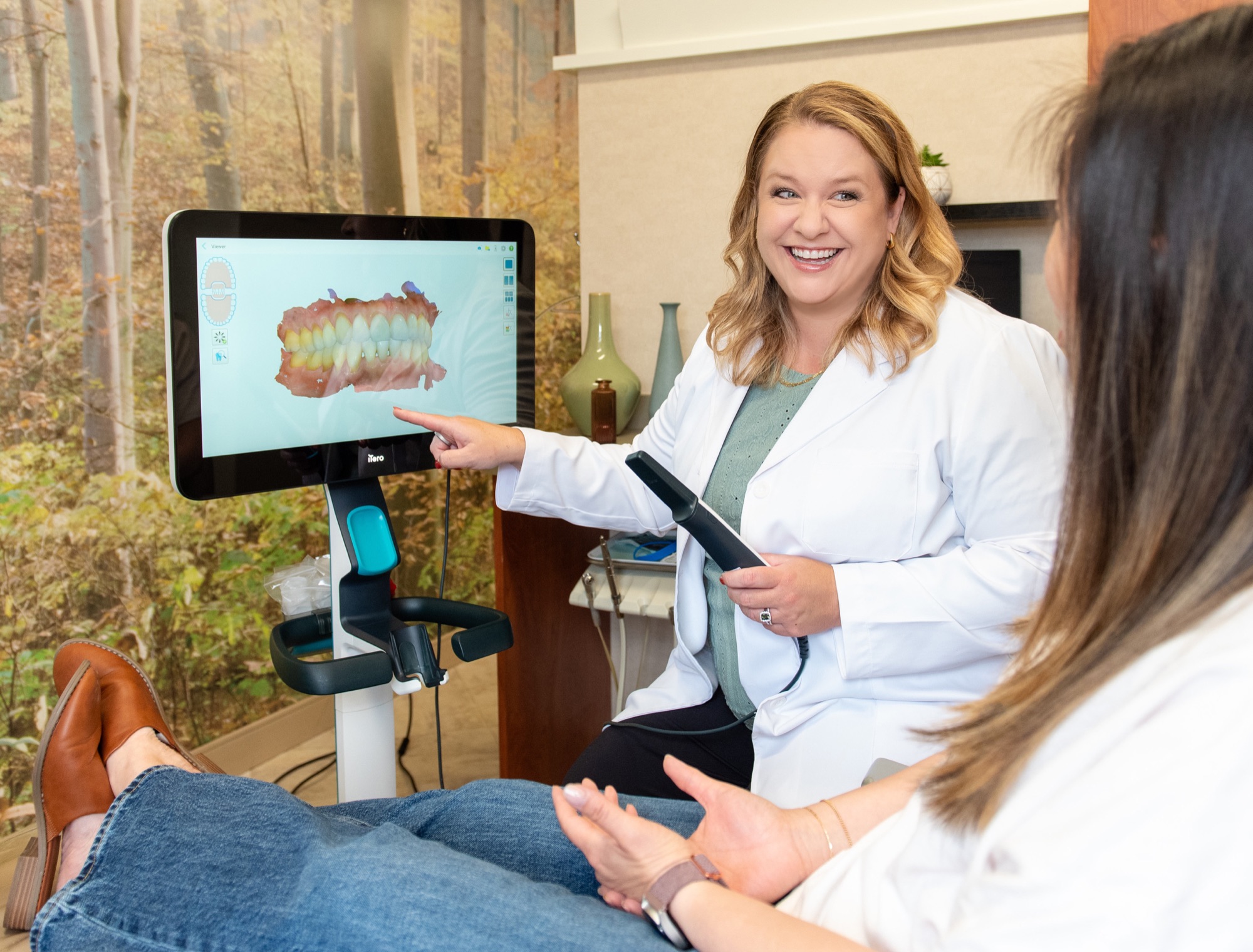
An examination, X-rays, and for planning work a 3D digital scan. We go over roots, bone, and nerve position on the screen beside you, and check your benefits before anything is scheduled.
2. The plan, and the alternatives
You should leave knowing what is proposed, what happens if you do nothing, and what the other options are. If a referral is the right answer, this is where you hear it.
3. Getting comfortable
Local anesthetic, given time to work properly rather than nearly. Nitrous oxide is available for an additional fee, plus blanket, neck pillow, lumbar support, headphones and music from the practice comfort menu.
4. The procedure
Most people report pressure and movement rather than pain, and you will hear more than you feel. If a sharp sensation gets through, say so and we stop and add more anesthetic.
5. Aftercare, in writing
Written instructions and a number to call, plus a plain account of which sensations belong to ordinary healing so a sore second day does not read as a complication.
Anesthetic, sedation, and the truth about both
Every surgical procedure here is done under local anesthetic. Nitrous oxide, also called laughing gas, is available for an additional fee: it comes through a small nasal hood, softens the experience without putting you to sleep, and clears within minutes of being switched off, so most patients drive themselves home.
Nitrous oxide is the extent of the sedation offered here. We do not provide IV sedation or general anesthesia, and if your case genuinely calls for either, Dr. Lokitis will arrange a referral rather than working at the edge of what this office can safely do. Comfort is not only pharmacological, though — anxious patients are welcome, and saying so in advance changes how the appointment is run.
The training behind the surgery
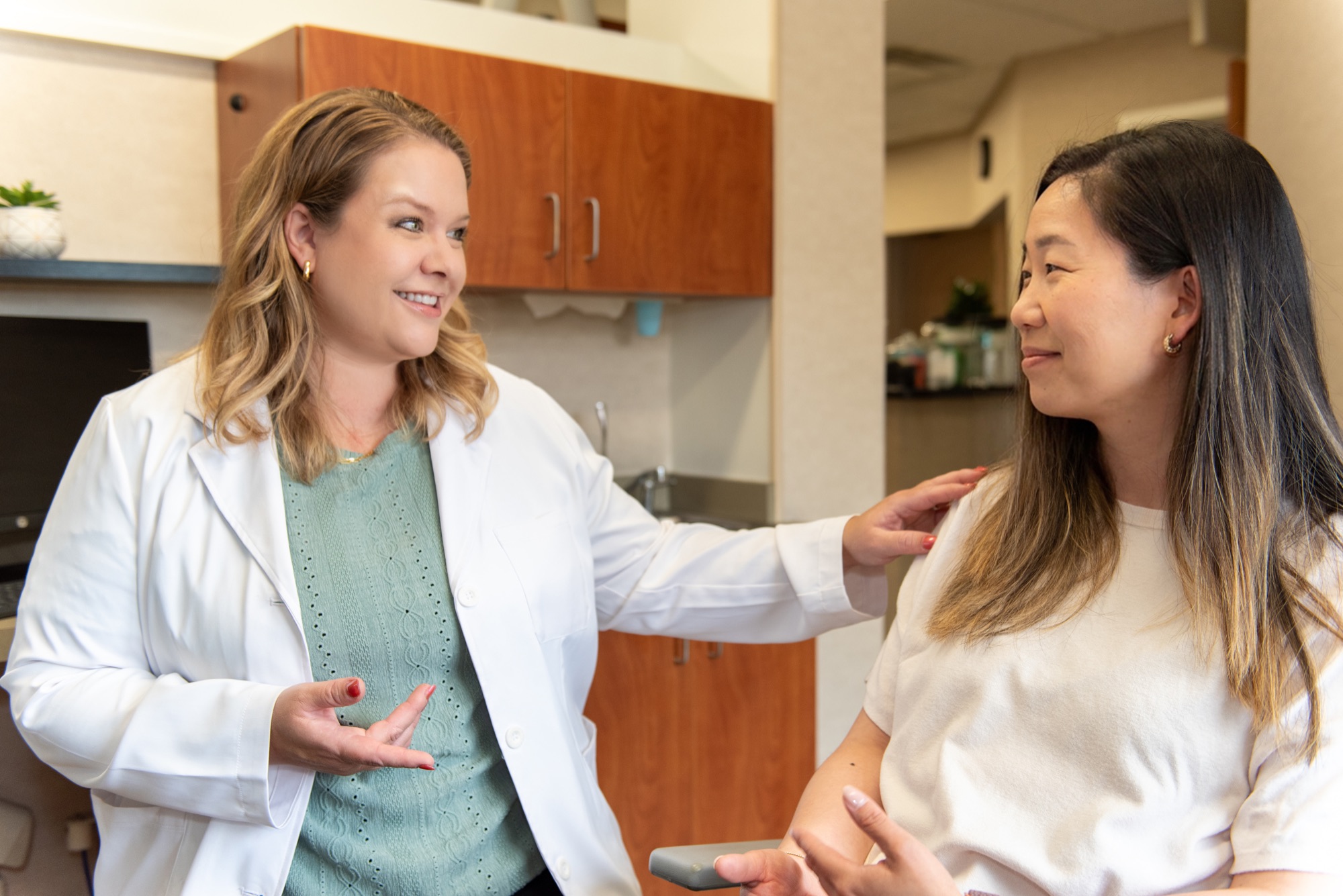
Dr. Julia Lokitis earned her DDS from the University of Maryland, Baltimore with special honors in prosthodontics, and completed a one-year general practice residency at York Hospital in Pennsylvania that included advanced training in oral surgery, implant surgery, and dental trauma management. She has spent over 15 years in general practice.
Two threads matter for surgical work. The hospital residency is why extractions, wisdom teeth, and implant placement happen in this office at all. The prosthodontic honors are why they are planned with the finished result in mind — where bone needs preserving, how a gap will be closed, what the bite has to do afterwards. Surgery and restoration are one plan here rather than two plans passed between offices.
Not every surgical need arrives on a schedule. For a tooth broken in an accident or a swelling that came up overnight, call (703) 893-1603 and see emergency dentistry. Our Vienna office, minutes from Tysons Corner, is open Monday 8:30 to 5:00, Tuesday 9:30 to 6:00, Wednesday 8:30 to 5:00, and Thursday 7:30 to 2:00, and closed Friday through Sunday. Over a weekend, swelling that is spreading or affecting your eye, swallowing, or breathing belongs in a hospital emergency room.
Frequently Asked Questions
Which oral surgery procedures are done in the office? expand_more
Tooth extractions, wisdom teeth removal, and dental implant placement, all performed by Dr. Lokitis in our Vienna office, with bone grafting at the time of an extraction often part of that work. Beyond those, some cases are better handled by an oral and maxillofacial surgeon or a periodontist, and you will be told at the consultation.
What surgical training does Dr. Lokitis have? expand_more
She earned her DDS at the University of Maryland, Baltimore with special honors in prosthodontics, and completed a one-year general practice residency at York Hospital in Pennsylvania that included advanced training in oral surgery, implant surgery, and dental trauma management, with over 15 years in general practice since. She is a general dentist with surgical training, not a board-certified oral surgeon.
Will I be referred to a specialist? expand_more
Sometimes, and it is a good sign rather than a bad one. Root anatomy, the position of a tooth relative to the nerve in the lower jaw, advanced gum disease, and cases needing sedation we do not provide are all reasons to involve a specialist. Dr. Lokitis would rather refer than stretch what can be done well here, and she will explain her reasoning.
What kind of anesthesia or sedation is used? expand_more
Local anesthetic for every procedure, with nitrous oxide available for an additional fee. Nitrous is breathed through a small nasal hood, takes the edge off without putting you to sleep, and clears within minutes, so most people drive themselves home. That is the extent of the sedation offered here. We do not provide IV sedation or general anesthesia, and cases needing either are referred.
How long is recovery after oral surgery? expand_more
It depends entirely on the procedure. A single straightforward extraction is usually a couple of uncomfortable days. Lower wisdom teeth ask more, with swelling and jaw stiffness often peaking on the second or third day. Implant placement heals over months before it is restored. We will give you a realistic range for your case rather than a generic figure.
How should I prepare for a surgical appointment? expand_more
Bring a current list of your medications and supplements, and tell us about any medical conditions, blood thinners, or bisphosphonates, because those genuinely change how we plan. Eat something beforehand unless we have said otherwise, wear something comfortable, and keep the rest of the day light, particularly if you are having nitrous oxide.
Does insurance cover oral surgery? expand_more
Coverage varies a great deal between plans, and some surgical procedures are occasionally handled by medical insurance rather than dental. We are happy to check your benefits before anything is scheduled, and you will know what the treatment costs before it begins. We will not quote a figure on a web page, because the honest answer depends on your plan and on what the imaging shows.
Start with the imaging and the plan.
A surgical consultation is an examination, imaging, and a clear account of what is being proposed, what the alternatives are, and what it costs. Contact our Vienna office, minutes from Tysons Corner.