Dental Implants
An implant replaces the root of a missing tooth with a titanium post in the jaw, and a crown, bridge or denture is fitted onto it. Dr. Julia Lokitis received advanced training in implant surgery during her hospital residency and plans implant cases at our Vienna office, minutes from Tysons Corner and convenient to McLean.
What a dental implant is
An implant replaces the root of a missing tooth. A titanium screw is placed into the jawbone where the root used to be, a post is attached to it, and a crown, bridge or denture is fitted on top. The practice describes the result as a tooth that looks and feels exactly like your other teeth, and the reason it can is that it is anchored in bone rather than resting on gum or hanging off neighboring teeth.
That anchoring does something a bridge and a denture cannot: it preserves bone mass. Bone responds to load, and when a root is lost the bone that held it is no longer being used and gradually changes shape. An implant gives that bone something to work against again.
Three parts, then, and they are worth separating because people talk about all three as the implant: the implant itself, which is the part in the bone; the post, or abutment, which connects it to what sits above the gum; and the restoration, which is the crown, bridge or denture you can actually see.
Why the root matters
The visible part of a tooth does the chewing and the smiling, but the root does the structural work, and it is the part a bridge or a conventional denture does not replace. That has consequences worth knowing about before you choose.
That last point is why the conversation about replacement often starts before the tooth is even out. Where a tooth has to be removed and an implant is a possibility later, grafting the socket at the time of the extraction helps preserve the bone that a future implant will need. It is much easier to keep bone than to rebuild it.
The evaluation, which is where the case is won
Implant work is planning-heavy and surgery-light. The first phase is an evaluation: an assessment of the bone available at the site, X-rays, impressions or a digital scan, and a look at the gum and the teeth around the gap. Bone volume and gum health decide whether an implant is straightforward, whether it needs preparation first, or whether another option suits you better.
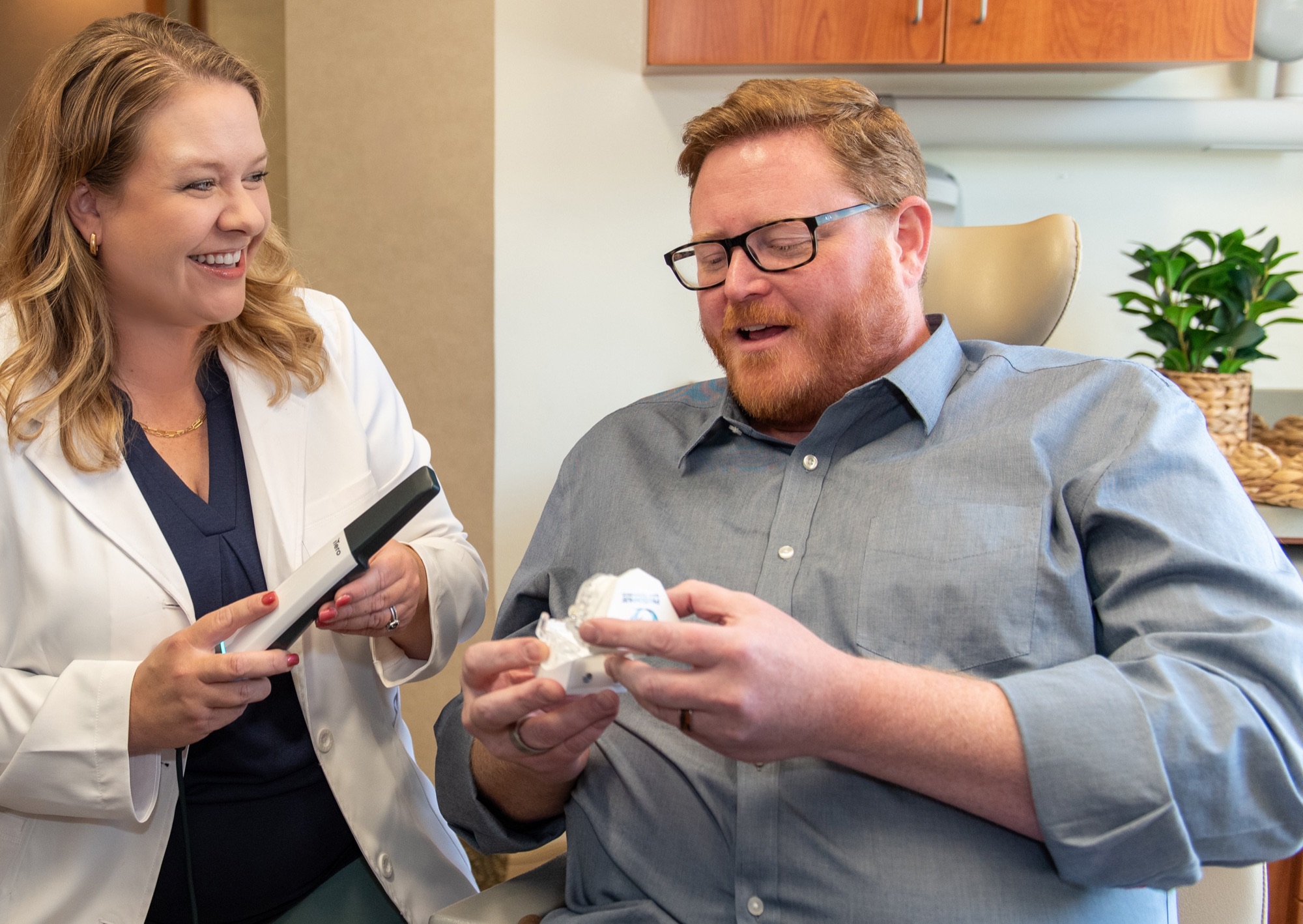
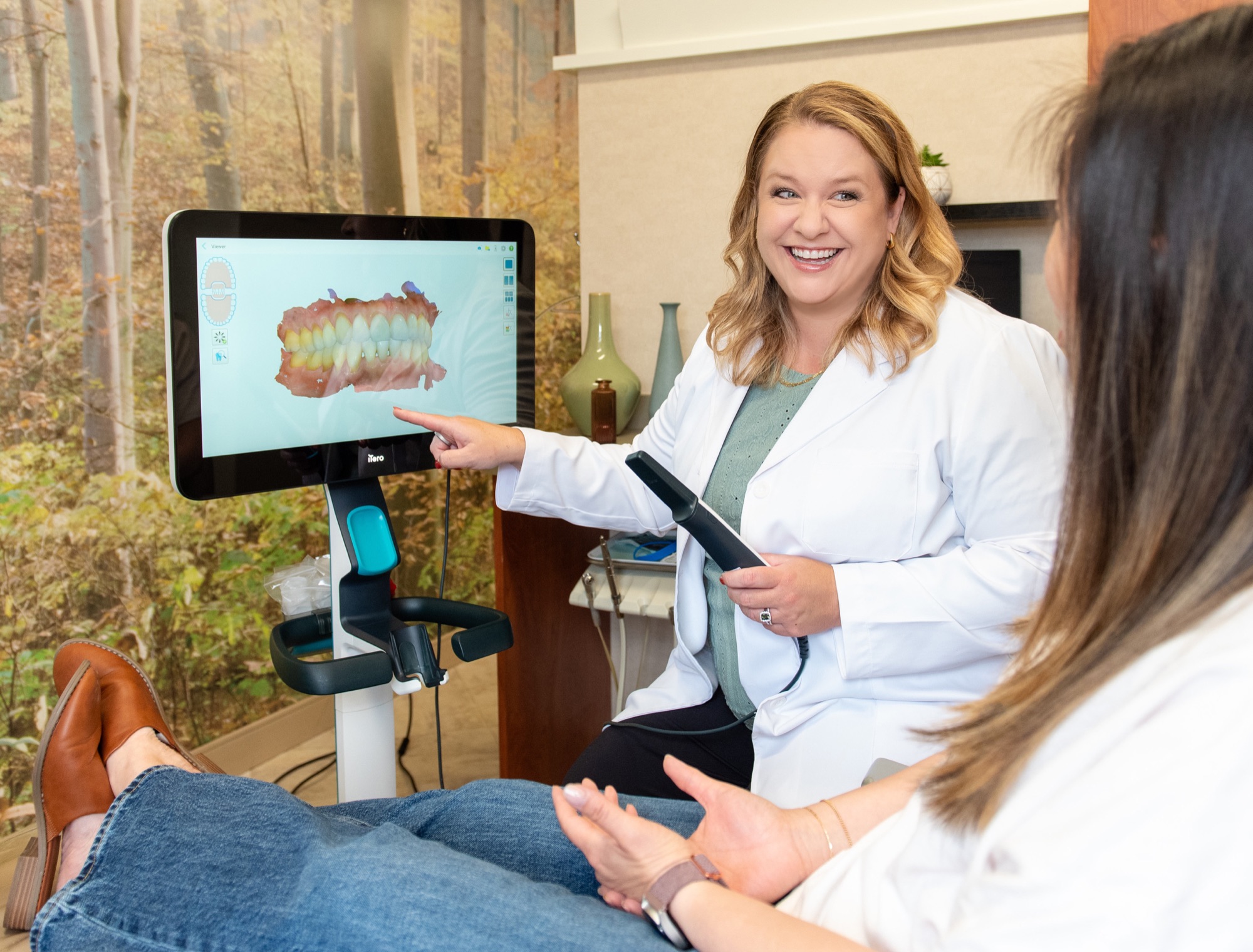
Our intraoral scanner puts a three-dimensional model of your mouth on the screen beside you in a few minutes. It makes the discussion concrete: this is the space, this is what sits either side of it, this is what we would be doing. General health matters here too, since conditions affecting healing and habits such as smoking both influence how an implant beds in.
The three phases
The practice sets implant treatment out in three phases, and the middle one is shorter than most people expect while the wait after it is longer.
1. Evaluation
Bone assessment, X-rays, impressions or a digital scan, and a plan for what will sit on top. This is also where we talk through the alternatives honestly, and check your benefits before you commit to anything.
2. Placement
The implant is placed into the jawbone under local anesthetic. Most people are surprised by how undramatic this appointment is; soreness for a few days afterwards, usually manageable with over-the-counter pain relief, is the normal experience rather than the exception.
3. Healing, then the post
The bone needs to grow around the implant before it can take load, which typically takes a matter of months rather than weeks. Once it has integrated, the post is attached. Rushing this stage is the one shortcut nobody sensible takes.
4. The restoration
A crown, bridge or denture is made to fit the post and shaded to your other teeth, then fitted and adjusted to the bite. This is the visible result, and by this point the hard part is already behind you.
One tooth, several teeth, or a whole arch
A single missing tooth is the case people picture, and it is the simplest: one implant, one crown, and the teeth either side left entirely alone. That last part is the strongest argument for an implant over a bridge where the neighboring teeth are healthy.
Several missing teeth in a row can be handled with implants supporting a bridge, so that two implants carry three or more teeth rather than one implant per tooth. Where a whole arch is missing, implant-supported dentures use titanium posts placed in the jawbone to hold a denture firmly in place. The practice also calls these clip-on dentures.
The benefits it lists for implant-supported dentures are enhanced stability, improved comfort, better chewing, jawbone preservation, and no need for adhesive. If a loose lower denture is the problem you are actually trying to solve, that combination is usually the answer, and it is covered further on our dentures page.

Who plans and places it
Dr. Julia Lokitis earned her DDS from the University of Maryland, Baltimore with special honors in prosthodontics, the discipline concerned with restoring and replacing teeth. She completed a one-year general practice residency at York Hospital in Pennsylvania with advanced training in restorative work, oral surgery, implant surgery, and dental trauma management, and has spent over 15 years in general practice.
That combination matters for implant work specifically, because an implant is a surgical procedure whose success is judged by how well the tooth on top of it functions years later. Planning the restoration and placing the implant are the same conversation, not two separate ones, and the practice treats them that way. Where a case is better handled by a specialist, she will say so.
We explain procedures thoroughly and build treatment plans that suit your individual needs, with no upselling and no overtreatment. Coverage for implants varies a great deal between plans, and we are happy to check your benefits before you commit to anything. Our office is on Old Courthouse Road in Vienna, a few minutes from Tysons Corner and easily reached from McLean, Dunn Loring, Merrifield, Oakton, Great Falls, and Falls Church.
Frequently Asked Questions
Am I a candidate for a dental implant? expand_more
Most people with a missing tooth are, but it is decided by the evaluation rather than in advance. The things that matter are how much bone there is at the site, the health of the gum around it, your general health and anything affecting healing, and whether you smoke. Where bone is short, grafting may make an implant possible that would not otherwise be.
How long does the whole implant process take? expand_more
Longer than most people expect, because most of it is waiting rather than treatment. The placement appointment itself is short. The bone then needs to grow around the implant before it can carry load, which typically takes a matter of months, and the crown or denture is made after that. Dr. Lokitis will give you a timeline for your case once the evaluation is done.
Does implant surgery hurt? expand_more
The placement is done under local anesthetic, so the appointment itself is not painful. Expect soreness and some swelling for a few days afterwards, usually manageable with over-the-counter pain relief. Nitrous oxide is available for an additional fee, and the practice keeps a Comfort Menu including a weighted blanket and noise-cancelling headphones.
How long do dental implants last? expand_more
A well-integrated implant that is looked after can serve for a very long time, and the crown on top of it is the part more likely to need attention first. What shortens the life of an implant is gum disease around it and poor cleaning, which is why implant patients still need regular checkups and cleanings. An implant cannot get a cavity, but the tissue around it can become inflamed.
What if I do not have enough bone for an implant? expand_more
Bone can often be built up, and where a tooth is being removed with an implant in mind, grafting the socket at the time of the extraction helps preserve the natural bone structure so a future implant has something to sit in. Where grafting is not appropriate, a bridge or a partial denture may be the better plan. The X-rays and the evaluation decide it.
Is an implant better than a bridge? expand_more
It depends on the gap. An implant replaces the root, preserves bone mass, and leaves the neighboring teeth untouched, which is a strong argument when those teeth are healthy. A bridge avoids surgery and is generally quicker, and it makes good sense when the neighboring teeth already need crowns. Dr. Lokitis will set both out for your case rather than recommend one on principle.
Does dental insurance cover implants? expand_more
It varies more with implants than with almost any other treatment. Some plans contribute, some exclude them, and many treat the surgical placement and the crown on top as separate items. We are happy to check your benefits and go over what treatment involves before you commit to anything.
Related Services
Start with the evaluation.
An implant consultation is an exam, X-rays, an assessment of the bone at the site, and a straight answer about whether an implant, a bridge or a denture suits your case. Contact our Vienna office, minutes from Tysons Corner and McLean.