Dental Contouring
Contouring removes a small amount of tooth enamel to change the shape or size of a tooth — evening out length, softening a corner, improving symmetry, or smoothing a minor chip. It is quick, usually needs no anesthetic, and it can only make minor changes. Dr. Julia Lokitis does this work at our Vienna office, minutes from Tysons Corner.
What contouring is
Contouring, sometimes called reshaping or enameloplasty, is the smallest cosmetic procedure in dentistry. A fine instrument is used to shape the outer enamel of a tooth: taking a fraction of a millimeter off an edge that sits longer than its neighbor, rounding a corner that reads as sharp, or evening a line across the front teeth that has gone uneven with wear.
Because it only touches enamel, which has no nerve supply of its own, most people feel very little and an injection is usually unnecessary. There is no laboratory stage and nothing to fabricate. You come in, the shaping is done, the surfaces are polished, and you leave with the result.
The honest framing is that contouring is a finishing move rather than a transformation. Her own materials put it plainly: contouring can only be used to make minor changes to your teeth. Where somebody comes in wanting a different smile, this is rarely the whole answer — but where somebody has spent years slightly bothered by one tooth being a hair longer than the one beside it, it very often is.
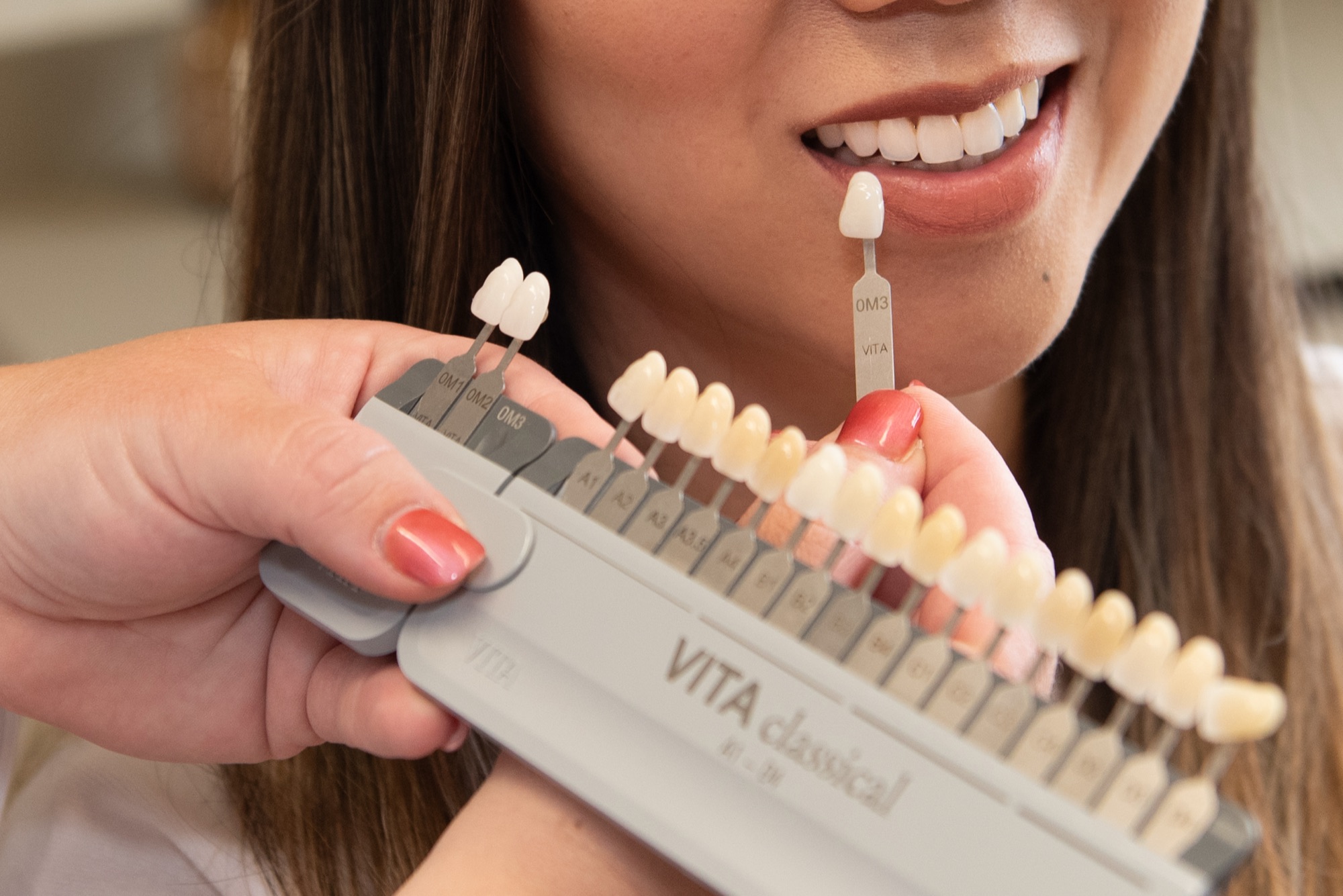
What it can change
Small, specific things. That is the point of it.
That last one is worth pulling out, because it is where contouring most often appears in a plan rather than on its own. Reshaping an edge can create the room and the surface that a bonding repair or a veneer needs to sit flush. In those cases you may never think of it as a separate treatment at all.
It also pairs naturally with whitening, and in that order. Shade and shape are the two things people notice about a front tooth, and they are easier to judge one at a time. Lighten first, look again, and then decide whether anything still needs shaping. Quite often, less does.
The appointment, and the limit
There is no long protocol to describe here, which is part of the appeal. We look at the teeth together, agree exactly which edges are being changed and by how much, shape them, then smooth and polish the surfaces so they catch the light the way unworked enamel does. Your bite gets checked at the end, because an edge that has been shortened changes where the teeth meet.
The limit is enamel. There is a finite amount of it on any tooth, and beneath it sits dentine, which is softer and does have a nerve supply. Take too much and you have traded a cosmetic complaint for a sensitivity one, permanently. Enamel does not grow back. That is why the conversation before the shaping is longer than the shaping itself, and why a good answer to a bigger request is often that contouring is not enough.
If the change you want is larger, adding material is safer than removing it. Bonding builds a tooth up rather than cutting it down, and it can be adjusted or taken off later. Dr. Lokitis will say plainly which side of that line your case falls on.

Afterwards
Expect some temporary sensitivity for around a week. It is the most common thing people report and it settles by itself. A desensitizing toothpaste over that period helps, and we would suggest avoiding hard or sticky foods for the first 24 hours while the newly shaped surfaces settle.
Beyond that there is nothing to manage. There is no material to protect, no margin to keep clean, and no follow-up appointment unless something feels wrong. Brush and floss as normal and keep your regular cleanings and exams.
Do call if sensitivity is still there after a couple of weeks, or if a reshaped edge feels like it is catching when you close. Neither is expected, and both are quick to look at.

When contouring is the wrong answer
Three situations come up often enough to name, because in each of them reshaping enamel treats a symptom and leaves the cause.
Teeth that need moving
A tooth that looks out of line because it is crowded or rotated needs repositioning, not filing. Clear aligners move teeth into place, and reshaping one to fake alignment costs enamel for a result that rarely satisfies.
Edges worn flat by grinding
If wear is what made the line uneven, smoothing it changes nothing about the load that caused it, and the teeth will wear again. Protecting them comes first, and shaping afterwards if it is still wanted.
A gum line, not a tooth line
Sometimes teeth look short because more gum is showing rather than because the teeth are small. That is a gum and bone question, and crown lengthening is the procedure that addresses it.
Who does the work
Dr. Julia Lokitis earned her DDS from the University of Maryland, Baltimore with special honors in prosthodontics, and completed a one-year general practice residency at York Hospital in Pennsylvania with advanced training in cosmetic procedures, veneers and restorative work. She has spent over 15 years in general practice.
For a procedure this small, the value is almost entirely in judgment: knowing how little to take, and knowing when to say that reshaping will not achieve what somebody is asking for. Her prosthodontic training is about how teeth function together, which is the discipline that stops a cosmetic tweak from creating a bite problem.
We explain procedures thoroughly, recommend the least invasive option that solves the problem, and never pressure anybody into starting. Our office is on Old Courthouse Road in Vienna, a few minutes from Tysons Corner and convenient to McLean, Dunn Loring, Merrifield, Oakton and Falls Church.
Frequently Asked Questions
Does dental contouring hurt? expand_more
Most people feel very little, because only the outer enamel is being shaped and enamel has no nerve supply of its own. There is usually no need for an injection. What you notice is the vibration and the sound rather than pain. If a tooth is already sensitive, say so before we start, because that changes how much we take and how we go about it.
How much enamel is removed? expand_more
A small amount, and less than most people picture. Contouring works in fractions of a millimeter, shaping an edge or a corner rather than reducing a tooth. That is also its limitation: there is only so much enamel to work with, and taking more than a little would expose the softer dentine underneath and create a sensitivity problem instead of solving a cosmetic one.
Will my teeth be more sensitive afterwards? expand_more
Some temporary sensitivity for about a week is normal and it settles on its own. A desensitizing toothpaste over that period helps most people, and we suggest avoiding hard or sticky foods for the first 24 hours. If sensitivity is still there after a couple of weeks, call us, because that is worth a look rather than waiting it out.
Is dental contouring permanent? expand_more
Yes. Enamel does not grow back, so anything removed is gone for good. That is the main reason we are conservative with it and the reason we take the time to agree exactly what is being changed before anything is shaped. If the change you want is larger than a light reshape, adding material with bonding is the more sensible route, because that can be adjusted or removed later.
How long does the appointment take? expand_more
Usually a short single visit. There is no laboratory stage, nothing to fabricate and nothing temporary to wear, so you leave with the finished result. Where contouring is being done as the first step before bonding or veneers, it becomes part of that longer appointment rather than a separate one.
Can contouring fix crowded or crooked teeth? expand_more
No, and this is the most common misunderstanding about it. Contouring changes the shape of a tooth, not where it sits. A tooth that looks out of line because it is rotated or crowded needs moving, which is what clear aligners do. Filing it to look straighter means taking enamel from the wrong places and rarely gives a result anyone is happy with.
Does dental insurance cover contouring? expand_more
Reshaping done for appearance is generally treated as elective, so most dental plans do not cover it. Where enamel is being adjusted as part of restorative treatment the picture can differ. We are happy to check your benefits, and we will go over what treatment costs with you before anything starts.
Bring us the one tooth that bothers you.
Contouring is a small procedure, and a consultation is a short conversation about whether it is enough for what you have in mind. Contact our Vienna office, minutes from Tysons Corner, and we will tell you plainly.