Dental Crowns
A crown is a custom-made cover that goes over a whole tooth — the usual answer when a tooth has cracked, worn down, lost too much structure to hold a filling, or just had a root canal. Ours are made by Oral Prosthetics Lab and fitted at our Vienna office, minutes from Tysons Corner.
What a crown is, and what it does
A crown is a cover, shaped and shaded to match, that sits over the whole visible part of a tooth. A filling replaces the part of a tooth that has been lost and relies on what is left to hold it in place. A crown takes over the outside surface entirely and holds the tooth together from the outside in. That difference is the whole reason a crown gets recommended for a tooth that is cracked or heavily worn rather than simply decayed.
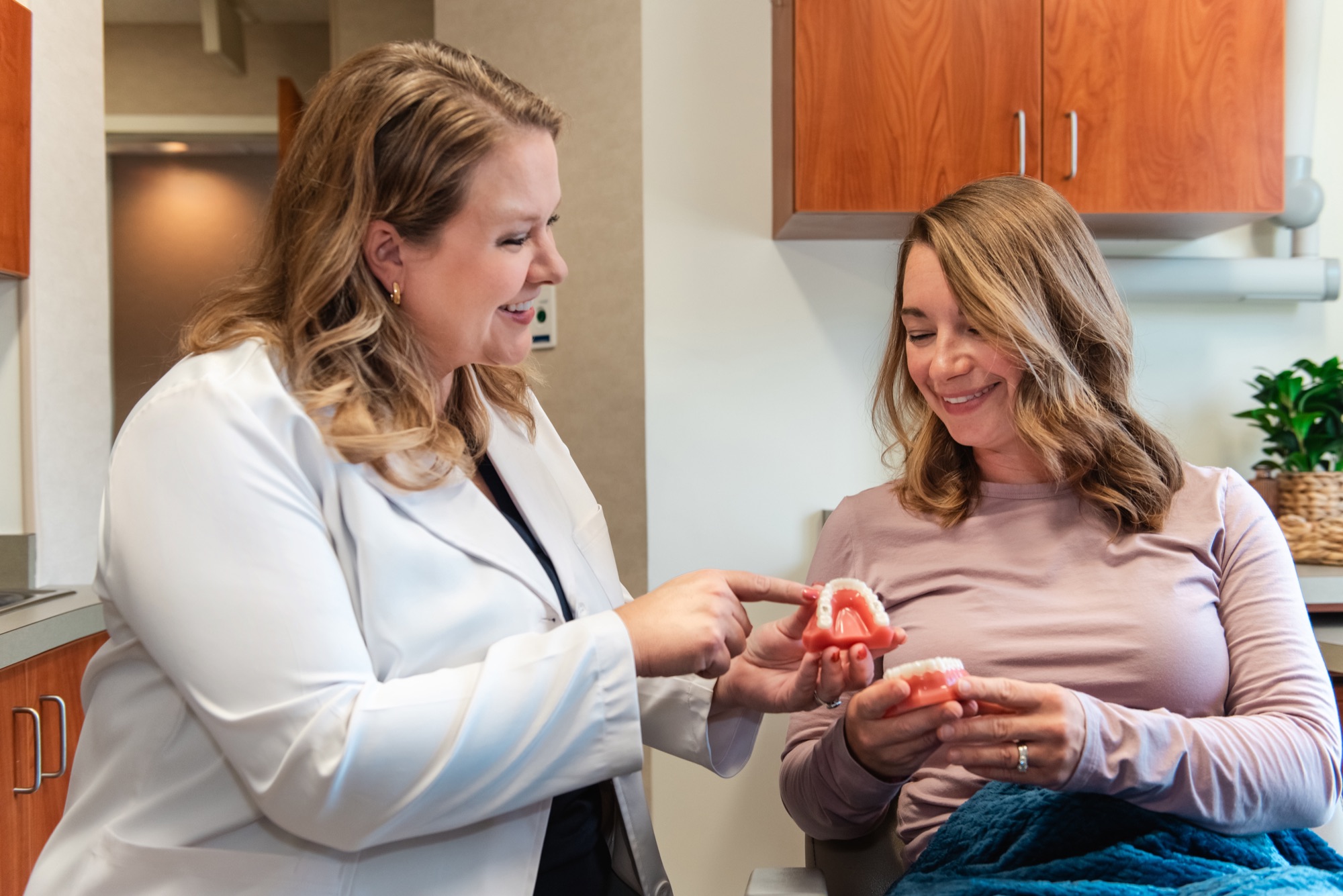
Dr. Lokitis describes crowns as custom-made covers for teeth that have had a root canal, for cracked or weakened teeth, and for teeth so decayed that a regular filling is no longer enough. Each one is made for your tooth alone, from a record of your own bite, so that it meets the teeth on either side and the tooth above or below it the way the original did.
A crown is restorative work, though it is often cosmetic at the same time. A crown on a back molar is about keeping a tooth in service and in function for as long as possible. A crown on a front tooth has to do that and disappear into the smile as well, which is a harder problem and calls for a different material.
When a crown is the sensible answer
Crowns are for teeth that have lost too much structure to be repaired from the inside. In practice, that usually means one of the following.
Not every damaged tooth needs one. Where enough healthy tooth remains, a filling or an inlay or onlay is the more conservative choice, and it is worth understanding those before assuming a crown is the only route. Enamel does not grow back, so the general rule is to remove as little of it as the job allows.
Dr. Lokitis will tell you which category your tooth falls into and why. If the answer is that a filling will do, that is what she will say.
Made for us by Oral Prosthetics Lab
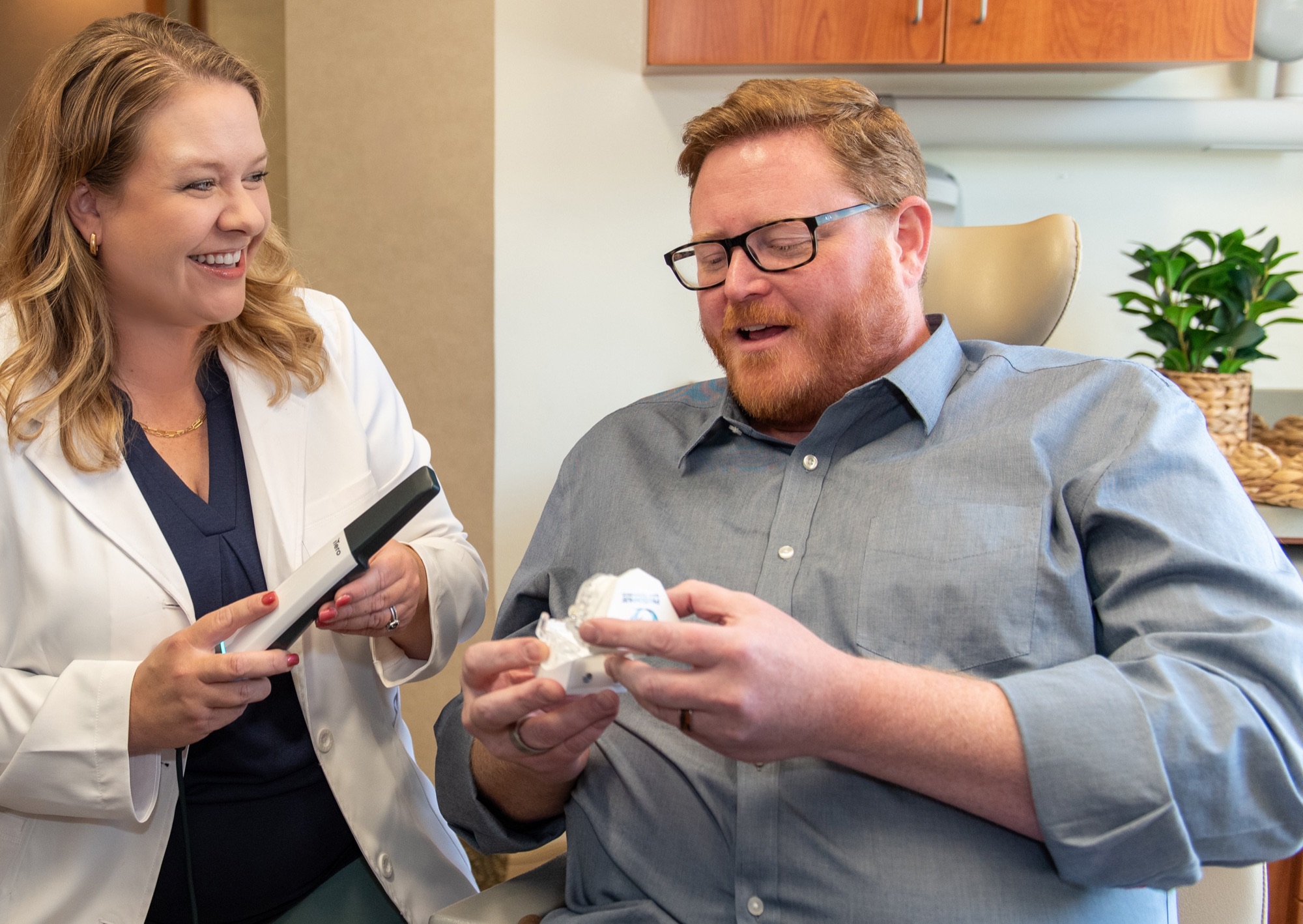
A crown is only as good as the record it is made from and the technician who makes it. Ours are made by Oral Prosthetics Lab, the laboratory Dr. Lokitis trusts with this work. The lab receives a detailed record of the prepared tooth, the teeth around it, and how your bite comes together, and builds the crown to fit that specific set of circumstances.
A steady relationship with one laboratory tends to show up in the small things rather than the obvious ones: shade that holds up in daylight as well as under the office lights, contact points that let floss pass properly, a margin that meets the tooth cleanly at the gum line. Those are the details that decide whether a crown is comfortable to live with and easy to keep clean.
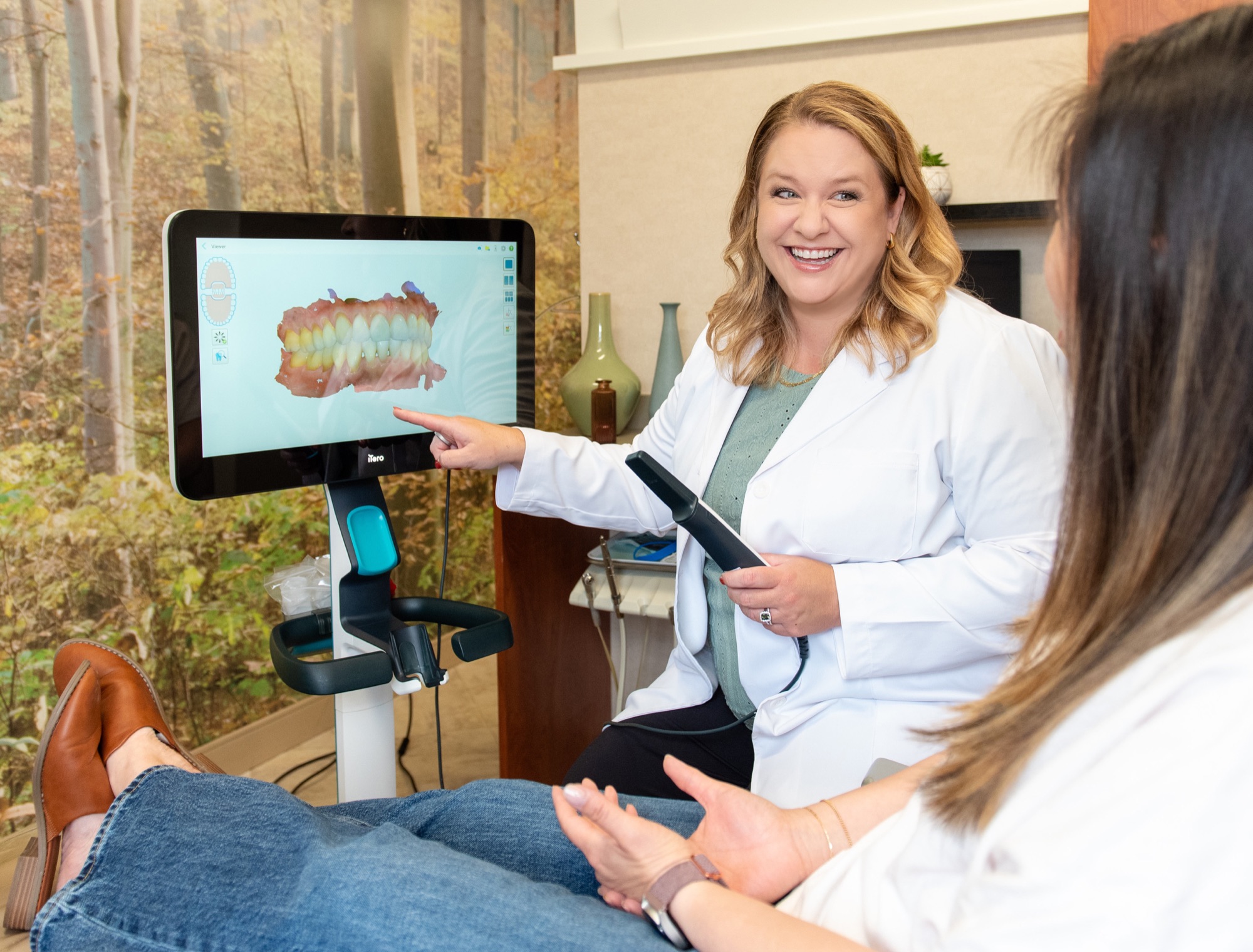
The record itself is usually digital. Our intraoral scanner builds a three-dimensional model in a few minutes, with nothing to gag on, and the model appears on the screen beside you while it is being captured. That means you can see the tooth being discussed rather than take a description on trust.
e.max and BruxZir Zirconia
Two materials cover most of the crowns we place, and they are chosen for different reasons. Neither is the better material in the abstract. They are better at different jobs.
e.max, or lithium disilicate
Valued for exceptional aesthetics and translucency, which is what lets a crown read as a real tooth rather than a flat white block. Light passes through it much the way it passes through enamel. It is the usual choice for front teeth and anywhere appearance is doing most of the work.
BruxZir Zirconia
Chosen for durability. It stands up well to the sustained load a molar takes and is a sound choice for patients who grind, where a more translucent material would be working harder than it should. Common in the back of the mouth, where strength matters more than translucency.
If you grind your teeth, say so before the material is chosen rather than after. Grinding is one of the few habits that reliably shortens the life of restorative work, and it is worth reading about grinding and bruxism alongside this page. A night guard protects a new crown the same way it protects natural enamel.
Two appointments, and the temporary in between
A crown takes two appointments. The tooth is prepared and recorded at the first, the laboratory makes the crown, and it is fitted at the second. You do not leave with an unprotected tooth in between.
1. Examination and plan
An exam and X-rays to see how much sound tooth there is, whether the nerve is healthy, and whether a crown is genuinely the right restoration. This is also where we go over what the work involves and check your benefits.
2. Preparing the tooth
Under local anesthetic, decay and any failing old filling are removed and the tooth is shaped so the crown will seat over it. Where a tooth is broken down, it may need building up first so there is a sound foundation underneath.
3. Taking the record
A digital scan or an impression of the prepared tooth, the neighboring teeth, and your bite. This is what goes to Oral Prosthetics Lab.
4. The temporary crown
A temporary is fitted the same day. It protects the prepared tooth and lets you eat and speak normally, though it is deliberately easy to remove, so it is worth going gently with hard and sticky food on that side.
5. Fitting the finished crown
At the second visit the temporary comes off and the new crown is tried in. We check the shade, the contour, how floss passes on either side, and how the crown meets the opposing tooth, then cement it once everything is right.
6. The bite check
A crown that sits a fraction high will feel wrong and can make the tooth ache, so the bite is adjusted until it feels like your own tooth. If it still feels high a day or two later, that is a five-minute appointment, not something to live with.
Living with a crown
A crowned tooth is looked after like any other. Brush it, floss it, and keep your regular checkups and cleanings. The one thing worth extra attention is the margin, the line where the crown meets your tooth at the gum. The crown itself cannot decay, but the natural tooth at that margin can, and that is where crowns are most often lost.
Longevity varies more than most people expect, because it depends on the tooth, the bite, and how well that margin is kept clean. Many crowns give good service for a decade or more and some last a great deal longer. Grinding, a heavy bite, and decay at the gum line are the three things most likely to shorten it, and all three are manageable once we know about them.
Call us if a crown feels loose, if a temporary comes off, if the tooth becomes sensitive to biting, or if the gum around it stays sore. None of those are emergencies in most cases, but they are all easier to deal with early. If a crown comes off outright, keep it and bring it in.
Who does the work
Dr. Julia Lokitis earned her DDS from the University of Maryland, Baltimore with special honors in prosthodontics, the discipline concerned with restoring and replacing teeth and with how a bite fits together. She completed a one-year general practice residency at York Hospital in Pennsylvania with advanced training in restorative work, and has spent over 15 years in general practice.
Nadia, our dental assistant, has been with the practice since 1999 and was originally trained as a dentist in Russia. She specializes in longer procedures like crowns and bridges, where, as the practice puts it, her calming presence and gentle approach truly shine. If you are having a crown done, you will likely be working with both of them.
We explain procedures thoroughly and build treatment plans that suit your individual needs, with no upselling and no overtreatment. Our office is on Old Courthouse Road in Vienna, a few minutes from Tysons Corner and convenient to McLean, Dunn Loring, Merrifield, Oakton, Great Falls, and Falls Church.
Frequently Asked Questions
How long does a dental crown last? expand_more
Longevity varies more than most people expect, because it depends on the tooth, the bite, and how well the margin at the gum line is kept clean. Many crowns give good service for a decade or more and some last a great deal longer. Grinding, a heavy bite, and decay starting at that margin are the three things most likely to shorten it, and all three are manageable once we know about them.
Is getting a crown painful? expand_more
The appointment is done under local anesthetic and most people find the preparation itself comfortable. It is normal for the tooth and the gum around it to feel tender for a few days afterwards, and for a newly crowned tooth to be briefly sensitive to cold. Tell us if tenderness is getting worse rather than better, because that is worth looking at rather than waiting out.
How many visits does a crown take? expand_more
Two, in the ordinary course of things. The first prepares the tooth and captures the record the laboratory works from, and you leave with a temporary crown in place. The second fits and cements the finished crown, checks how it meets the teeth around it, and adjusts the bite if anything sits high.
What is the difference between e.max and zirconia? expand_more
e.max is lithium disilicate, valued for its translucency and appearance, which makes it a common choice for front teeth. BruxZir Zirconia is chosen for durability and stands up well at the back of the mouth and in patients who grind. Dr. Lokitis picks between them tooth by tooth rather than by habit, and she will explain which she is recommending and why.
Do I need a crown after a root canal? expand_more
Usually, yes, and especially on a back tooth. A root-treated tooth has had its inside hollowed out and is more brittle than it was, and the access opening leaves it weaker still. A crown holds the tooth together so it is not lost to a fracture after the endodontic work has already succeeded. Dr. Lokitis will tell you whether your tooth is one of the exceptions.
Can the tooth underneath a crown still get a cavity? expand_more
Yes. The crown itself cannot decay, but the natural tooth underneath it can, usually right at the margin where the crown meets the tooth at the gum line. Brushing and flossing that margin properly and keeping regular checkups is what protects the work, which is why a crown does not reduce the need for cleanings.
My temporary crown came off. What should I do? expand_more
Call us. A temporary coming loose is common and not usually an emergency, but the tooth underneath is prepared and unprotected, so it should not be left that way. Keep the temporary if you still have it, avoid chewing on that side, and we will get you in to reseat it or make another.
Bring us the tooth and we will tell you what it needs.
A crown, a filling, or an onlay — the answer depends on how much sound tooth is left, and that takes an exam rather than a guess. Contact our Vienna office, minutes from Tysons Corner.