Teeth Grinding & Bruxism
Chronic grinding and gritting your teeth is a condition known as bruxism. It's often caused by stress and may happen while you sleep, leading to TMJ disorder, jaw pain, migraines, and damaged teeth and dental work.
A habit most people don't know they have
Bruxism is the clinical name for grinding, gritting, or clenching your teeth. Some of it happens during the day — a jaw held tight through a difficult meeting, or set hard over a keyboard — but a great deal of it happens at night, while you are asleep and entirely unaware of it. That is what makes it easy to live with for years without ever naming it.
The forces involved are considerable. Chewing is intermittent and controlled; night-time clenching is sustained, and it goes on far longer than any meal. Enamel is the hardest tissue in the body, but it does not repair itself. What wears away stays worn.
Very often the first person to notice is a dentist, at an ordinary exam, looking at flattened edges and polished wear facets that should not be there yet. The second is usually a partner who hears it.
Signs to look for
If several of these are familiar, it is worth raising. None of them is proof on its own, but together they form a fairly clear pattern.
What untreated grinding can lead to
Left alone, bruxism tends to compound. The recognized consequences include TMJ disorder, jaw pain, migraines, flattened, chipped and worn teeth, broken dental work, muscle tension through the face, neck and shoulders, a limited range of motion in the jaw, difficulty eating, and tinnitus.
None of that arrives overnight, which is both the good news and the difficulty: there is usually plenty of time to intervene, and correspondingly little urgency to do so. The practical argument for acting is simple enough — a custom splint is a modest piece of dentistry, and rebuilding a worn-down bite years later is not.

What's usually driving it
Stress
The most commonly cited cause, and the one people recognize fastest in themselves. Periods of pressure at work or at home very often show up in the jaw before they show up anywhere else.
An uneven bite
When teeth don't meet evenly, the jaw muscles keep searching for a comfortable position. Correcting the bite can reduce the grinding rather than simply padding it.
Disrupted breathing during sleep
Grinding and airway problems frequently occur together. If snoring, waking unrefreshed, or morning headaches accompany the jaw soreness, sleep apnea belongs in the same conversation.
Stimulants and certain medications
Caffeine, alcohol, and nicotine can all make night-time grinding more likely, and some prescription medications list it as a side effect. Worth mentioning what you take when we talk.
Treatment Options
We treat grinding on two fronts at once: protecting the teeth from the force, and reducing the force itself. Which combination makes sense depends on what we find and on what you tell us.
Custom bite splints and deprogrammers
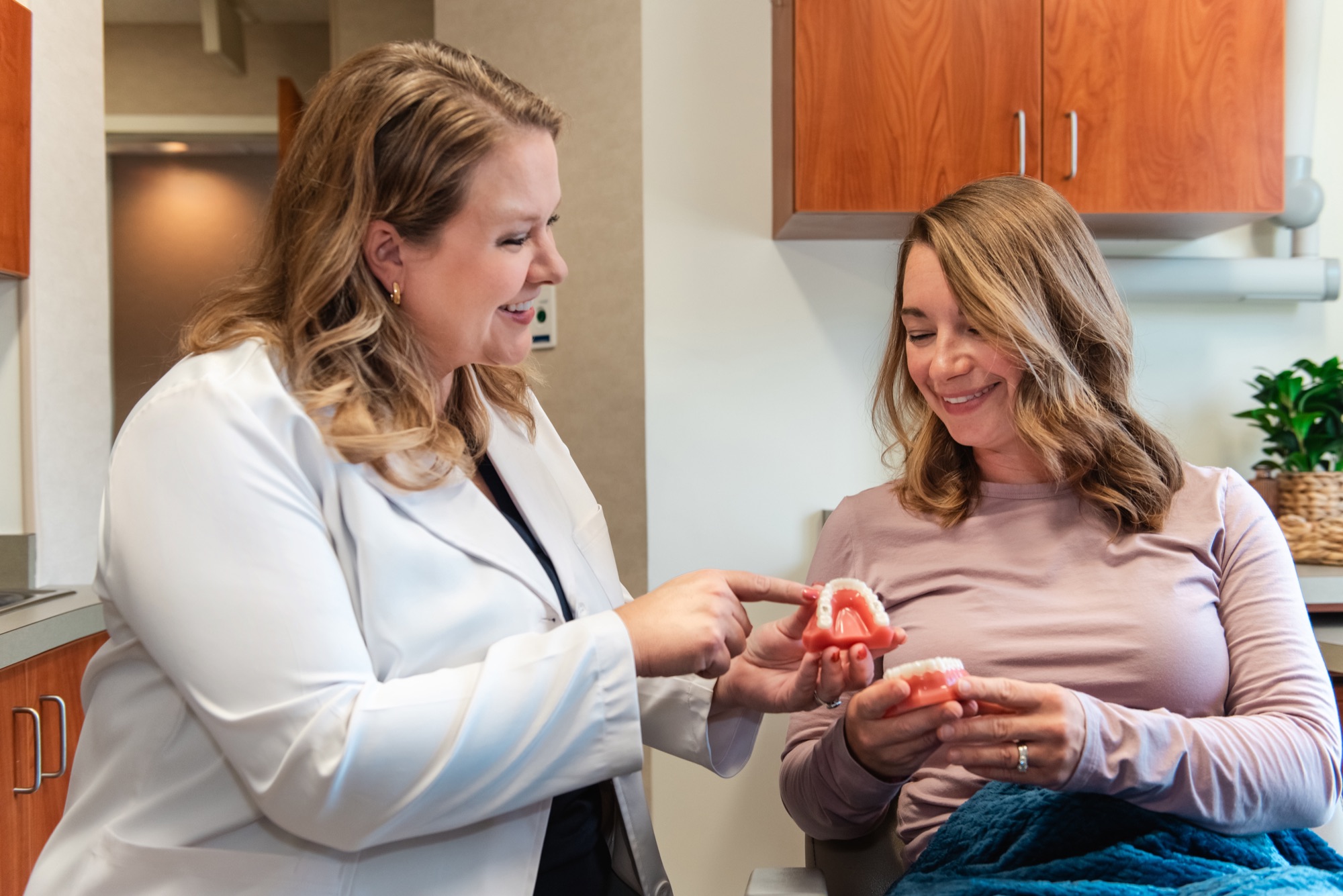
Made from impressions of your own teeth and worn while you sleep. A splint takes the wear so your enamel does not, and gives the muscles a stable, even surface to close against — which for many people is what settles the morning soreness. A deprogrammer works differently, discouraging the muscles from finding their habitual clenching position at all.
Neuromuscular treatments
Approaches aimed at the muscle activity itself rather than at the teeth, used where the muscular component is the dominant part of the problem.
Muscle relaxants and therapeutic Botox
Targeted injections reduce how forcefully the clenching muscles can contract, which may ease jaw tension, headaches, facial pain, and wear on the teeth. Dr. Lokitis trained in this through the International Academy of Facial Aesthetics and offers it therapeutically, not only cosmetically. More on therapeutic Botox.
Physical therapy or massage referrals
Where the pain sits in the muscles of the face, neck, and shoulders, hands-on therapy can do more than anything we fit in the mouth. We will say so when we think that is the case.
Sleep apnea screening and treatment
If your sleep is part of the picture, treating the grinding without looking at the breathing tends to be half a job. See sleep apnea for how a custom oral device works.
A note on cost: when grinding is bound up with a jaw-joint disorder, treatment is sometimes handled by medical insurance rather than dental. We are glad to check your benefits before you commit to anything.
Children who grind
Grinding is common in children and often passes on its own as the adult teeth come through. When it doesn't — or when there is visible wear — sleep grinding appliances are part of what we offer in children's dentistry. Mention it at their next checkup and we will examine it rather than guess.
Frequently Asked Questions
How do I know if I grind my teeth at night? expand_more
Most people don't catch themselves doing it. The usual clues are waking with a sore or tired jaw, a dull headache in the mornings, tooth sensitivity that comes and goes, a partner who hears the sound, or a dentist pointing out flattened edges and worn enamel. Wear patterns on teeth are one of the more reliable signs, which is why it often turns up at a routine exam.
What causes bruxism? expand_more
It's often caused by stress, and it may happen while you sleep without your knowing. An uneven bite, disrupted breathing at night, certain medications, caffeine, alcohol, and nicotine can all play a part. Frequently it is more than one of these at once, which is why we look at the whole picture rather than treating the noise.
Is grinding actually harmful, or just annoying? expand_more
Over time it can flatten, chip, and crack teeth, break crowns and fillings, and contribute to TMJ disorder, jaw pain, migraines, muscle tension through the face, neck and shoulders, limited jaw movement, difficulty eating, and tinnitus. Enamel does not grow back, so damage is cumulative. Catching it early is considerably easier than rebuilding later.
How is a custom night guard different from a store-bought one? expand_more
A custom splint is made from impressions of your own teeth, so it sits stably and lets your jaw close evenly. A boil-and-bite guard is a generic shape you soften and press onto your teeth; it may protect enamel to some degree, but it can also change how your jaw closes and leave some people more uncomfortable than before.
How does Botox help with grinding? expand_more
Small, targeted injections into the muscles that do the clenching reduce how hard those muscles can contract, which may ease jaw tension, headaches, facial pain, and wear on the teeth. It is a therapeutic use of Botox rather than a cosmetic one, and it is usually paired with a splint rather than used on its own.
Could my grinding be related to my sleep? expand_more
It's worth asking. Grinding and disrupted breathing at night often occur together, and morning headaches, loud snoring, and waking unrefreshed alongside jaw soreness are a combination we take seriously. Sleep apnea screening and treatment is one of the options we consider for people who grind.
Will a night guard stop me grinding altogether? expand_more
A splint is chiefly a protective device — it takes the wear so your teeth don't, and it may reduce muscle soreness by giving the jaw a stable surface to close against. It does not cure the underlying habit. That's why we look at what's driving the grinding rather than fitting an appliance and leaving it there.
Related Services
Bring it up at your next visit.
Grinding is straightforward to protect against and much harder to undo. Contact our Vienna office — minutes from Tysons Corner — and we will look at your wear patterns and talk through what makes sense.