Dental Bridges
A bridge fills the space left by a missing tooth with an artificial tooth held in place by crowns on the teeth either side. It is fixed, so nothing comes out at night. Dr. Julia Lokitis plans bridges at our Vienna office, minutes from Tysons Corner.
What a bridge is
A dental bridge is an artificial tooth used to fill the space left by a missing tooth. It is held in place by crowns on the teeth on either side of the gap, which act as anchors, and the whole unit is cemented in as one piece. It does not come out, and once it is in you brush it as part of your normal routine rather than handling it separately.
The idea is old and it endures because it works. What has changed is the materials and the accuracy of the fit. A bridge is made from a detailed record of your own bite by a dental laboratory, so the replacement tooth is shaped to the space it is filling and shaded to the teeth around it.
Because the anchor teeth have to be prepared for crowns, a bridge asks something of two healthy teeth in order to replace one missing one. That trade is the single most important thing to understand before choosing one, and it is the reason a dental implant is sometimes the better answer.
Why closing the gap matters
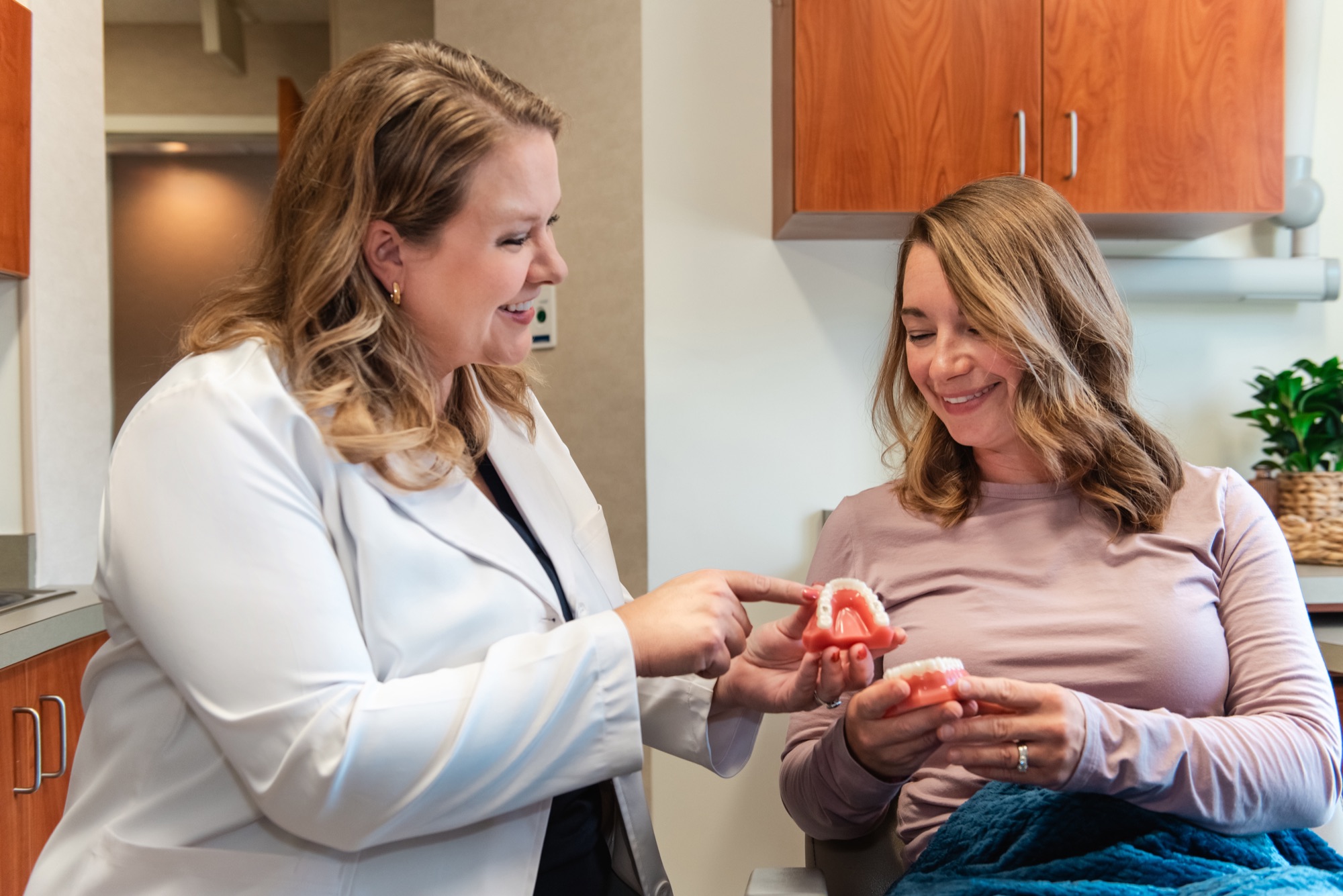
A missing back tooth is easy to live with for a while, which is exactly why gaps get left. Teeth are a system under load, though, and removing one member of it has effects that show up gradually.
The practice puts the benefits of a bridge simply: it restores your smile and confidence, improves chewing and speaking, prevents remaining teeth from shifting, and improves appearance. All four are real, and the third one is the one people underestimate.
One honest caveat. A bridge replaces the visible tooth but not the root, so the bone under the gap is not being loaded the way a natural root or an implant would load it, and it typically continues to change shape over time. That is not a reason against a bridge. It is a reason to have the comparison properly rather than by default.
Bridge, implant, or denture
One missing tooth, three sensible answers. Which one suits you depends on the health of the neighboring teeth, the bone under the gap, your general health, and how much work you want to take on.

A fixed bridge
Fixed, generally quicker than an implant, and does not involve surgery. The cost of that is preparing the two neighboring teeth for crowns. It suits a gap where those teeth already need crowns, or would benefit from crowns anyway.
A dental implant
Replaces the root as well as the tooth, so the neighboring teeth are left untouched and bone mass under the gap is preserved. It involves surgery and a healing period measured in months, and it depends on there being enough bone to place it in.
A partial denture
Removable, and the least invasive of the three. It suits several missing teeth, a staged plan, or a case where surgery is not appropriate. It comes out for cleaning and takes some getting used to.
How the work runs
A bridge, like a crown, is made outside the office and fitted at a later visit. You are not left with a visible gap in the meantime.
1. Examination and plan
An exam and X-rays to check the health of the teeth either side of the gap and the gum and bone around them. Anchor teeth carry the load of the bridge, so their condition decides whether a bridge is wise.
2. Preparing the anchor teeth
Under local anesthetic, the teeth on each side of the gap are shaped to receive crowns, in the same way a tooth is prepared for a single crown.
3. Taking the record
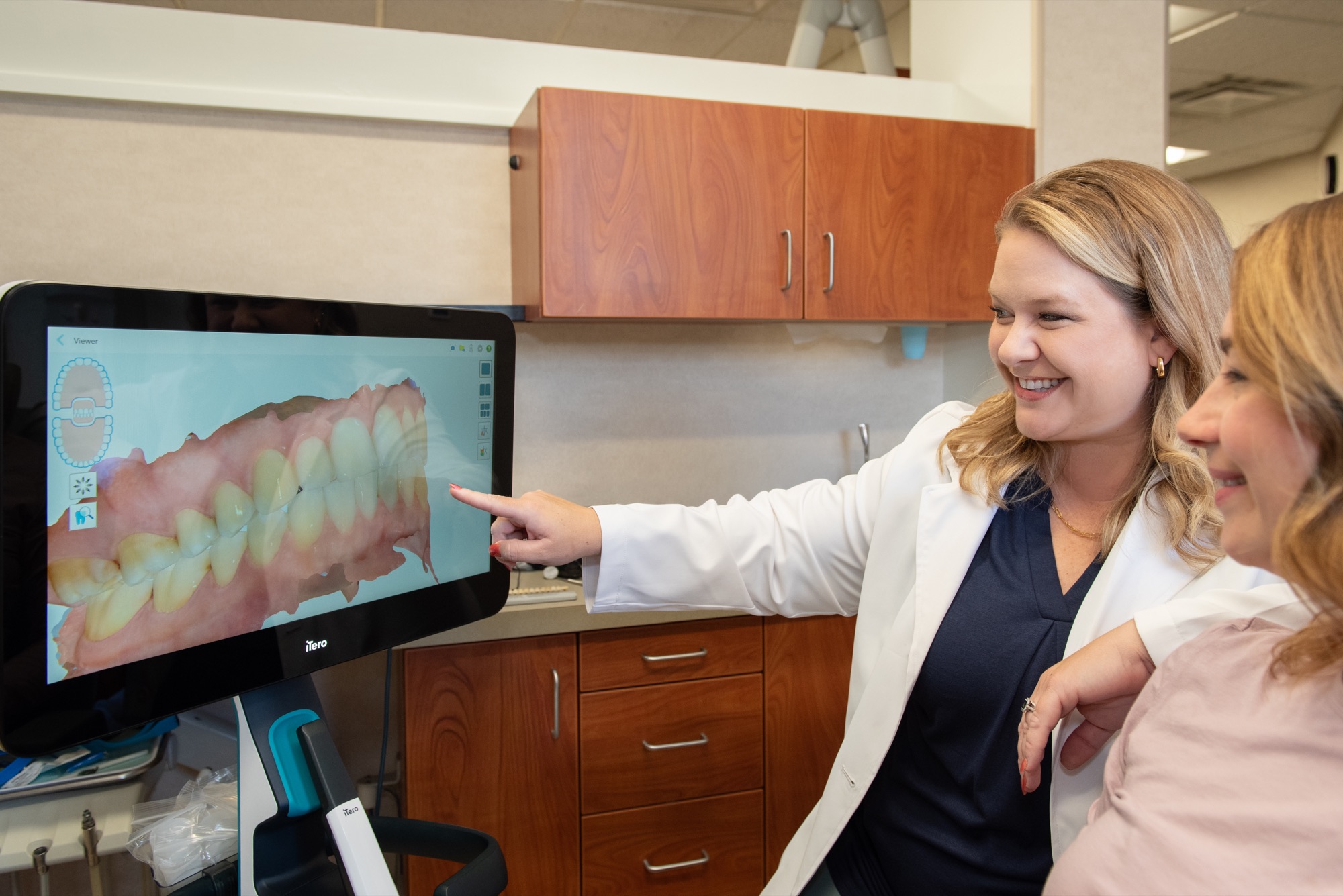
A digital scan or impression of the prepared teeth, the space, and how your bite comes together. That is what the laboratory builds the bridge from.
4. A temporary bridge
A temporary is fitted the same day, so the prepared teeth are protected and the gap is not visible while the permanent bridge is made.
5. Fitting and cementing
At the final visit the temporary comes off and the finished bridge is tried in. We check the fit, the shade, the contour, and how floss and an interdental brush pass underneath, then cement it and adjust the bite.
Materials, and the laboratory
Bridges are made in porcelain, gold, and silver alloys, and the choice follows the same logic as a single crown: appearance matters most at the front of the mouth, strength matters most at the back, and the two requirements pull in different directions.
The crowns that anchor a bridge are made by Oral Prosthetics Lab, the laboratory Dr. Lokitis trusts with this work. Where a bridge shows, that relationship earns its keep in shade and contour. Where it does not show, it earns its keep in a margin that meets the tooth cleanly at the gum line, which is what makes the work possible to keep clean.
Dr. Lokitis holds a DDS from the University of Maryland, Baltimore with special honors in prosthodontics, the discipline concerned with restoring and replacing teeth, and has spent over 15 years in general practice. Nadia, who has been with the practice since 1999, specializes in longer procedures like crowns and bridges.
Cleaning under a bridge
This is the part that decides how long a bridge lasts, and it is worth being told properly rather than discovering it later. The replacement tooth in the middle of a bridge does not have a root, so there is a space underneath it where the bridge meets the gum. Floss cannot get in there the ordinary way, because the bridge is one solid piece.
The tools are simple: a floss threader or superfloss to pass floss underneath, an interdental brush sized to the space, or a water flosser. Whichever you use, the habit needs to be daily. Bridges are most often lost not because the bridge fails but because the anchor teeth decay at the margin or the gum around them becomes inflamed.
Which is also why regular cleanings and exams matter more once you have a bridge, not less, and why gum health is part of the same conversation. If your gums bleed when you brush, read periodontal disease alongside this page. Our office is on Old Courthouse Road in Vienna, minutes from Tysons Corner and convenient to McLean, Dunn Loring, Merrifield, Oakton, and Falls Church.
Frequently Asked Questions
How long does a dental bridge last? expand_more
It depends far less on the bridge than on the two teeth holding it up. Where the anchor teeth stay healthy and the margins are kept clean, many bridges give good service for a decade or more. Where decay gets in at a margin or the gum around an anchor tooth becomes inflamed, the bridge is only as sound as the tooth underneath it.
Is a bridge better than an implant? expand_more
Neither is better in the abstract. A bridge is quicker and avoids surgery, but it means preparing two neighboring teeth for crowns. An implant leaves those teeth alone and replaces the root, which preserves bone mass under the gap, but it involves surgery and a healing period measured in months. Dr. Lokitis will lay out both for your particular gap rather than recommend one on principle.
Does getting a bridge hurt? expand_more
The preparation appointment is done under local anesthetic and is comparable to having two crowns done. Expect the teeth and gums to be tender for a few days afterwards. The fitting visit is usually straightforward, since the teeth are already shaped and the work at that point is checking, adjusting and cementing.
How do I clean under a bridge? expand_more
With a floss threader or superfloss to pass floss underneath the replacement tooth, an interdental brush sized to the space, or a water flosser. Ordinary flossing cannot get under a bridge because it is one solid piece. We will show you which tool suits your bridge, and it needs to be a daily habit rather than an occasional one.
How many teeth can a bridge replace? expand_more
More than one, but every extra tooth in the span puts more load on the anchor teeth at either end, and there is a point past which that becomes unwise. Where the span is long, or the anchor teeth are not strong enough to carry it, implants or a partial denture are usually the better plan. The X-rays and the exam decide it.
Will a bridge look natural? expand_more
It should. The replacement tooth is shaped to the space and shaded to the teeth on either side, and at the front of the mouth that matching is the most demanding part of the job. Where a bridge is visible, material choice and the laboratory work matter a great deal, which is why ours are made by Oral Prosthetics Lab.
What if the teeth next to my gap are perfectly healthy? expand_more
Then it is worth taking the implant conversation seriously. A bridge requires those healthy teeth to be prepared for crowns, which is a permanent change to two sound teeth. Where they already need crowns, a bridge is efficient. Where they do not, an implant leaves them untouched, and that is a real argument in its favour.
Related Services
One gap, three good options.
A consultation is an exam, X-rays, and a straight comparison of a bridge, an implant, and a partial denture for your particular case. Contact our Vienna office, minutes from Tysons Corner.