Dentures
Full, partial, and implant-supported dentures, made from a record of your own mouth and adjusted until they fit properly. They are more comfortable and natural looking than those of the past. Dr. Julia Lokitis fits dentures at our Vienna office, minutes from Tysons Corner.
Dentures, as they are now
A denture replaces missing teeth with a custom-made appliance that rests on the gum and is taken out for cleaning. Full dentures replace a whole arch. Partial dentures fill in around teeth you still have, and clip onto them for support. Both are made from a record of your own mouth, so the fit and the tooth shape are specific to you.
The practice is straightforward about how much this has changed: dentures today are more comfortable and natural looking than those of the past. Materials hold their color better, the teeth are shaped and shaded to look like teeth rather than a set, and the base can be made thinner while staying strong. If your idea of a denture comes from a relative decades ago, it is out of date.
None of which makes a denture the same as your own teeth. It is a very good solution to a real problem, and it asks something of you in return: patience through the first few weeks, and a daily cleaning habit afterwards. Being told that plainly at the start makes the first month a good deal easier.
Full and partial
Which one you need is decided by how many teeth are missing and what condition the remaining ones are in.
Full dentures
For an arch where no natural teeth remain. The denture rests on the gum and the bone underneath it, and it is shaped to hold its own position. Upper dentures generally settle in more readily than lower ones, which have less ridge to hold on to.
Partial dentures
For gaps among teeth that are still sound. The partial clips to the remaining teeth, which do much of the work of holding it in place, and it also keeps those teeth from drifting into the spaces. Removable, and less invasive than a bridge.
Keeping natural teeth is the priority wherever it is realistic. The practice removes teeth only when it is necessary and preserves natural teeth when possible, so a partial denture that works around what you still have is usually preferred to clearing an arch. Where a tooth can be saved with a crown or root canal therapy, that is the conversation to have first.
What to expect, step by step
Getting a denture is a sequence of appointments rather than one, because the fit is arrived at rather than guessed. Where teeth have to be removed first, the gum and bone need time to settle into their healed shape before a final denture is made.
1. Examination and records
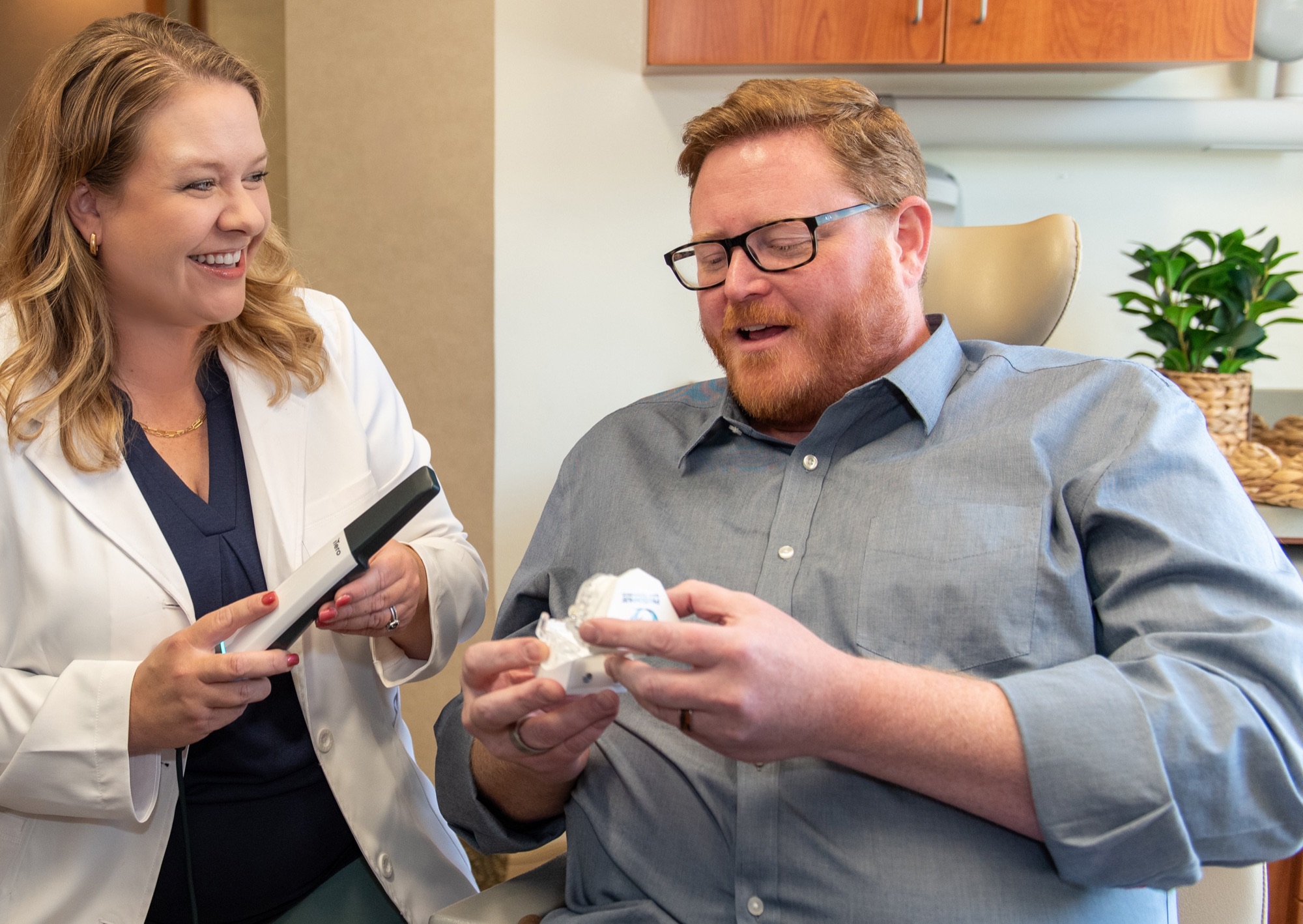
An exam, X-rays, and a look at the ridge, the gum, and any teeth that remain. This is where the plan is set and where we check your benefits before anything is made.
2. Any extractions
Teeth that cannot be kept are removed, usually under local anesthetic. See extractions for what that appointment involves and how the healing goes.
3. A temporary denture while you heal
You are not sent home without teeth. A temporary denture is worn during healing, which typically takes in the region of two to three months, and it lets you eat and speak while the tissue settles.
4. The final denture
Once healing is complete, the final denture is made to the healed shape of the ridge and fitted. This is the one built for the long term, and the difference in fit compared with the temporary is usually obvious straight away.
5. Adjustments
Expect a few. A new denture almost always needs small adjustments once you have worn it and eaten with it, and sore spots are normal in the first weeks. These are short appointments, and they are part of the process rather than a sign something went wrong.
Implant-supported dentures
If there is one development worth knowing about, it is this one. Titanium posts are placed in the jawbone and the denture attaches to them, so it is held in position rather than resting on gum. The practice also calls these clip-on dentures.
The benefits it lists are enhanced stability, improved comfort, better chewing, jawbone preservation, and no need for adhesive. That combination addresses the specific complaints that make people give up on a conventional lower denture: movement while eating, a sore ridge, and never quite trusting it in company.
It is a bigger undertaking. It involves implant surgery and a healing period measured in months, and it depends on there being enough bone to place the posts in. Our dental implants page sets out how that works, and Dr. Lokitis received advanced training in implant surgery during her hospital residency.
The first few weeks
A new denture feels strange, and the first fortnight is the hardest part of the whole process. Your tongue and cheeks have to learn a shape that was not there before, and speech can feel odd before it sounds odd to anyone else. Reading aloud for a few minutes a day is long-standing advice and it genuinely helps.
Eating comes back in stages. Softer food and smaller pieces at first, chewing on both sides at once to keep the denture level, then gradually back to normal. Most people find this settles within a few weeks. Sore spots are common early on and are usually solved by a small adjustment rather than by enduring them.
Tell us what is actually bothering you, specifically. A denture that rocks when you bite, a spot that rubs, a whistle on certain words, and a denture that drops when you laugh are four different problems with four different fixes, and none of them is something to put up with quietly.
Caring for them, and for the rest of your mouth
Dentures are cleaned daily, out of the mouth, with a brush and a cleaner made for the purpose rather than ordinary toothpaste, which is more abrasive than the material wants. Rinse after meals. Most people are advised to leave them out overnight, which gives the tissue underneath a rest, and to keep them in water so they do not dry out. Never use hot water, which can distort the fit.
Wearing a denture does not end your need for dental visits, and this is the part most easily missed. The gum and bone underneath continue to change shape, which is why a denture that fit beautifully can loosen over a few years and need relining or remaking. Remaining teeth still need checkups and cleanings, and the soft tissue still needs looking at, including oral cancer screening.
Dr. Julia Lokitis earned her DDS from the University of Maryland, Baltimore with special honors in prosthodontics, the discipline specifically concerned with replacing missing teeth, and has spent over 15 years in general practice. Our office is on Old Courthouse Road in Vienna, a few minutes from Tysons Corner and convenient to McLean, Dunn Loring, Merrifield, Oakton, and Falls Church.
Frequently Asked Questions
Will dentures change the way I talk? expand_more
At first, yes, and it is the change people notice most. Your tongue is working around a shape that was not there before, so certain sounds feel awkward for a while. It usually settles within a few weeks. Reading aloud for a few minutes a day speeds it along. A persistent whistle or lisp after that is worth telling us about, because it can often be adjusted.
How long does it take to get used to dentures? expand_more
Most people describe the first two weeks as the hardest part and find things much easier by the end of the first month. Eating comes back in stages: softer food first, smaller pieces, chewing on both sides at once to keep the denture level, then gradually back to normal. Sore spots early on are common and are usually fixed by a small adjustment.
Do I need denture adhesive? expand_more
Many people use a little, particularly with a lower denture, and there is nothing wrong with that. If you find you need a lot of it to get through the day, the denture is telling you something about its fit and it is worth having it looked at. Implant-supported dentures attach to posts in the jawbone and need no adhesive at all.
Can I keep the teeth I still have? expand_more
Wherever it is realistic, yes, and that is the preference here. Natural teeth are preserved when possible and removed only when necessary. A partial denture is designed to work around the teeth you keep, and it has the added benefit of stopping them drifting into the gaps. Where a tooth is failing, we will look at whether a crown or root canal therapy can save it first.
How long do dentures last? expand_more
The denture itself is durable, but your mouth does not stay still. Gum and bone continue to change shape after teeth are lost, so a denture that fitted beautifully can loosen over a few years and need relining or remaking. That is not a fault in the denture. It is the reason denture wearers still need regular appointments.
What are clip-on dentures? expand_more
It is another name for implant-supported dentures. Titanium posts are placed in the jawbone and the denture clips onto them, so it is held in position instead of resting on the gum. The practice lists the benefits as enhanced stability, improved comfort, better chewing, jawbone preservation, and no need for adhesive.
Should I sleep in my dentures? expand_more
Most people are advised to take them out overnight. It gives the gum and the tissue underneath a rest from constant pressure, and it makes proper cleaning easier. Keep them in water so they do not dry out, and never in hot water, which can distort the fit. If there is a reason you have been asked to wear yours at night, follow that instead.
Come and be measured properly.
Whether it is a first denture, a partial around teeth you want to keep, or a lower denture that has never sat right, start with an exam and a conversation. Contact our Vienna office, minutes from Tysons Corner.