Crown Lengthening
Crown lengthening is a surgical procedure that exposes more of the tooth structure by adjusting the gum, and where necessary the bone, around it. It is done either to make a restoration possible or to even out a gum line that shows more than you would like. Dr. Julia Lokitis performs it at our Vienna office, minutes from Tysons Corner.
What crown lengthening is
The crown of a tooth is the part above the gum. Crown lengthening does not lengthen the tooth itself — nothing is added. It reveals more of what is already there, by carefully repositioning the gum tissue and, where the situation calls for it, reshaping a small amount of the bone underneath.
That distinction matters, because it explains why bone is sometimes involved in what sounds like a gum procedure. Gum follows bone. Trim gum tissue without adjusting the bone beneath it and the tissue tends to creep back to where it was, because the underlying architecture has not changed. Whether bone needs adjusting is one of the things the consultation and the imaging are there to establish.
It is a surgical procedure and we describe it as one. It is done under local anesthetic, it leaves the area sore for a while, and it needs aftercare and healing time. None of that makes it unusual or alarming — it is routine work — but it belongs in a different category from contouring or whitening, and it is worth understanding before you agree to it.
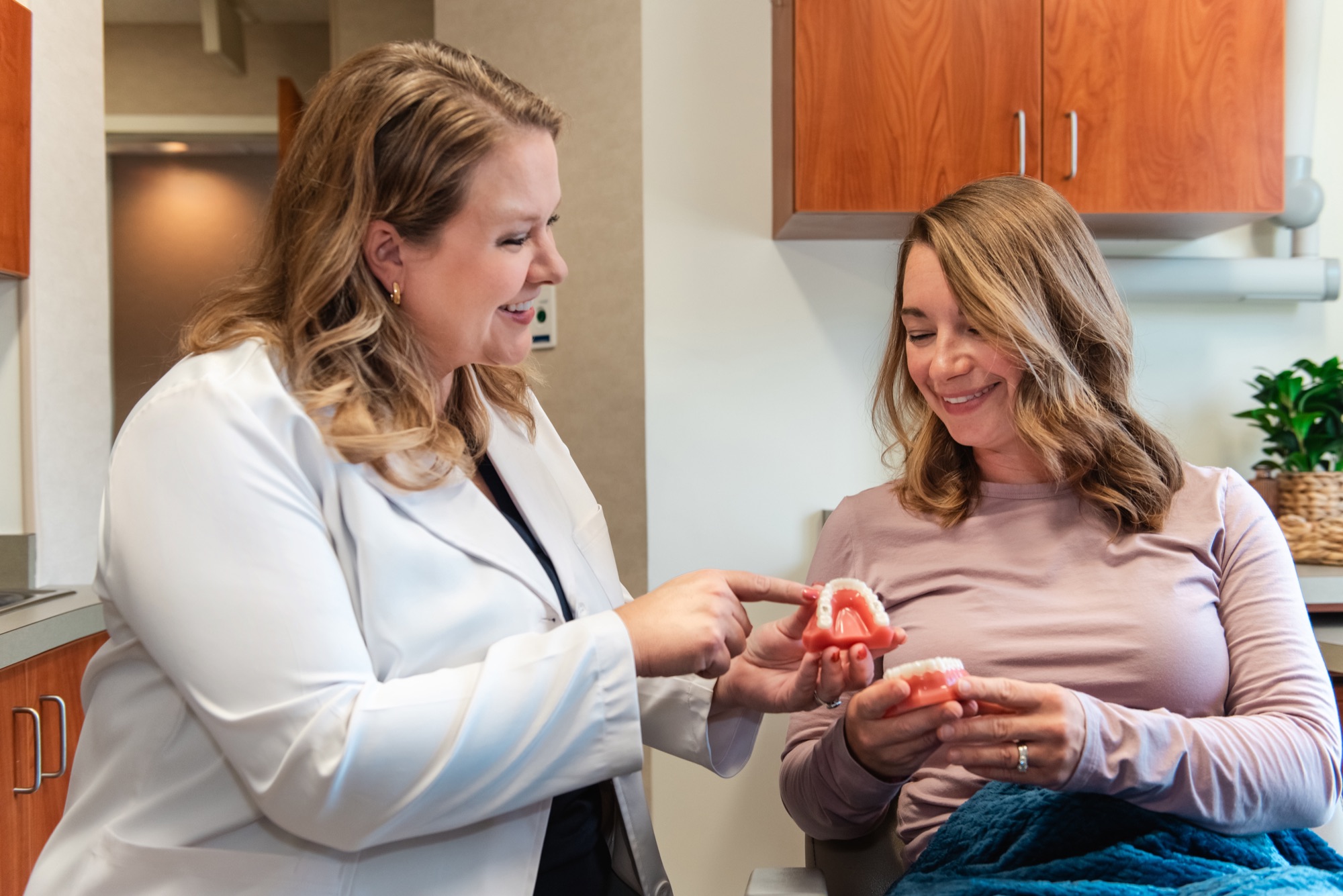
The two reasons it is done
They are quite different, and it is worth knowing which one applies to you before you read anything else about the procedure.
To make a restoration possible
A crown needs enough sound tooth standing above the gum to grip. When a tooth has fractured near the gum line, or decay has run underneath it, there may not be enough to work with. Exposing more structure is what turns an unrestorable tooth into one that can carry a crown.
To manage decay below the gum line
Decay that has extended beneath the gum cannot be properly cleaned out or sealed while it is covered. Exposing the margin lets the tooth be treated on sound structure rather than guessed at, which is what makes the restoration last.
To improve how the smile looks
Where teeth appear short because more gum shows than you would like, or the gum line runs unevenly across the front teeth, adjusting the tissue and bone can bring the proportions into balance. This is the aesthetic version of the same procedure.
How the procedure runs
Three stages, and the first one is the longest conversation.
1. Consultation with advanced imaging
An examination and imaging, so the position of the bone as well as the gum is known before anything is planned. This is where we establish how much structure needs exposing, whether bone is involved, and whether this is the right procedure for you at all.
2. The procedure, under local anesthetic
The area is numbed, and Dr. Lokitis adjusts the gum tissue and, where the case requires it, the bone, to expose the appropriate amount of tooth. You should not feel it while it is happening.
3. Recovery, with detailed aftercare instructions
You leave with specific instructions rather than general advice: how to keep the area clean without disturbing it, what to eat, what to expect, and when to come back. Gum tissue needs time to settle before any final restoration is shaped to it.
Because the healing stage sits between the surgery and the finished result, crown lengthening is almost always part of a longer plan rather than a treatment on its own. Where a crown is going on the tooth afterwards, the timing of that is set by the tissue rather than by the calendar, and Dr. Lokitis will tell you where you are in that sequence at each visit.

What recovery asks of you
Expect the area to be tender for a while. That is the honest summary, and how long it lasts depends on how much tissue was adjusted and whether bone was reshaped, which is why we give you a timeline for your own case rather than a number from a brochure.
The aftercare instructions are the part to follow closely. Keeping the site clean matters, and so does keeping it undisturbed, and those two things pull against each other — which is exactly why we write it down for you instead of telling you to brush carefully and leaving it there.
Gum tissue also settles gradually, so what you see in a mirror in the first weeks is not the final contour. Many people find this the strangest part, and it is the reason a final crown is not shaped straight away. Call us if something feels wrong at any point rather than waiting for your review appointment.

Where it fits in a larger plan
Crown lengthening is rarely the reason somebody calls us. It turns up as a step: a tooth that needs a crown but does not yet have enough structure to hold one, or a smile-design conversation where the proportions turn out to be about gum rather than about teeth. Occasionally it appears alongside veneers, where an even gum line is what makes the porcelain read correctly.
That is also why it belongs on a page that talks about sequence. There is no point shaping a restoration to a gum line that is about to change, and no point reshaping a gum line before you know what the final teeth are going to look like. The order runs: establish the plan, expose what needs exposing, let it heal, then restore.
Where gum health itself is the underlying issue, that comes first. Inflamed or receding gums are a periodontal question, and treating that is not optional groundwork — it is what determines whether anything built afterwards holds.
When we refer, and who does the work
Not every case belongs in a general practice, and periodontist referrals are a normal part of how this practice works rather than an admission of anything. Where a case involves substantial bone work, significant periodontal disease, or a complexity that a specialist handles better, Dr. Lokitis will coordinate that referral rather than take it on. You should expect to be told which category you are in at the consultation.
Dr. Julia Lokitis earned her DDS from the University of Maryland, Baltimore with special honors in prosthodontics, and completed a one-year general practice residency at York Hospital in Pennsylvania with advanced training in cosmetic procedures, restorative work, veneers, oral surgery, implant surgery and dental trauma management. She has spent over 15 years in general practice.
We explain procedures thoroughly and build plans that suit your needs, with no upselling and no pressure to start. You will know what a procedure involves and what it costs before it begins. Our office is on Old Courthouse Road in Vienna, a few minutes from Tysons Corner and convenient to McLean, Dunn Loring, Merrifield, Oakton and Falls Church. Reach us on (703) 893-1603 or through the contact page.
Frequently Asked Questions
Is crown lengthening painful? expand_more
The procedure is done under local anesthetic, so you should not feel it while it is happening. Soreness afterwards is normal, in the way that any gum treatment leaves the area tender for a while, and Dr. Lokitis will tell you how to manage it as part of your aftercare instructions. If discomfort is worse than you were told to expect, call us rather than waiting for the review appointment.
How long does recovery take? expand_more
It varies with how much tissue was adjusted and whether bone was reshaped as well as gum, so we would rather give you a timeline for your own case than a general figure. What is consistent is that gum tissue needs time to settle into its new position before a final crown is shaped to it. Dr. Lokitis will give you detailed aftercare instructions and tell you when the next stage can happen.
Will my gums look uneven while they heal? expand_more
Possibly, for a while. Gum tissue takes time to settle and the contour you see immediately afterwards is not the contour you will end up with. This is the main reason we do not rush the final restoration: shaping a crown to a gum line that is still moving means the margin ends up in the wrong place. It is worth knowing this in advance so the in-between stage does not worry you.
Do I always need crown lengthening before a crown? expand_more
No, and most crowns do not need it. It comes up when there is not enough tooth structure standing above the gum for a crown to grip, which usually happens because a tooth has fractured near the gum line or decay has run underneath it. In those cases exposing more of the tooth is what makes a restoration possible at all. If your tooth has enough structure, the step is skipped.
Can crown lengthening fix a gummy smile? expand_more
It is one of the reasons it is done. Where teeth look short because more gum is showing rather than because the teeth themselves are small, adjusting the gum and the underlying bone can reveal more of the tooth and even out the gum line. Whether it is the right answer for your smile depends on what is causing the proportion, which is what the consultation and the imaging are for.
Will the tooth be more sensitive afterwards? expand_more
Exposing more of a tooth can mean exposing surface that was previously covered, and some sensitivity is common while things settle. It often eases as the tissue heals. Tell us if it does not, or if it is sharp rather than mild, because that is worth looking at rather than living with. Where the tooth is going on to receive a crown, the crown itself usually resolves it.
Does dental insurance cover crown lengthening? expand_more
It depends on why it is being done. Crown lengthening carried out so that a damaged tooth can be restored is a surgical procedure with a clinical purpose, and plans often treat it differently from the same procedure done to change how a smile looks. We are happy to check your benefits before anything is scheduled, and you will know what treatment costs in advance.
Find out whether this step is actually needed.
Crown lengthening is a surgical procedure and it should only happen when there is a clear reason for it. A consultation with imaging will tell you whether yours qualifies. Contact our Vienna office, minutes from Tysons Corner.