Invisalign
Invisalign uses a planned series of clear, removable aligners to move teeth gradually into a better position — no brackets, no wires, and nothing you have to explain to anyone. Dr. Julia Lokitis plans treatment from a 3D digital scan at our Vienna office, minutes from Tysons Corner.
Straightening teeth without brackets and wires
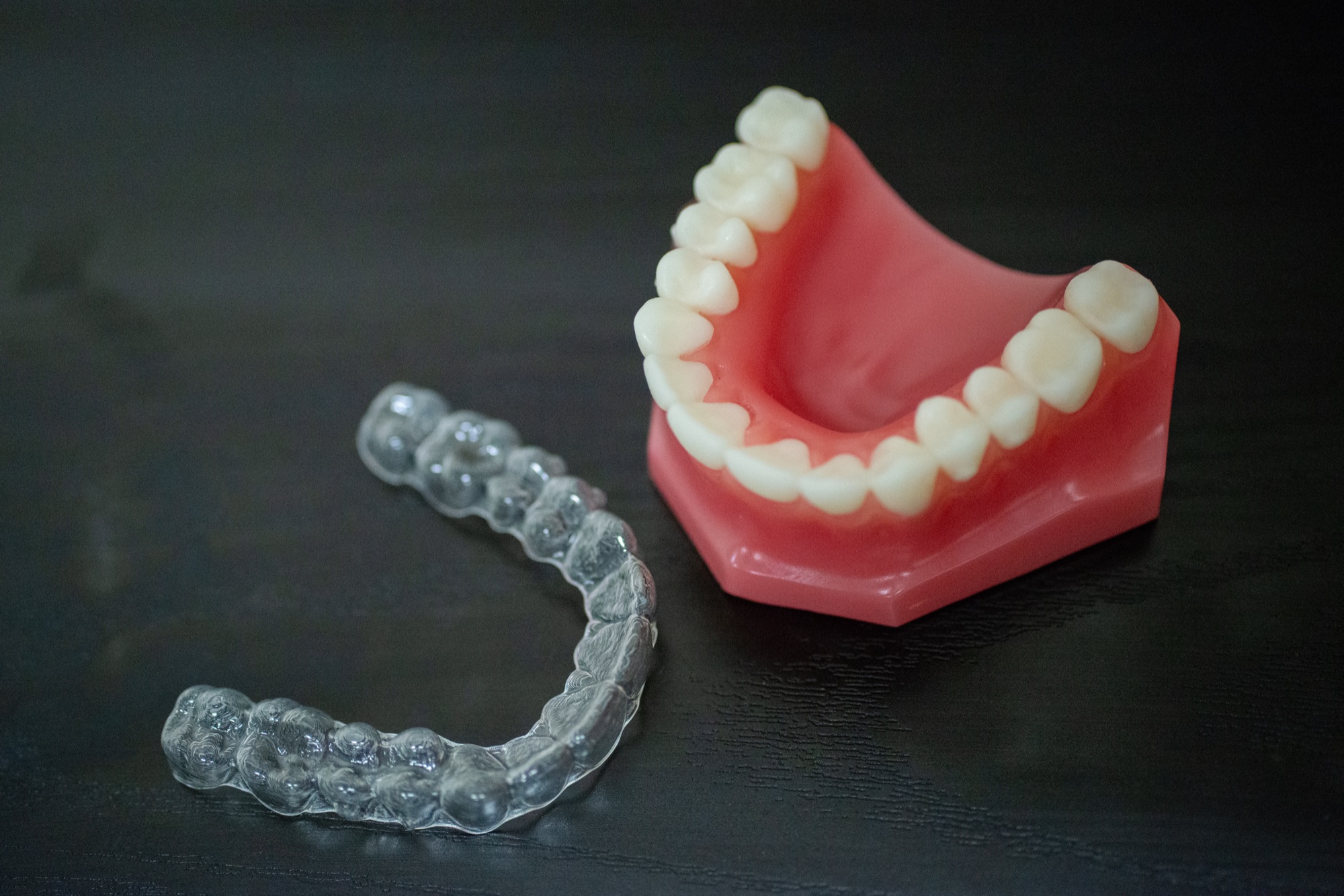
A course of clear aligners is a series of thin, transparent trays, each one shaped a fraction differently from the last. You wear a tray for a couple of weeks, then move on to the next. Because every tray sits slightly out of step with where your teeth currently are, it applies gentle, continuous pressure, and the teeth follow it. The whole sequence is planned in advance from a three-dimensional model of your mouth, so the finishing position is worked out before the first tray goes in.
They come out, which is the practical difference most people notice first. You remove them to eat, and to brush and floss, so your routine doesn't change and there is no cleaning around wires. They are also close to invisible at conversational distance. For adults who put orthodontics off in their twenties and would rather not spend a year in metal brackets, that is often what tips the decision.
None of which makes this a cosmetic shortcut. Moving teeth is real orthodontics, and it works because bone remodels around a tooth held under sustained light force. That is why the timeline is measured in months rather than weeks — and why wearing the trays as prescribed matters more than anything else you do.
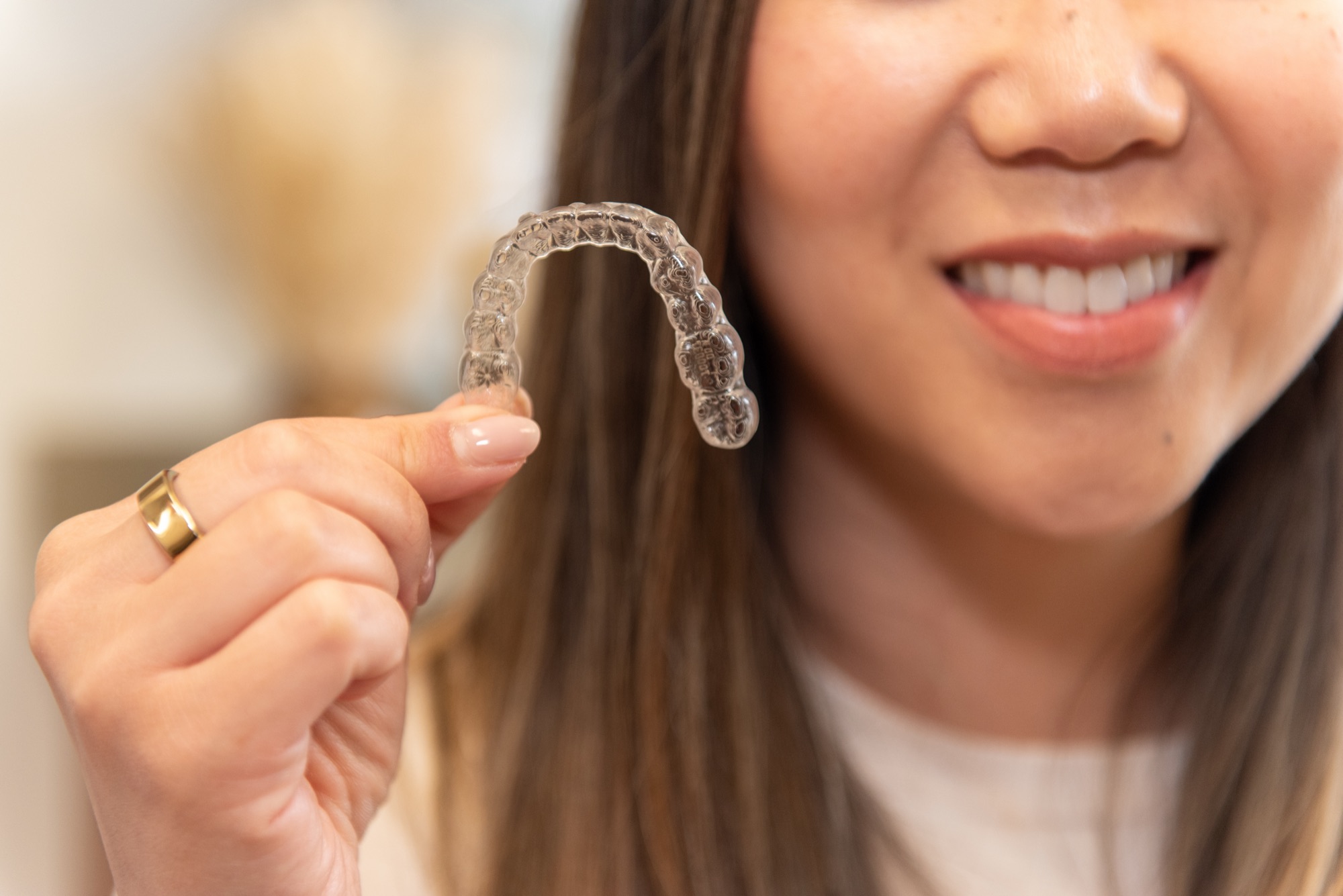
What clear aligners can correct
Aligners handle most of the crowding and spacing problems people come in asking about, and a good deal of bite correction as well.
There are limits, and it is fairer to say so here than at the consultation. Substantial skeletal discrepancies, teeth needing large rotations or significant vertical movement, and some cases involving existing crowns or bridges are better served by fixed braces or by an orthodontist. Dr. Lokitis will tell you which category you fall into rather than starting a course that cannot finish the job.
Sometimes crowding is one thread in a larger picture. If your jaw aches or clicks, or your teeth are wearing flat, straightening may be part of a plan rather than the whole of it — worth reading alongside TMJ treatment and teeth grinding.
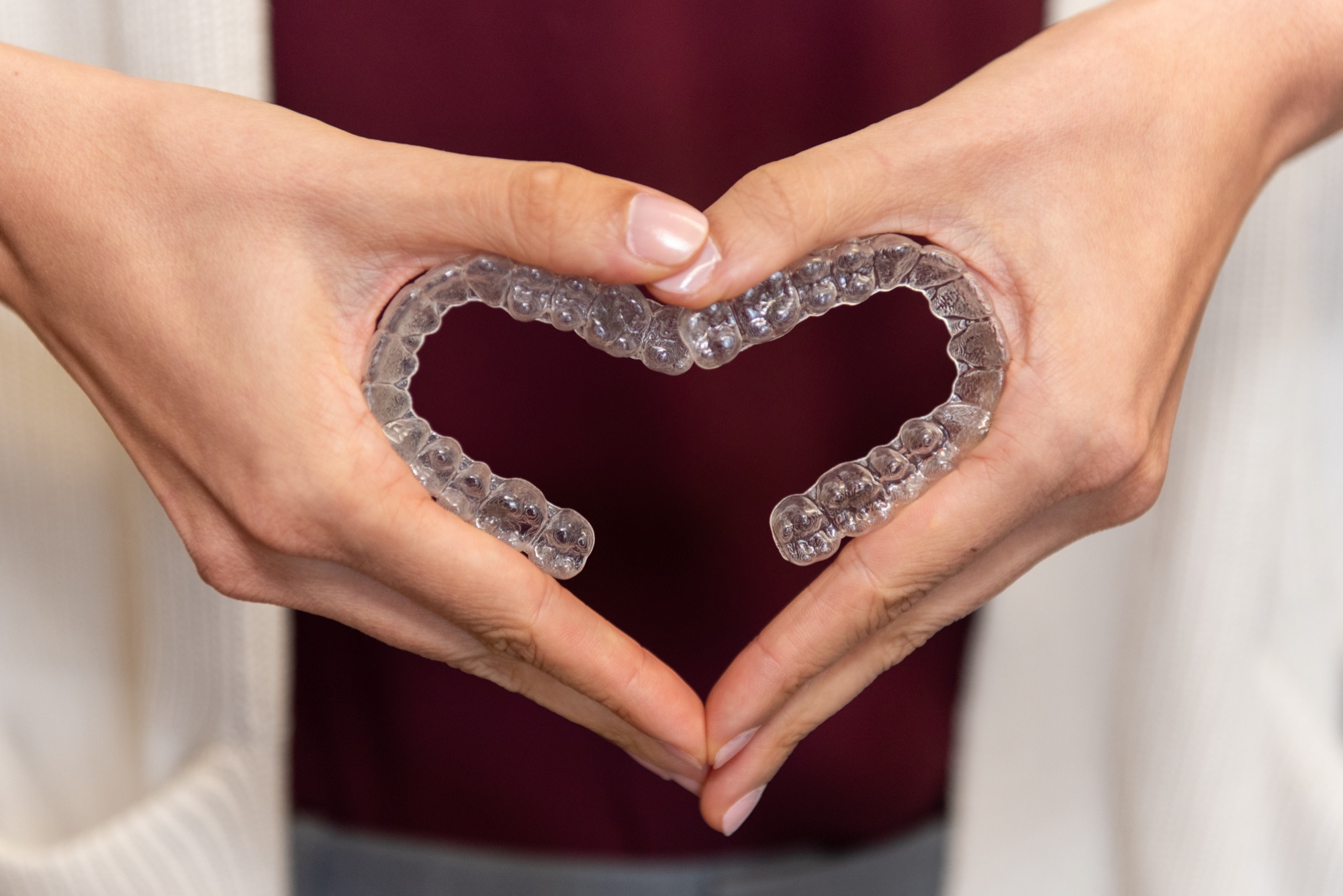
The scan your treatment is planned from
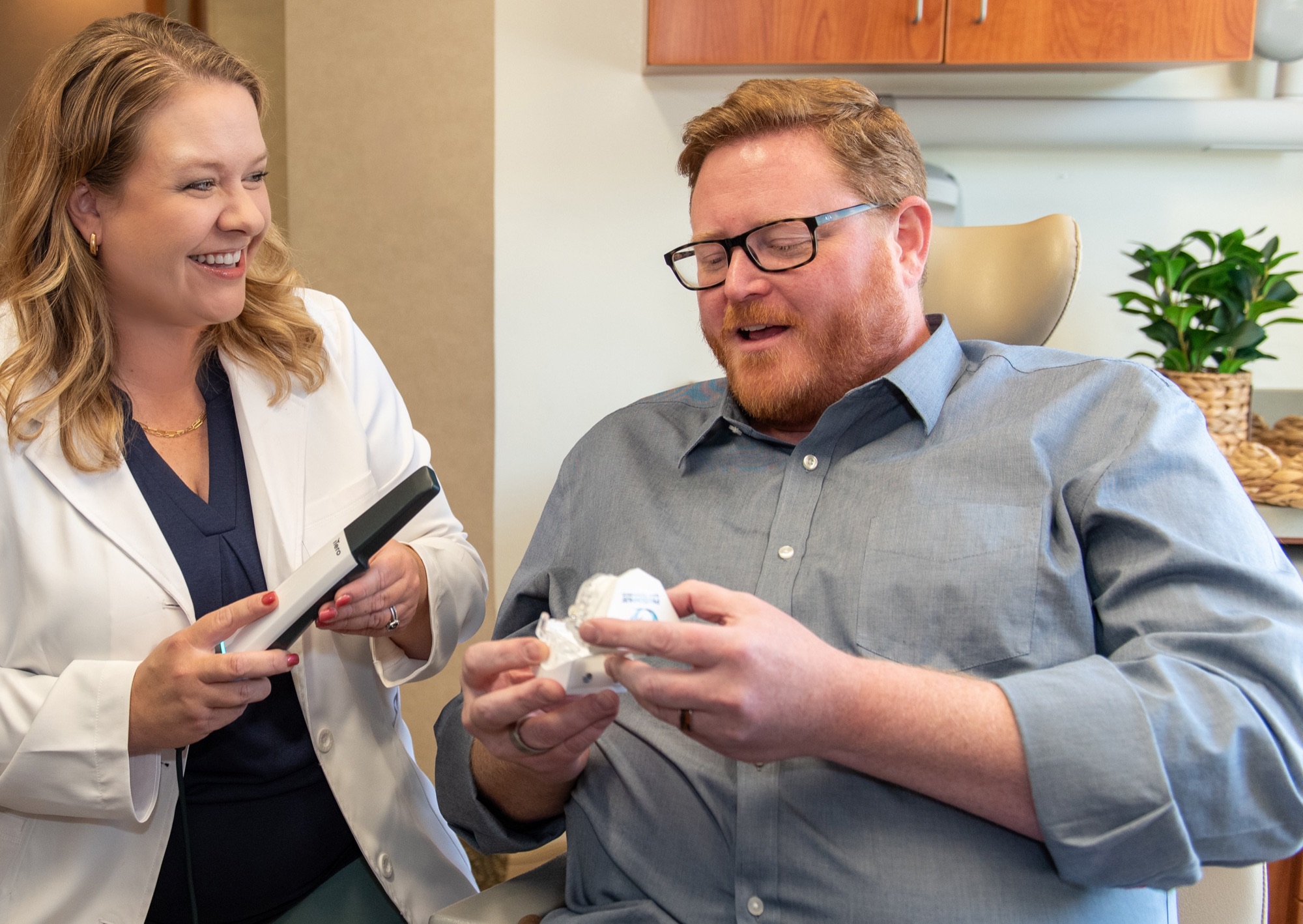
Aligner treatment starts with a digital record of your mouth rather than a tray of impression material. Our iTero scanner builds a 3D model in about three to five minutes, with no radiation and nothing to gag on, and the model appears on the screen beside you while it is being captured.
That model is where the plan is made: the sequence of movements, which teeth move when, and what the finish should look like. It also means you can see the starting point for yourself instead of taking a description on trust. The iTero health scan is something we offer every patient here at no charge, not an extra reserved for aligner cases.
How treatment runs, visit by visit
Aligner treatment is mostly quiet. Long stretches of it happen at home, punctuated by short appointments here. This is the shape it usually takes.
1. Consultation and records
An exam, X-rays, photographs, and the digital scan. We talk about what you would like changed, whether aligners are the right tool for it, and what treatment costs — including a look at your benefits — before anything is ordered.
2. Planning
Dr. Lokitis works out the sequence of movements on the digital model. You see the projected result before the trays are made, which is the point at which to ask questions or change your mind.
3. Fitting the first trays
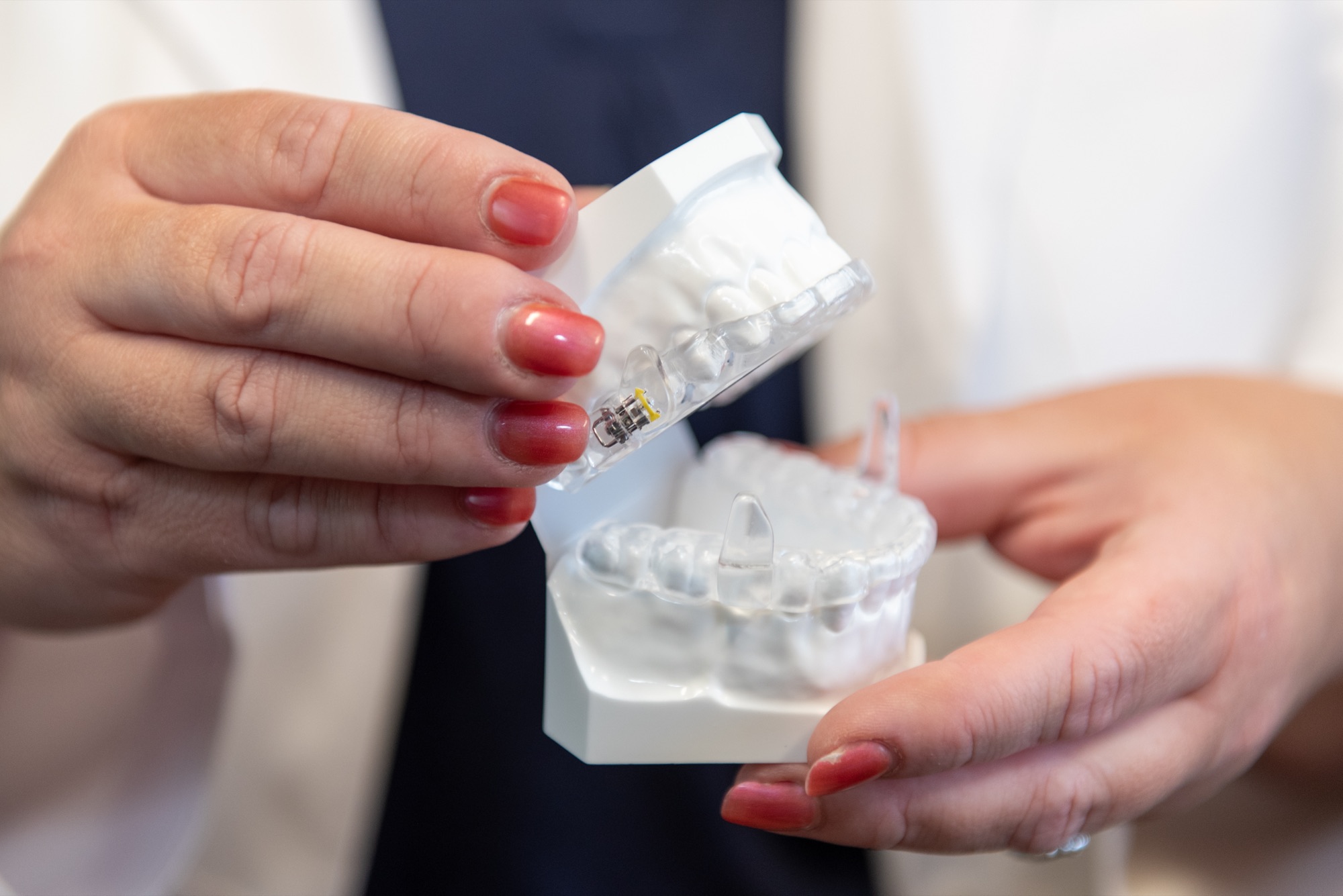
Many plans call for small tooth-colored attachments bonded to a few teeth — handholds, in effect, that give the aligner something to push against. They are removed at the end. We check the fit, show you how to seat and remove the trays, and send you home with the first few in the series.
4. Changing trays at home
You move to the next aligner on a schedule Dr. Lokitis sets — often around every ten days, sometimes longer where a movement needs more time. Each change brings a day or two of tightness, then settles.
5. Progress checks
Brief appointments every couple of months, to confirm the teeth are tracking the plan and to hand over the next batch of trays. These are short visits; the aligners do the work in between.
6. Refinement, if it is needed
Teeth do not always move exactly as modelled. A short additional series to finish the detail is common rather than a sign something went wrong, and it is worth knowing that in advance so it doesn't feel like a setback.
7. Retainers
One set of retainers is included with treatment, fitted once the movement is complete.
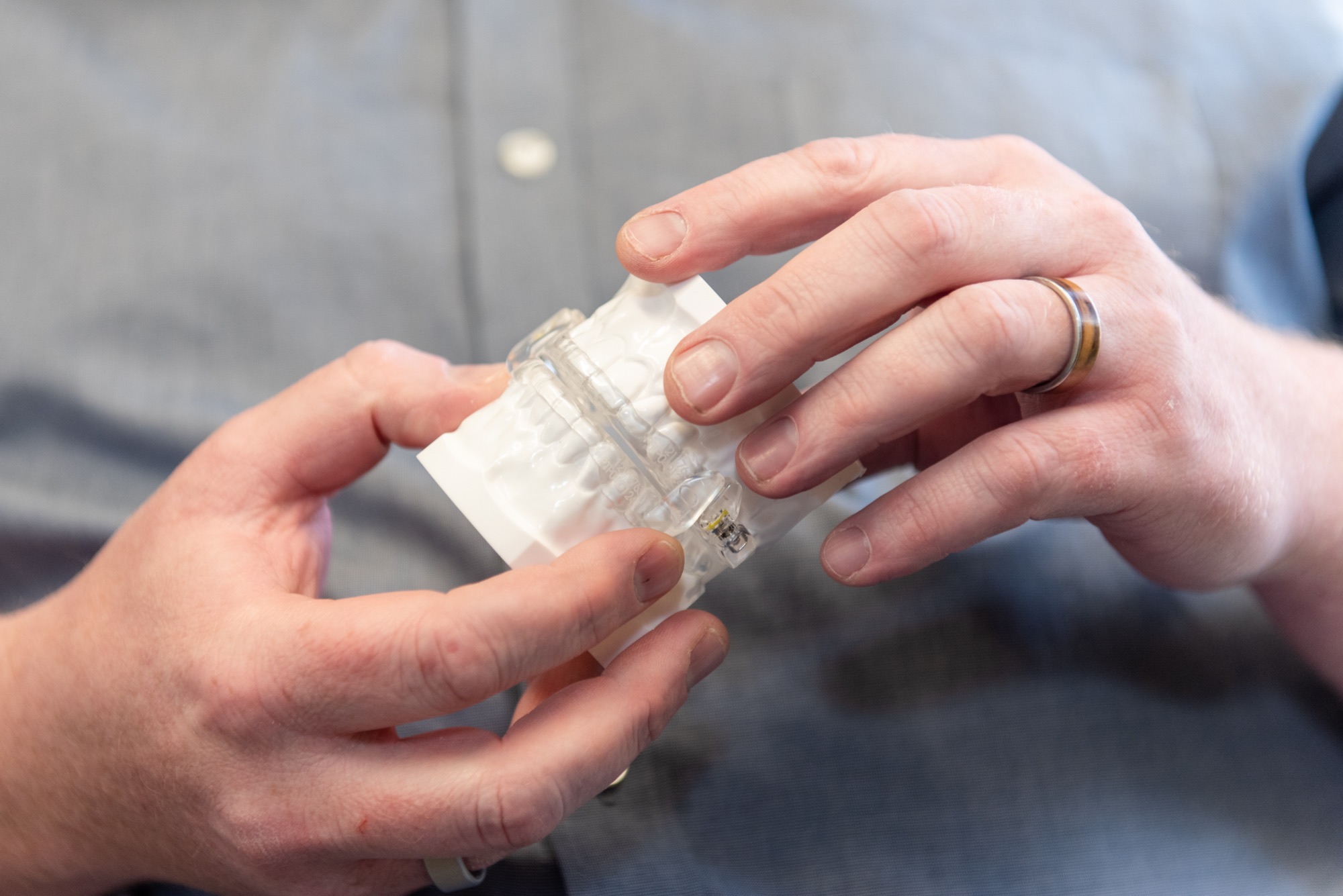
Timelines vary with how far the teeth have to travel — months for straightforward crowding, longer for a fuller bite correction, and many cases finish in under a year. We would rather give you a range after the scan than a number before it.
What wearing them is actually like
Aligners want roughly 20 to 22 hours a day — all the time except meals and brushing. This is the one part of treatment that sits entirely with you, and it is worth knowing that going in.
The first few days are the strangest. A new tray feels tight, there may be a faint lisp for the first week or so, and taking the trays out in a restaurant takes a little getting used to. Most people find the rhythm within a fortnight. Two habits make the difference: keep the case in a pocket or bag, because the classic way to lose an aligner is wrapped in a napkin on a table, and keep a travel toothbrush at work so putting them back after lunch is easy rather than a decision.
Plain water is the only thing worth drinking with the trays in. Coffee, tea, and red wine will stain the plastic, and hot drinks can distort it. Rinse the aligners when you take them out and clean them as we show you — not with hot water, and not with toothpaste, which is more abrasive than the plastic wants.
If a whiter shade is part of what you are after, it is usually simpler to finish the movement first and then talk about teeth whitening, so the shade is judged against the final position rather than the starting one.
Retainers, and holding the result
Teeth have a long memory. Left to themselves after treatment they drift back toward where they started, which is why retention is best thought of as part of the treatment rather than an optional extra tacked on at the end. One set of retainers is included with your treatment here, and most people settle into wearing theirs at night, indefinitely — a small nightly habit in exchange for not repeating a year of work.
Two practical notes. A retainer is not a night guard — if you clench or grind, the appliance that protects enamel is a different one, made for a different job, and we would talk about grinding separately. And if a tooth needs a crown or other restorative work, the sequence matters: teeth are usually moved into their final position first, so the new work is shaped to a bite that isn't about to change.
Clear aligners compared with fixed braces
Both move teeth, and both work. They ask different things of you, and neither is the right answer for every case.
Where aligners tend to win
Where fixed braces still make more sense
Who plans your treatment
Dr. Julia Lokitis earned her DDS from the University of Maryland, Baltimore with special honors in prosthodontics — the discipline concerned with how bites fit together and function — and completed a one-year general practice residency at York Hospital in Pennsylvania. She has spent over 15 years in general practice and is a member of the American Academy of Clear Aligners.
In practical terms, that background is why an aligner consultation here starts with how your teeth meet rather than only how they look. Straightening changes the way the bite loads, and a plan that ignores that is a plan that can leave you with a straighter set of teeth and a new problem.
We explain procedures thoroughly and build plans that suit your needs — no upselling, no overtreatment, and no pressure to start. You will know what treatment involves and what it costs before anything begins. Our office is on Old Courthouse Road in Vienna, a few minutes from Tysons Corner and convenient to McLean, Dunn Loring, Merrifield, Oakton, and Falls Church.
Frequently Asked Questions
Can I eat normally with Invisalign? expand_more
Yes. The aligners are removable, so you take them out for meals and eat what you would ordinarily eat — there is no list of foods to avoid the way there is with fixed braces. Brush, or at least rinse, before the trays go back in. Plain water is the only thing worth drinking while they are in; hot and colored drinks can stain the plastic and warm drinks can distort it.
How long does clear aligner treatment take? expand_more
It depends entirely on how far the teeth have to travel. Straightforward crowding or a small relapse after childhood braces can be a matter of a few months. A fuller bite correction runs longer, and many cases finish in under a year. Nobody can give you an honest figure before the scan and the plan, and we would rather quote you a range afterwards than a number before.
Do clear aligners hurt? expand_more
Most people describe pressure rather than pain. A new tray typically feels tight for the first day or two, then settles as the teeth respond, and the pattern repeats each time you change. Many people find it easiest to switch trays in the evening so the tightest hours pass while they sleep. Tell us if a tray is genuinely sore or an edge is rubbing — that is usually a quick adjustment, not something to endure.
How many hours a day do I have to wear them? expand_more
Roughly 20 to 22 hours a day, which in practice means all the time except meals and brushing. This is the one part of treatment that is entirely in your hands. Aligners left in a case do not move teeth, and the most common reason a course runs long is honest, ordinary forgetfulness rather than anything clinical.
Does dental insurance cover clear aligners? expand_more
Some plans include an orthodontic benefit and some do not, and where a benefit exists it is often a lifetime maximum rather than a percentage. We are happy to check your benefits before you commit to anything, and we will go over what treatment costs with you in full before we begin.
What happens if I lose an aligner? expand_more
Call us and tell us which number you were on. Depending on how far into the tray you were, we may have you go back to the previous one or move ahead to the next while a replacement is ordered. It is worth carrying the case with you — the most common way an aligner disappears is wrapped in a napkin on a restaurant table.
Will I have to wear a retainer afterwards? expand_more
Yes, and it is fair to think of retention as part of the treatment rather than an optional extra. Teeth have a long memory and will drift back toward where they started if nothing holds them. One set of retainers is included with treatment. Most people settle into wearing them at night, indefinitely.
Start with a look and a conversation.
A consultation is a scan, an exam, and an honest answer about whether clear aligners are the right tool for what you want changed. Contact our Vienna office — minutes from Tysons Corner — and we will take it from there.