General Dentistry
General dentistry is the ongoing work of keeping a mouth healthy — the exams, the cleanings, the imaging, and the small repairs that add up to not needing anything larger later. Dr. Julia Lokitis has spent over 15 years in general practice and sees patients of every age at our Vienna office on Old Courthouse Road, minutes from Tysons Corner.
What general dentistry covers
Most of what a general dentist does is cumulative. You come in, your teeth are cleaned properly, everything is looked at carefully, and one of two things happens: nothing needs doing, or something small needs doing while it is still small. The second outcome is the point. A cavity found on a routine bitewing is a short appointment; the same cavity eighteen months later, once it reaches the nerve, is a root canal and a crown.
A general practice is therefore two things running side by side. There is prevention — cleanings and exams, digital X-rays, oral cancer screening, sealants, and gum health. And there is repair — fillings, crowns, and the rest of the restorative range, for the things prevention did not get to in time.
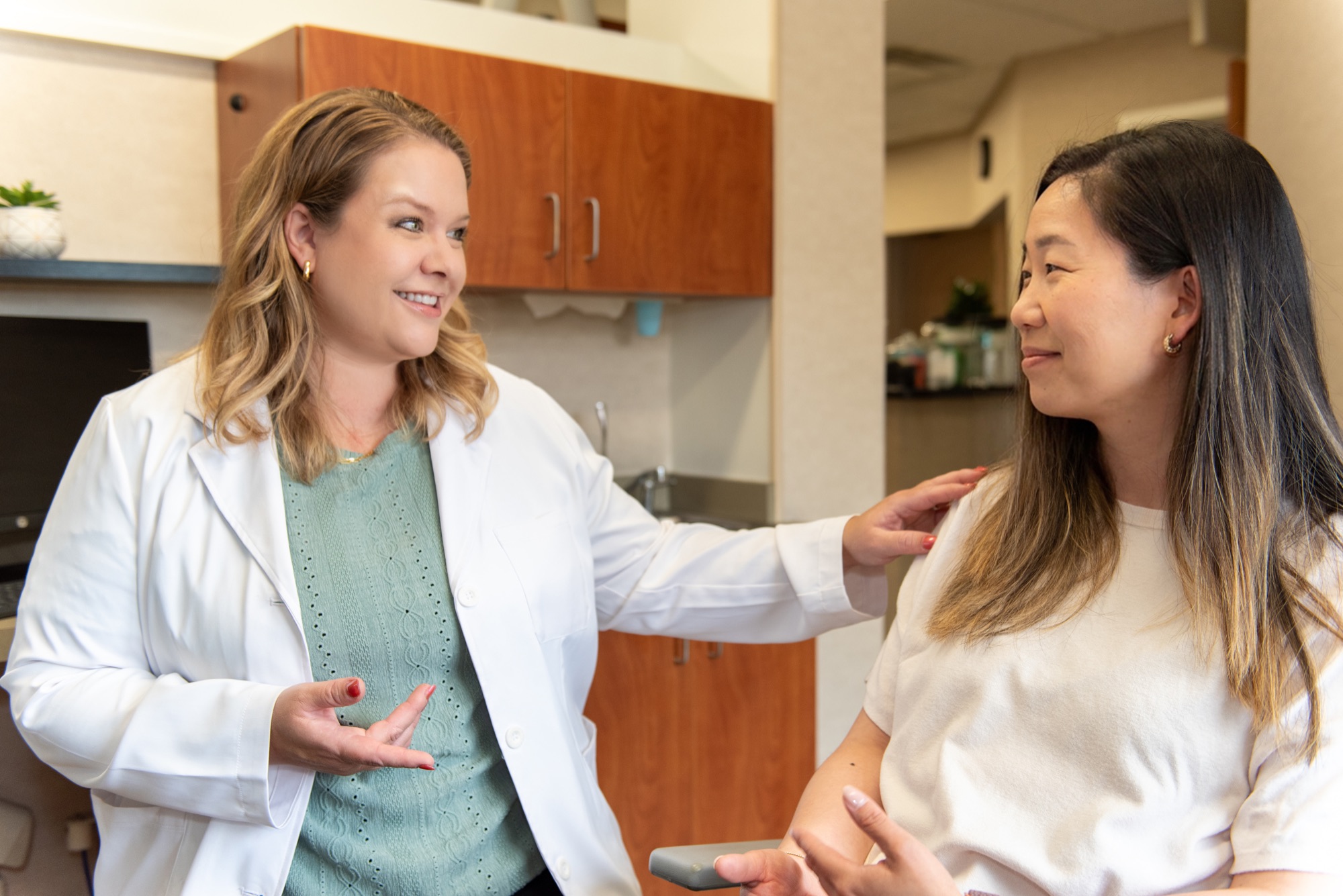
Dr. Lokitis treats whole families here, from a toddler's first look in the chair through to adults who have not sat in one in years. Both are ordinary, and neither is met with a lecture.

What is involved in a comprehensive exam
A comprehensive exam is more than a look for holes. Dr. Lokitis works through five separate assessments, because a mouth can be cavity-free and still be in trouble.
- check_circleOral cancer screening — a visual and digital check of the soft tissues, using Oral ID fluorescence technology alongside the visual exam.
- check_circleDiagnostic X-rays — digital images of what sits between and beneath the teeth, where the eye cannot reach.
- check_circlePeriodontal examination — the gums and the bone that holds your teeth in, measured rather than eyeballed.
- check_circleOcclusal exam — how your teeth meet, how evenly they wear, and a check of the jaw joints.
- check_circleTooth-by-tooth assessment — every tooth and every existing restoration, one at a time.
The occlusal part is worth dwelling on. Flattened cusps, a chipped edge, or a tooth sensitive to cold with no decay near it often point at how the bite loads rather than at the tooth itself — a different conversation, closer to grinding or TMJ than to fillings.
The 3D scan we offer every patient
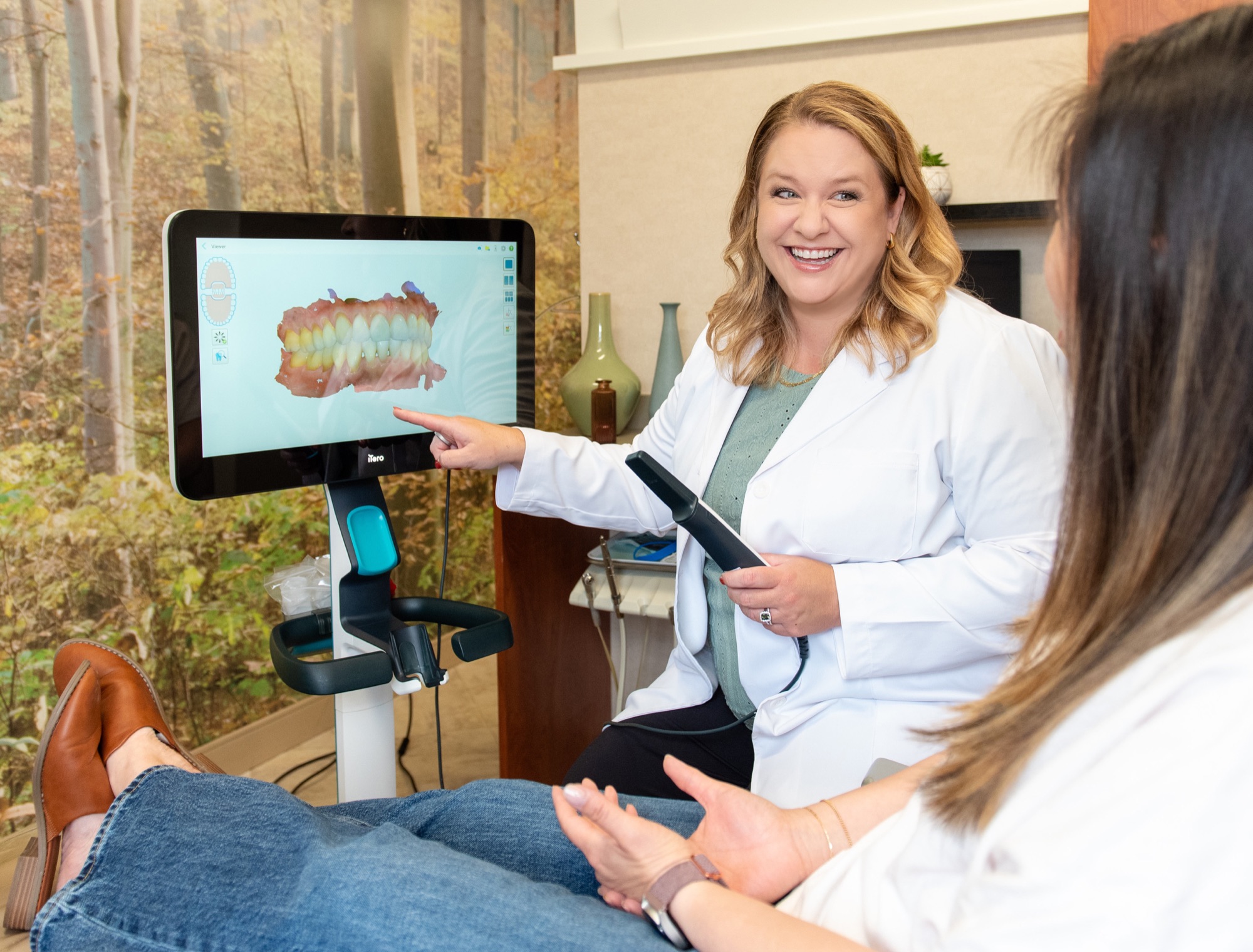
Our iTero scanner builds a three-dimensional model of your mouth in about three to five minutes. There is no radiation and nothing to gag on — a small wand passes over the teeth and the model assembles on the screen beside you as it goes. The iTero Health Scan is free to every patient here, not an extra sold on top of a plan.
Its real value is that it makes the conversation concrete. When Dr. Lokitis says a molar is wearing on one side, you can look at the same surface she is looking at, magnified, rather than take a description on trust. It also gives us a dated record: scan you this year, scan you in two years, and recession or wear that is invisible day to day becomes obvious side by side.
Your first visit, start to finish
Set aside about 75 minutes for a first appointment. It runs longer than a routine visit because we are building a baseline rather than checking one.
1. Paperwork and history
Bring your insurance card, a photo ID, and any records from a previous dentist. The medical history matters more than people expect — blood pressure medication and reflux are two of many ordinary things that change what we see in a mouth.
2. Imaging
A full set of digital X-rays, unless you have recent ones we can request instead. If you have images from another practice, tell us before your appointment and we will try to save you the retake.
3. The exam
The five assessments above, unhurried. This is also where you say what has been bothering you, however small or however long it has been going on.
4. A cleaning, in most cases
Many first visits include a cleaning the same day. Where there is heavy build-up or gum inflammation, one appointment is not enough to do it properly, and we would rather schedule the time than rush.
5. A plan, if you need one
If something needs doing, you leave knowing what it is, why, in what order, and what it costs. If nothing needs doing, you leave knowing that too, and we will see you in six months. We do not upsell and we do not overtreat.
Coming back, and what happens when something needs fixing
Twice a year suits most people. It is roughly how long it takes for hardened deposit to build back beyond what brushing reaches, and roughly the window in which a small problem stays small. Some patients do better on a shorter interval — a history of gum disease, a dry mouth from medication, diabetes, or smoking all shorten it — and we will say so rather than leave you to guess.
When repair is needed, most of it happens here: fillings for decay, crowns and inlays and onlays where a tooth has lost too much structure to hold a filling, root canal treatment when the nerve is involved, periodontal treatment for gums pulling away, and implants, bridges or dentures to replace a tooth. If something cracks or starts aching between visits, call us — urgent problems are better handled the same day than nursed through a weekend.
Dr. Lokitis earned her DDS from the University of Maryland, Baltimore with special honors in prosthodontics and completed a one-year general practice residency at York Hospital in Pennsylvania, covering restorative and cosmetic work, oral surgery, implant surgery, and dental trauma. Most of what a general practice needs to do can therefore be done by the person who found it. We are on Old Courthouse Road in Vienna, minutes from Tysons Corner and easy to reach from McLean, Dunn Loring, Merrifield, Oakton, and Falls Church, open Monday through Thursday. Get in touch or call (703) 893-1603.
Frequently Asked Questions
How long does a typical visit take? expand_more
A routine cleaning and exam runs about an hour. A first visit is longer, around 75 minutes, because it includes paperwork, a full set of X-rays, and a comprehensive exam rather than a check against records we already hold.
I have not been to the dentist in years. Will I be judged? expand_more
No. People stay away for all sorts of reasons — a bad experience, cost, or simply that one missed appointment became five years. It is not something we comment on. The best time to get your oral health in order is now, and Dr. Lokitis starts from where you actually are.
Is the exam painful? expand_more
An exam itself should not hurt. There is some poking and some cold air, and a spot that is already inflamed can be tender, so tell us where it is. If dental visits make you anxious, say so when you book — a blanket, a neck pillow, and noise-cancelling headphones are on the comfort menu, and nitrous oxide can be arranged for an additional fee.
How often should I come in for a checkup? expand_more
Twice a year suits most people. Some do better on a shorter interval, since gum disease, a dry mouth from medication, diabetes, and smoking all mean deposits and inflammation build faster. Dr. Lokitis recommends an interval rather than applying one by default.
What should I bring to my first appointment? expand_more
Your insurance card, a photo ID, and any records or X-rays from a previous dentist. A list of your current medications helps too, since many common prescriptions affect the mouth.
Do you accept my dental insurance? expand_more
We accept most major insurance plans and offer flexible payment options. Rather than guess, call us with your plan details and we will check your benefits before you commit to anything.
What days are you open? expand_more
Monday 8:30 to 5:00, Tuesday 9:30 to 6:00, Wednesday 8:30 to 5:00, and Thursday 7:30 to 2:00. We are closed Friday through Sunday. The Tuesday evening and early Thursday slots tend to be the easiest ones to fit around a workday in Tysons.
Ready to Get Started?
Contact our Vienna office to schedule your appointment with Dr. Julia Lokitis.