Children's Dentistry
Dental hygiene is important to instill into your little ones at a young age so that they can thrive for life. We see children from around their first birthday onward at our Vienna office, minutes from Tysons Corner — and the first few visits are mostly about making the chair an ordinary place to sit.
Start at about the first birthday
Around a child's first birthday is the usual recommendation, which surprises most parents, since there is very little to examine at that age. That is precisely the point. Nothing needs finding and nothing needs doing, so the chair gets filed away as somewhere ordinary before it can become somewhere significant. A child who has come since they were one tends to be an easy eight-year-old.
A first visit at that age is short and largely a conversation with you: teething, bottles and cups, what to do about brushing two teeth, whether thumb-sucking matters yet, and how much fluoride toothpaste is the right amount. Dr. Lokitis will have a quick look, often with your child sitting on your lap rather than in the chair at all.
If that window has passed, it does not matter. We happily accept older children who have never been to a dentist, and there is no comment to be made about it. Starting at four, or seven, or eleven is starting.
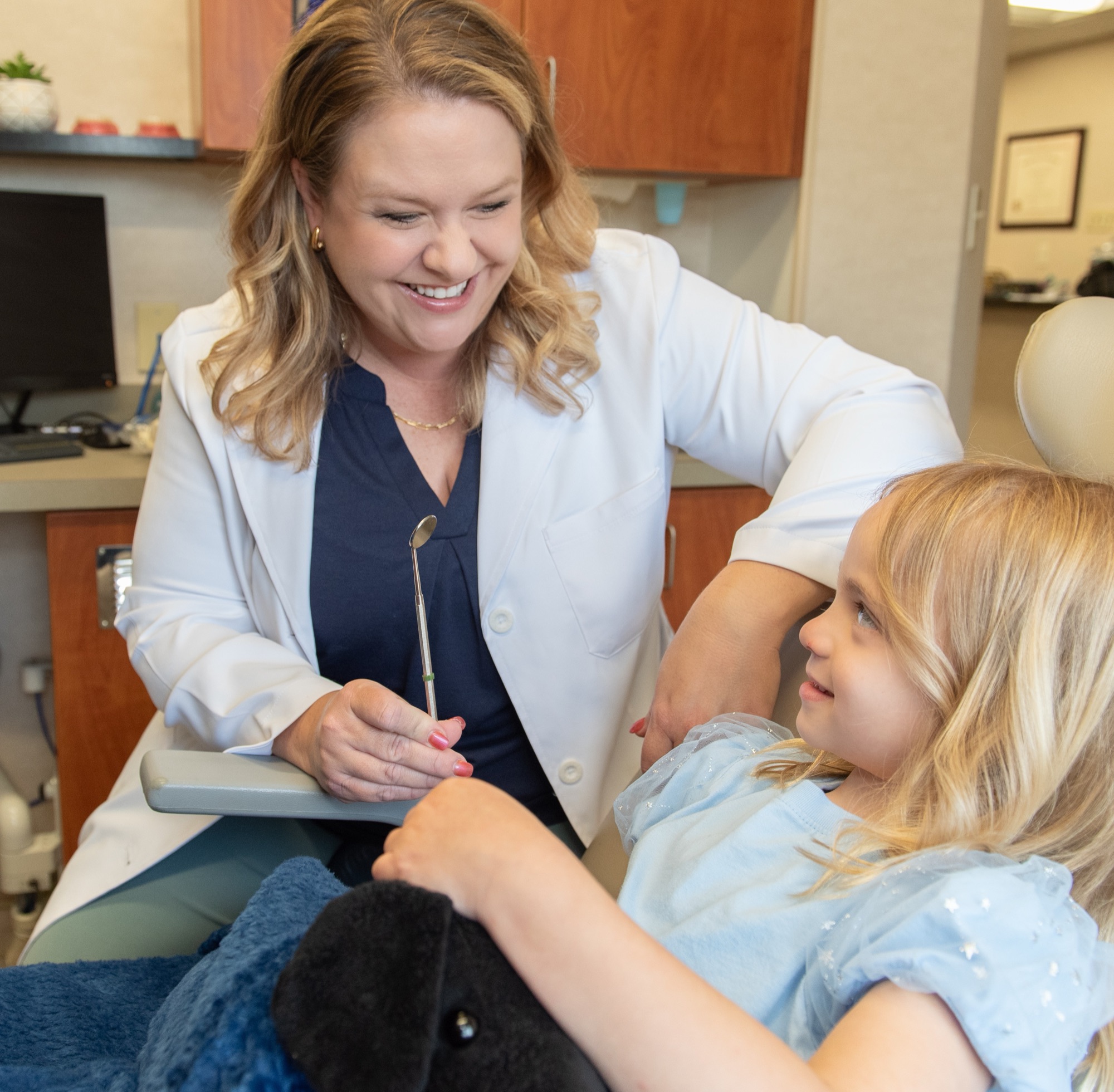
Your child's first visit
The aim is a calm, no-stress appointment. Nothing happens without being shown and explained first, and you are in the room throughout.
1. Meeting the room
The chair goes up and down, which most children enjoy. The mirror and the little air blower get demonstrated on a finger first, so nothing arrives in a mouth unannounced.
2. Counting teeth
A look at every tooth, the gums, the tongue, and how the bite is coming together, counting out loud as she goes because most children want to know the number.
3. A polish, if they are up for it
A soft spinning brush and flavoured paste, followed by fluoride. If your child is not ready today, we leave it. A visit that ends well is worth more than a visit that gets everything done.
4. Brushing, practised rather than described
Children hear brushing instructions from their parents constantly and from a dentist rarely, which is why the second one tends to land. We hand over a brush and have them show us, then correct the angle.
5. What we saw
A plain summary for you: anything to watch, anything to change at home, whether sealants are due, and when to come back. Usually six months.
What we look after as they grow
A child's mouth changes constantly for about twelve years, so children's dentistry is as much about watching a sequence as it is about treating anything.
Two are worth explaining. Space maintenance matters because a baby tooth holds a place for the adult tooth beneath it; lose one early and the neighbouring teeth drift in, leaving the adult tooth nowhere to go. A small appliance holds the gap and often prevents a much longer orthodontic problem later.
Preventive orthodontics is mostly watching. Dr. Lokitis tracks how the jaws are growing and how the adult teeth are arriving, and flags crowding or a crossbite while the options are still open. She is a general and family dentist rather than a specialist in children's dentistry or orthodontics, so some of what she notices is best handled by an orthodontist — and she will say so.
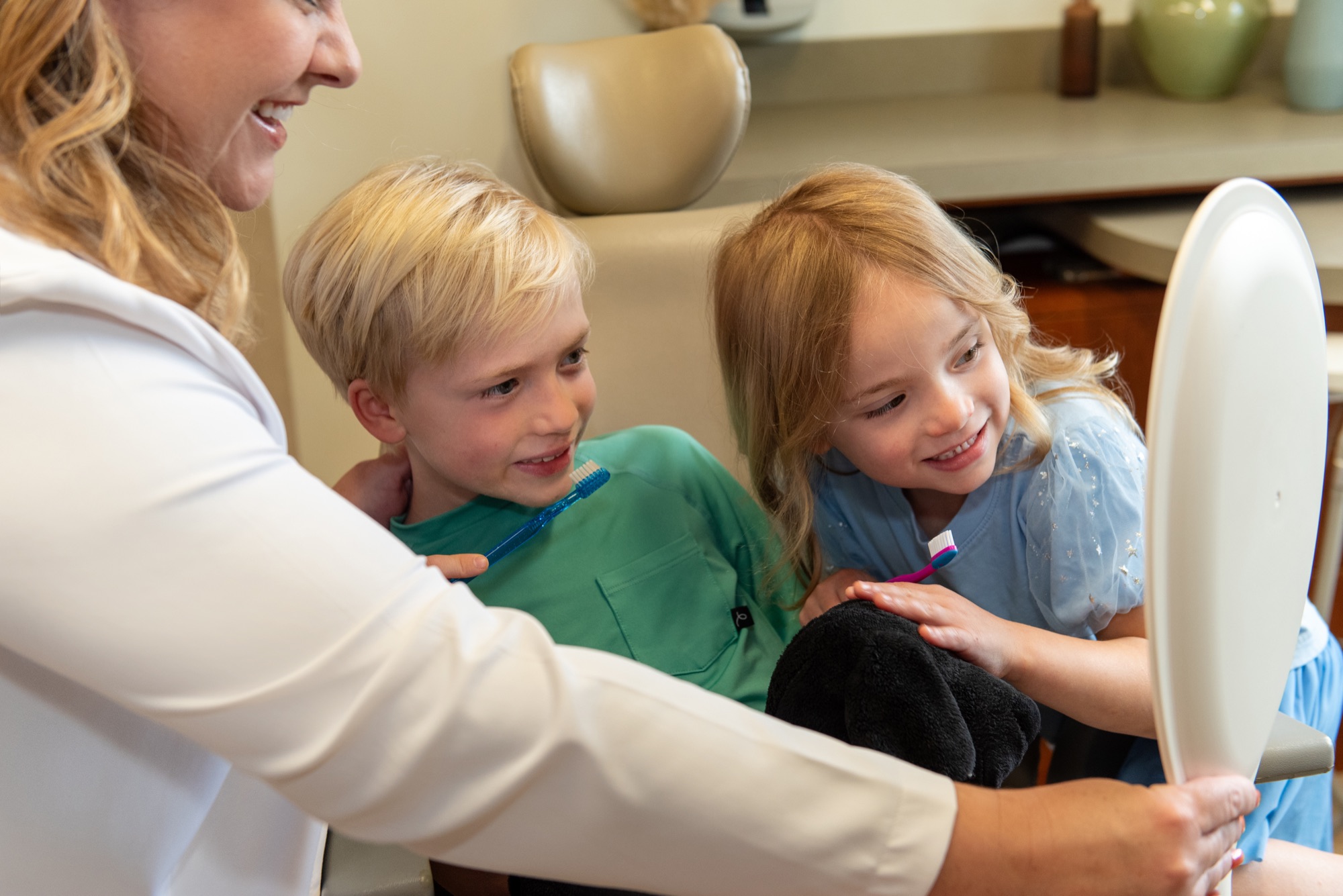
Older children and teenagers
The teenage years are quietly the highest-risk stretch. The second permanent molars arrive around twelve with deep grooves in them, brushing standards slip, sports drinks and snacking increase, and parental supervision tapers off. A good deal of the decay we treat in adults started in that window.
The useful work is unglamorous: sealing those new molars, holding the six-month rhythm, being honest about sugary drinks without turning it into a lecture, and fitting a proper mouthguard once contact sport gets serious. A custom guard is a different object from a boil-and-bite one, and a knocked-out front tooth at fourteen is a lifetime of dentistry.
Teenagers also start caring how their teeth look, which is a lever worth using. If crowding is the concern, clear aligners are worth a conversation once growth is far enough along, and Dr. Lokitis will tell you plainly whether a case belongs here or with an orthodontist. If your teenager has drifted out of the habit of coming in, no one here will make anything of it.
If your child is nervous
Tell us when you book, and tell us why if you know. A child who had a bad experience elsewhere needs a different appointment from one who is simply new to it, and both are manageable with enough time set aside.
What helps: showing every instrument before it is used, narrating what comes next, and letting the child stop things with an agreed hand signal, which restores a sense of control more effectively than reassurance does. A blanket, neck pillow, stress ball and fidget toys are on the comfort menu, and noise-cancelling headphones with music are often the most effective item on it. Nitrous oxide is available for an additional fee where warranted. If today is not the day, we stop — a short visit that ended well makes the next one easier.
Two things parents can do. Avoid promising it will not hurt, which sets up a claim you cannot keep; say instead that we will tell them everything before we do it, which is true. And book your own checkup alongside theirs. A parent who is plainly relaxed in the chair teaches more than any explanation.
We see whole families here, which is much of the point of a general practice. Our office is on Old Courthouse Road in Vienna, minutes from Tysons Corner and convenient to McLean, Dunn Loring, Merrifield, and Falls Church, open Monday through Thursday. The early Thursday and later Tuesday appointments fit best around a school day. Book a first visit or call (703) 893-1603.

Frequently Asked Questions
When should my child first see a dentist? expand_more
Around their first birthday is the usual recommendation. There is very little to examine at that age, which is exactly why it works — nothing needs doing, so the chair becomes somewhere ordinary before it can become somewhere frightening. If that window has passed, it genuinely does not matter. We happily accept older children who have never been.
What happens at a first visit? expand_more
Less than parents expect. The chair goes up and down, instruments are demonstrated on a finger before they go near a mouth, Dr. Lokitis counts the teeth out loud, and there is a polish and fluoride if your child is willing. Much of it is a conversation with you about brushing, cups, and diet. A very young child often sits on your lap rather than in the chair.
My child is nervous. How do you handle that? expand_more
Tell us when you book so the time is there. Everything is shown before it is used, we narrate what comes next, and your child can stop us with an agreed hand signal — some control helps more than reassurance does. A blanket, neck pillow, stress ball, fidget toys, and noise-cancelling headphones are available, and nitrous oxide can be arranged for an additional fee. If today is not the day, we stop and try again.
Do baby teeth really need fillings? expand_more
Often, yes. Decay in a baby tooth can reach the nerve and cause real pain or infection, and the adult tooth forming underneath can be affected. Baby molars also stay until around age twelve, which is a long time to leave a hole in one. Where a tooth is about to come out anyway, Dr. Lokitis will say so rather than treat it.
Can I stay in the room with my child? expand_more
Yes. You are welcome to stay throughout, and with younger children we would rather you did. For a very anxious child of any age, having a parent visible is usually the thing that makes the appointment possible.
When should we think about braces or aligners? expand_more
Dr. Lokitis watches how the jaws are growing and how the adult teeth are arriving from early on, and will flag crowding or a bite problem while the options are still open. Some cases are best handled by an orthodontist and she will tell you when that is so. For older teenagers with straightforward crowding, clear aligners are worth a conversation.
How do I stop my child getting cavities? expand_more
Brushing twice a day with a fluoride toothpaste, with an adult doing or checking it until about age eight. Something between the teeth once a day as soon as they touch. And the part most parents underrate: how often sugar appears rather than how much — a sweet drink sipped across an afternoon does far more damage than the same drink finished at once. Sealants close the gap on back teeth that brushing cannot reach.
Related Services
Ready to Get Started?
Contact our Vienna office to schedule your appointment with Dr. Julia Lokitis.