Checkup & Cleaning
Keeping your smile healthy and beautiful is our number one priority, and a checkup and cleaning is where most of that work happens. Two visits a year, an hour or so each, catching things while they are still small — at our Vienna office on Old Courthouse Road, minutes from Tysons Corner.
Why twice a year is the number
Plaque is soft and comes off with a toothbrush. Left alone for a few days it hardens into calculus, which does not, no matter how well you brush — it has to be removed with instruments. Six months is roughly how long it takes for that hardened deposit to build back to the point where it starts irritating the gum line, which is why the interval is what it is rather than an arbitrary habit.
The exam that goes with the cleaning matters just as much. Early decay does not hurt. Early gum disease does not hurt either — the first sign is usually a little blood in the sink, which is easy to explain away. Both are straightforward to deal with at that stage and considerably less so later, and a routine visit is how the gap between those two states gets closed.
Some people need a shorter interval. A history of gum disease, a dry mouth from medication, diabetes, smoking, or simply a mouth that builds calculus quickly all shorten it. Dr. Lokitis will recommend a schedule that fits you rather than apply one by default.
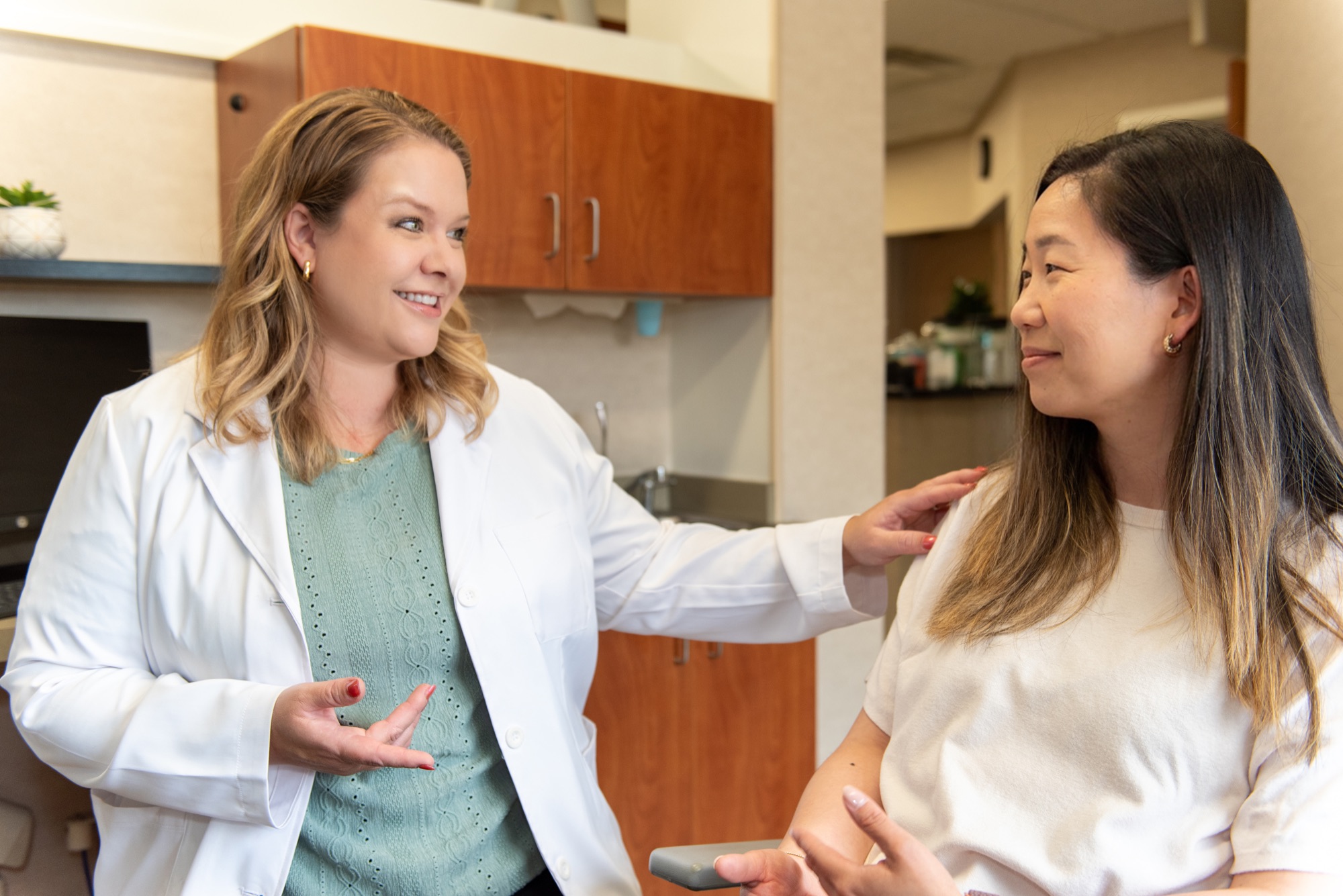
What happens during a checkup and cleaning
About an hour, in five parts. None of it is a surprise, and you can ask us to stop at any point.
1. Imaging, when it is due
Not every visit needs X-rays. Bitewings come round roughly once a year for most adults, more often if you are prone to decay, and a panoramic image every three to five years. We take them when they will tell us something, not on a timer.
2. The cleaning itself
Hardened deposit is removed from above and just below the gum line, between the teeth as well as across the fronts, and the surfaces are then polished. Expect vibration, water, and some pressure. Where a spot is tender we can numb it rather than have you sit through it.
3. Fluoride
A fluoride treatment at the end helps remineralise enamel where it has begun to soften but has not yet broken down. It is quick, and it is one of the few genuinely cheap interventions in dentistry.
4. Screening
Dr. Lokitis checks for decay, for signs of infection, and for gum and bone changes, and carries out an oral cancer screening of the soft tissues. That last one takes a couple of minutes and is part of a routine visit, not an add-on.
5. What we found, and what we would do
Custom recommendations, in plain language: what needs attention now, what is worth watching, and what needs nothing. If treatment is needed you will know what it costs before it is booked. No upselling, no overtreatment.
Seeing what we see
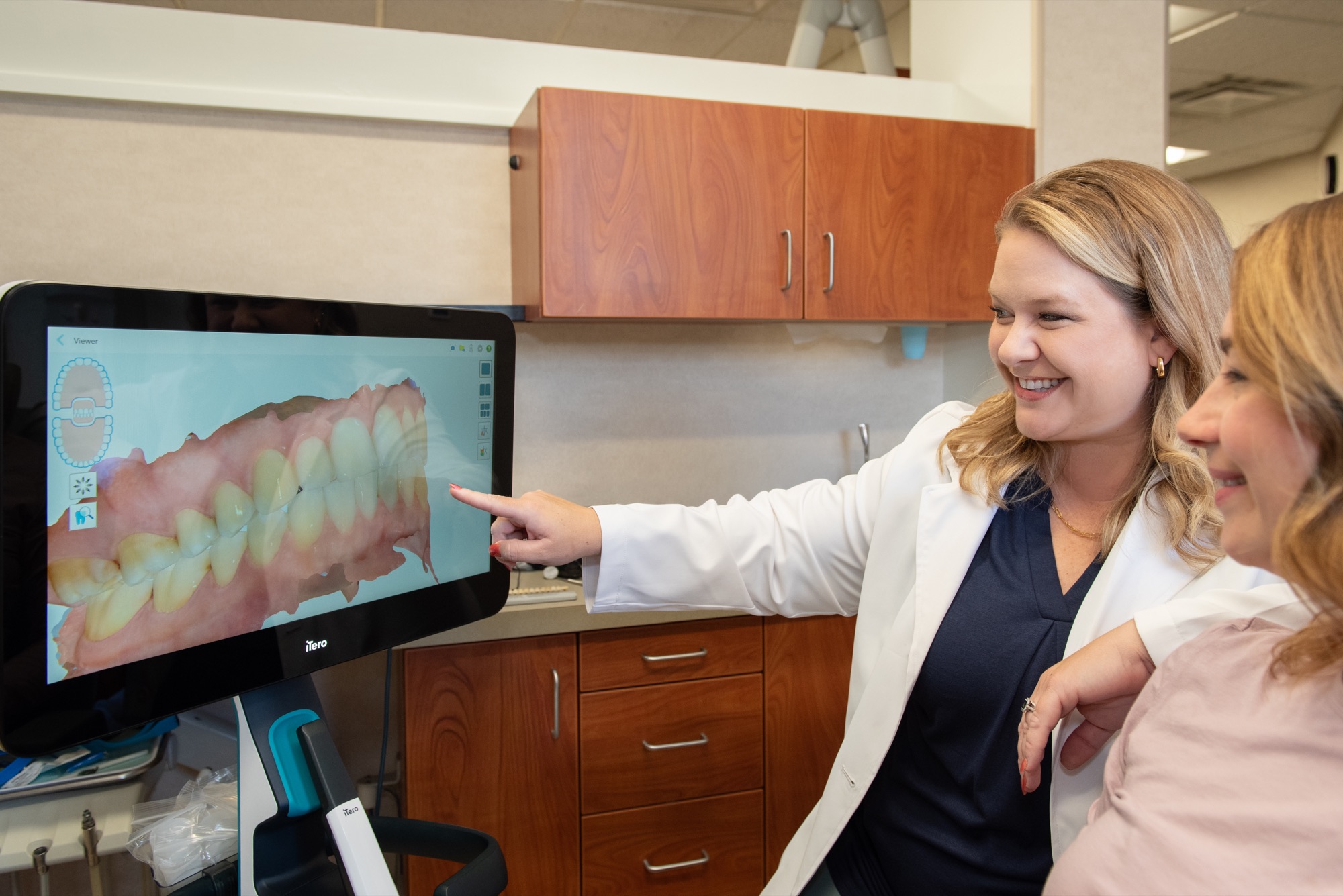
Being told your gums are receding on the lower left is not very useful. Looking at it is. Our iTero scanner builds a 3D model of your mouth in three to five minutes with no radiation, and it is free to every patient here. Because it is dated, this year's scan can be set beside the one from two years ago, which turns slow changes — wear, recession, a tooth drifting — into something you can actually see rather than something you have to take on trust.
Laser bacterial reduction with the Picasso Laser
For some patients we offer laser bacterial reduction using the Picasso Laser by AMD Lasers. It is a painless treatment that targets and significantly reduces bacteria beneath the gums, and it is generally worth discussing if you have food traps between teeth, persistent bad breath, gums that bleed when you brush, or gingivitis.
Two honest notes. It carries an additional fee, so it is a choice rather than something folded into a routine cleaning — we will tell you the cost before we do it. And it works alongside the cleaning rather than instead of it: reducing bacteria helps the gum tissue settle, but the deposit still has to come off. If your gums have moved beyond inflammation into periodontal disease, that is a longer conversation with a different treatment plan.
The other 363 days
Two cleanings a year is maintenance on top of what you do at home, not a substitute for it. Twice a day, two minutes, a soft brush angled gently into the gum line rather than scrubbed across it. Something between the teeth once a day — floss, or the small interdental brushes, which most people find easier and therefore actually use. A brush reaches perhaps three of a tooth's five surfaces; the two it misses are where most adult decay starts.
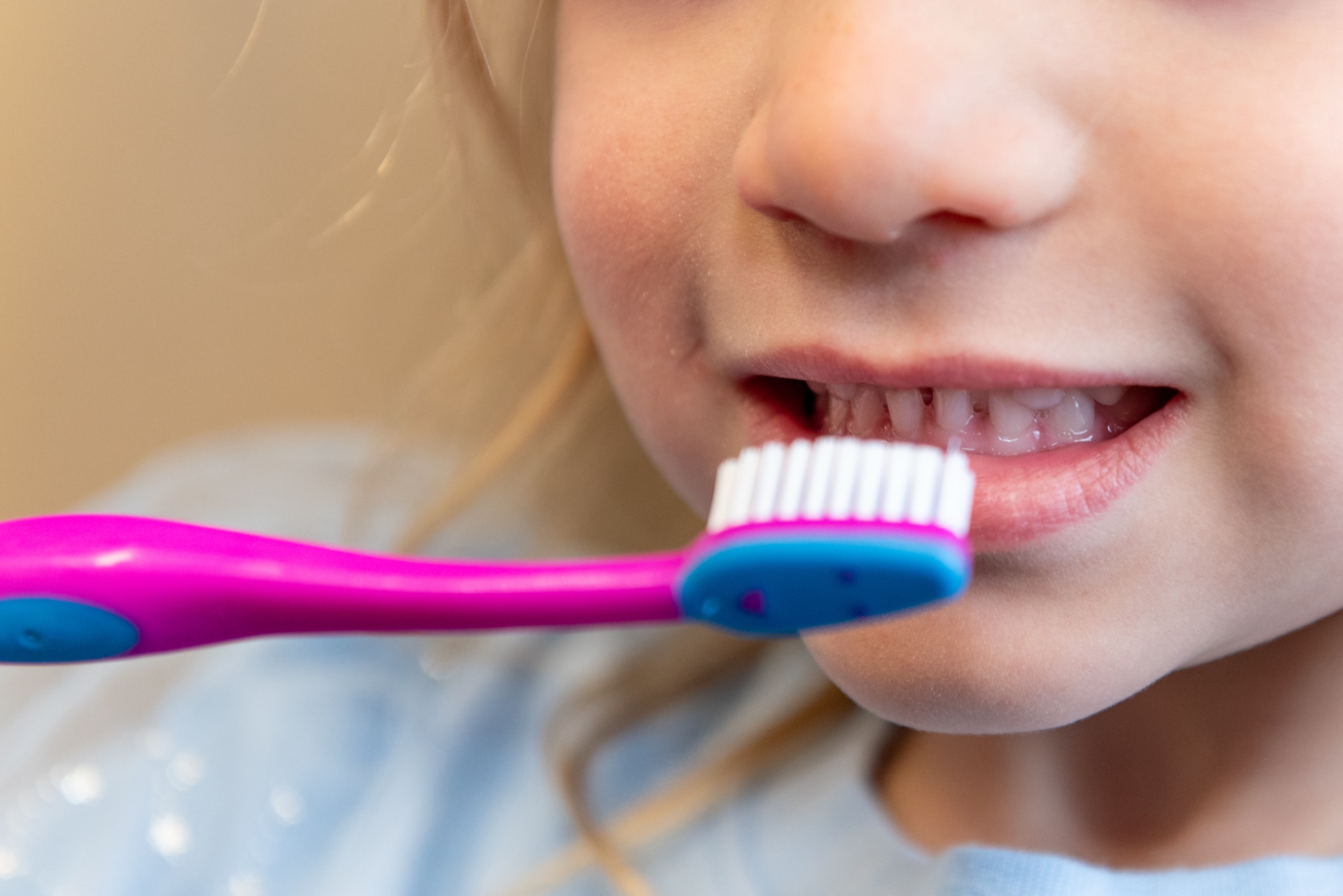
Habits are easier to set early, which is why we coach children through brushing at their visits rather than just handing over a toothbrush. Family appointments can usually be arranged together, and children's dentistry and sealants cover that side in more detail.
We also welcome nervous and anxious patients, and mean that practically rather than as reassurance — tell us when you book and the time will be there. We are on Old Courthouse Road in Vienna, minutes from Tysons Corner, open Monday through Thursday. Book online or call (703) 893-1603.
Frequently Asked Questions
How often should I have my teeth cleaned? expand_more
Twice a year suits most people. Some do better on a three or four month interval — a history of gum disease, a dry mouth caused by medication, diabetes, smoking, or simply a mouth that builds calculus fast. Dr. Lokitis will recommend an interval based on what she actually sees rather than applying a default.
Does a cleaning hurt? expand_more
Most people find it uncomfortable rather than painful — vibration, water, and some pressure. It is more tender if the gums are already inflamed, which tends to improve once they settle after a visit or two. If a particular area is sore we can numb it. There is no reason to sit through something you are gripping the armrest for.
Why do my gums bleed when I brush? expand_more
Healthy gums generally do not bleed, so bleeding usually means inflammation from plaque sitting at the gum line. The instinct is to brush that area less, which makes it worse. Cleaning it more gently but more thoroughly often settles it within a couple of weeks. If it persists, have us look — bleeding is the earliest sign of gum disease and the easiest stage at which to deal with it.
What is laser bacterial reduction, and do I need it? expand_more
It is a painless treatment with the Picasso Laser that targets and significantly reduces bacteria beneath the gums. We tend to suggest it for food traps, persistent bad breath, bleeding gums, or gingivitis. It carries an additional fee and is not part of a standard cleaning, so it is your call — we will tell you the cost first.
Do I need X-rays at every cleaning? expand_more
No. Bitewings come round about once a year for most adults, more often if you are prone to decay, and a panoramic image every three to five years. If you have recent images from another dentist, tell us before your appointment and we will try to request them rather than repeat them.
I get anxious at the dentist. What can you do? expand_more
Say so when you book, so the time is there. We can talk through each step before it happens or leave the narration out entirely, whichever helps. A blanket, a neck pillow, a stress ball, and noise-cancelling headphones are available, nitrous oxide can be arranged for an additional fee, and you can agree a hand signal with us that stops everything immediately.
Will a cleaning make my teeth whiter? expand_more
A cleaning removes surface staining from coffee, tea, and tobacco, so teeth often look brighter afterwards. That is not the same as changing the underlying shade of the enamel, which is what whitening does. If the color rather than the staining is what bothers you, see teeth whitening — and it is worth having the cleaning first, so the shade is judged fairly.
Ready to Get Started?
Contact our Vienna office to schedule your appointment with Dr. Julia Lokitis.