Tooth Extractions
Removing a tooth is the last option here, not the first. Where a tooth genuinely cannot be saved, Dr. Julia Lokitis performs the extraction in our own Vienna office — minutes from Tysons Corner — under local anesthetic, with nitrous oxide available and the replacement planned in the same conversation.
Removing a tooth is the last option, not the first
A natural tooth holds the bone around it and keeps its neighbours from drifting, so the first pass is always whether it can be kept — with a filling, a crown, or root canal therapy where the nerve is involved.
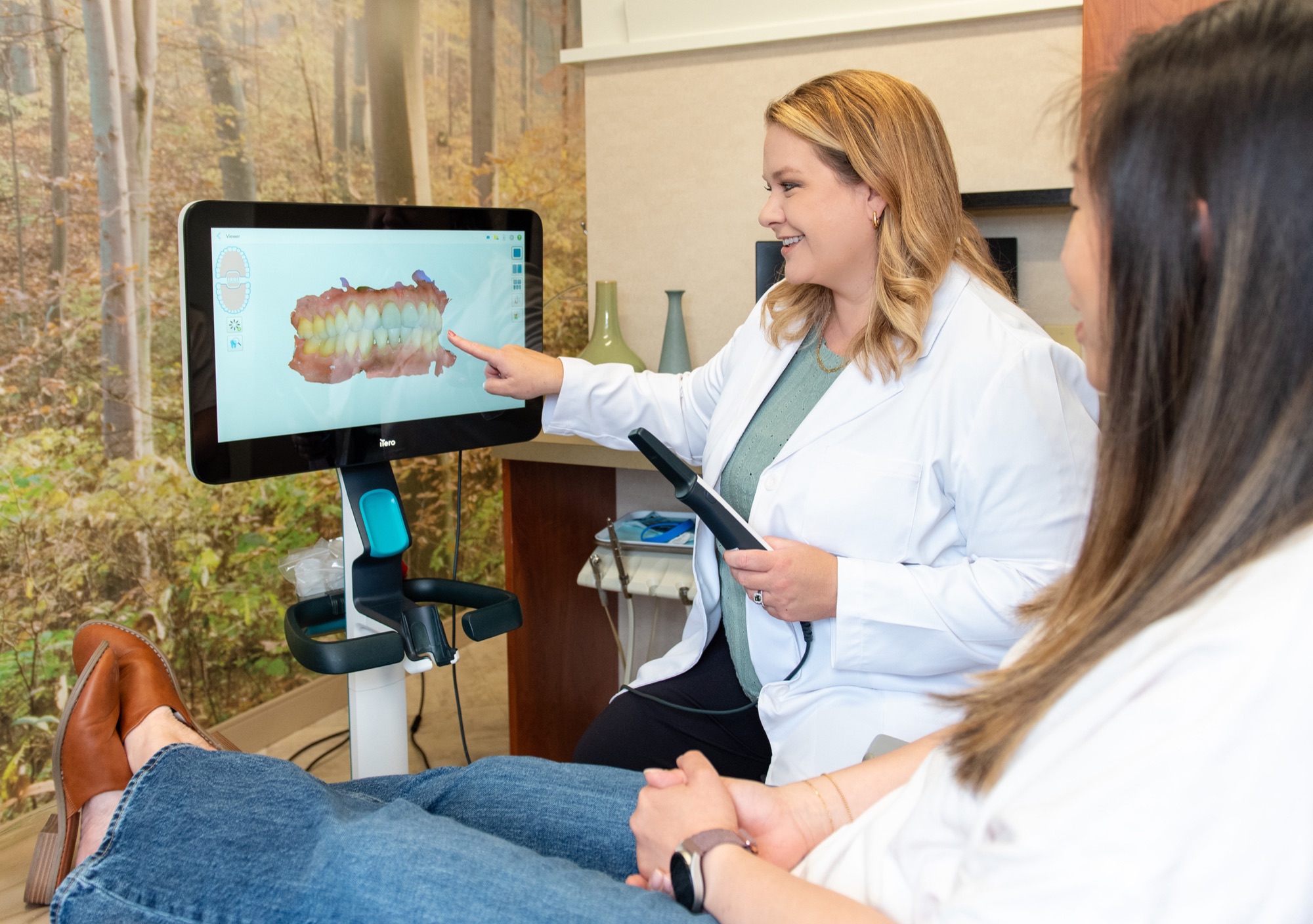
Sometimes the answer is no. A tooth split below the gumline, a root fractured by trauma, or an infection that keeps returning is better out than held on to. You will see the tooth, the X-ray, and the reasoning on screen rather than being asked to take a verdict on trust.
Why a tooth may need to come out
The situations that most often lead to an extraction at our Vienna office.
For a third molar, see wisdom teeth removal. Where a tooth has loosened because the bone around it has been lost, the extraction is a symptom and periodontal care is what stops it happening next door. Either way it sits inside our oral surgery care.

What the appointment is actually like
Most of the dread comes from not knowing the shape of the visit. We take an X-ray, look at the root and the bone around it, and Dr. Lokitis explains what she is going to do before she picks anything up.
The area is numbed and we wait until it is genuinely numb rather than nearly numb. Teeth are loosened before they are lifted, so most people report pressure rather than pain; if anything sharp gets through, say so and we stop and add more. Afterwards the socket is cleaned, a graft placed if that was the plan, and you leave with written aftercare and a number to call.
Anesthetic and comfort options
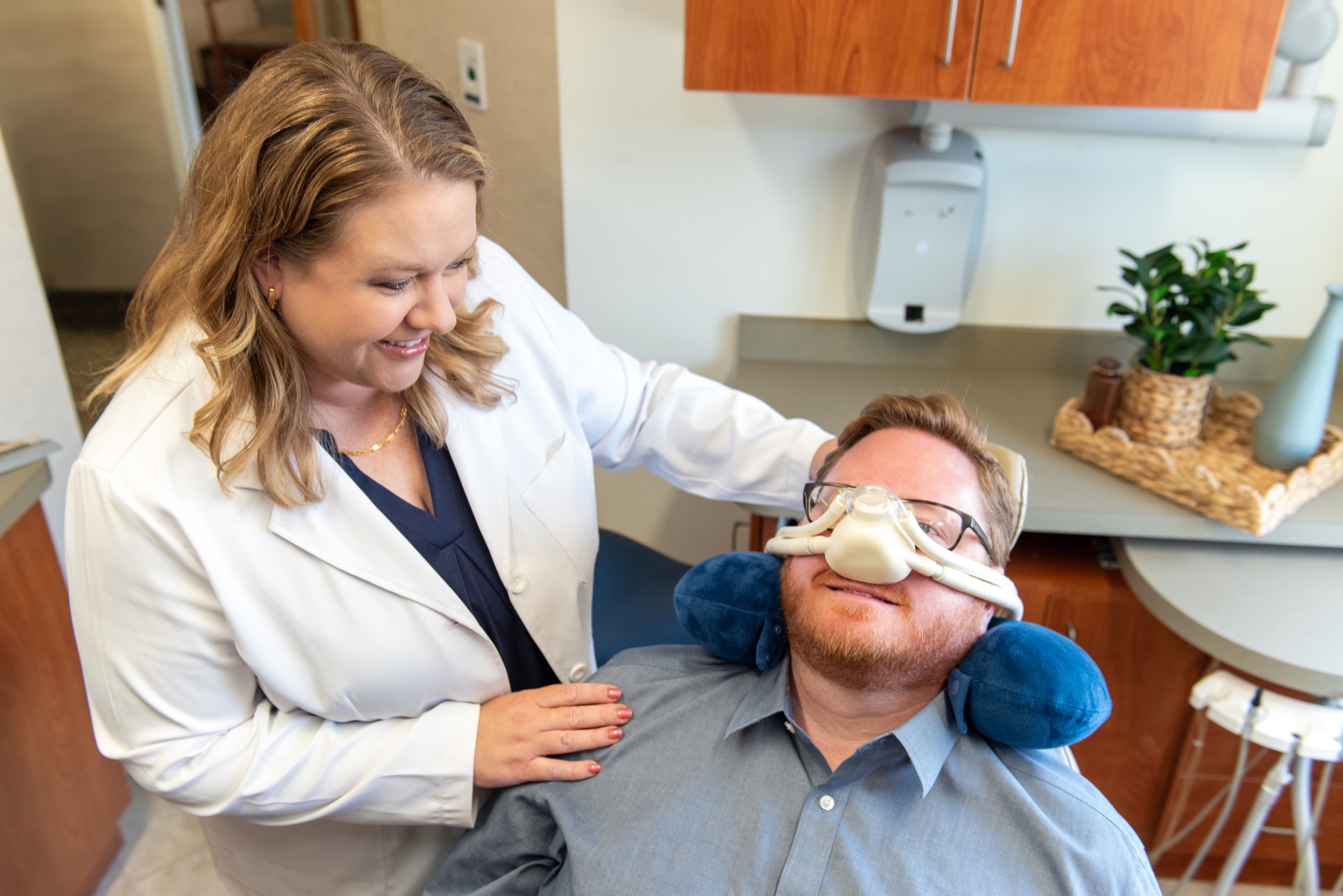
Every extraction here is done under local anesthetic. Nitrous oxide — laughing gas — is available for an additional fee: breathed through a small nasal hood, it helps you relax without putting you to sleep and clears quickly once switched off, so in most cases you can drive yourself home.
Nitrous oxide is the sedation we provide; where a case genuinely calls for IV sedation, Dr. Lokitis arranges a referral. Alongside it the practice keeps a comfort menu: a soft or weighted blanket, a neck pillow, lumbar support, a stress ball, noise-cancelling headphones with music. Dental anxiety is a reason to tell us, not a reason to put the appointment off.
Healing and home care
A clot forms in the socket and the site heals underneath it. Nearly everything here exists to protect that clot for the first day or two.
Bone grafting, and planning the gap
The bone that holds a tooth exists because the tooth is there, so the ridge begins to narrow once it is gone. A graft placed into the socket at the same appointment helps preserve the natural bone structure and supports future dental implants. It is not automatic: if the plan is a bridge, a denture, or a gap you will not be filling, the calculation changes.
Dr. Julia Lokitis earned her DDS from the University of Maryland, Baltimore with special honors in prosthodontics, and completed a one-year general practice residency at York Hospital in Pennsylvania with advanced training in oral surgery, implant surgery, and dental trauma management. She has spent over 15 years in general practice. Prosthodontics is the discipline of replacing teeth and making a bite work, which is why an extraction here is planned with the replacement in view.
If a tooth has broken or pain is keeping you awake, call (703) 893-1603 rather than waiting, and read emergency dentistry for what counts as urgent. Our Vienna office, minutes from Tysons Corner, is open Monday 8:30 to 5:00, Tuesday 9:30 to 6:00, Wednesday 8:30 to 5:00, and Thursday 7:30 to 2:00, and closed Friday through Sunday. Over a weekend, swelling that is spreading or affecting your eye, swallowing, or breathing belongs in a hospital emergency room.
Frequently Asked Questions
Does having a tooth pulled hurt? expand_more
The area is fully numbed with local anesthetic first. Most people notice pressure rather than pain, because a tooth is loosened before it is lifted out. If anything sharp gets through, tell us and we add more. Afterwards, expect soreness for a couple of days that over-the-counter medication typically handles.
How long does it take to heal after an extraction? expand_more
The gum surface usually closes over within a couple of weeks, and most people feel noticeably better after two or three days. The bone underneath takes considerably longer to fill in, which is why implant timing is planned separately. Healing varies, so treat any timeline as a range.
What is dry socket, and how do I avoid it? expand_more
A clot forms in the socket and protects it while it heals; dry socket is what happens when that clot is lost early. The usual causes are suction and smoking, which is why we ask you to skip straws and avoid smoking for one to three days. Pain that eases and then sharpens is the signature. Call us.
Can I go back to work the same day? expand_more
Many people do after a straightforward single extraction, particularly if the rest of the day is desk work. Your lip and tongue stay numb for a few hours, so keep the afternoon light. If several teeth are coming out, or you are having nitrous oxide, plan on a quieter day.
Do I have to replace the tooth afterwards? expand_more
Not always, and it depends where the tooth was. A gap toward the back changes how you chew and lets neighbouring teeth drift, so replacement is usually the better long-term call. An implant, a bridge, or a denture are the three routes, and the decision affects whether we graft on the day.
What sedation is available for an extraction? expand_more
Local anesthetic is standard. Beyond that we offer nitrous oxide, also called laughing gas, for an additional fee. It is breathed through a nasal hood, takes the edge off without putting you to sleep, and clears quickly. Nitrous oxide is the sedation available in this office; where a case genuinely calls for IV sedation, Dr. Lokitis arranges a referral.
My tooth just broke and it is painful. Should I come in today? expand_more
Call us and describe it. A broken tooth with pain, swelling, or a bad taste is worth seeing quickly, partly because early treatment sometimes saves a tooth that waiting would cost. We are closed Friday through Sunday, so if swelling spreads over a weekend, go to a hospital emergency room.
A straight answer about the tooth.
A consultation is an examination, an X-ray, and an honest verdict on whether the tooth can be kept. Contact our Vienna office, minutes from Tysons Corner, or call if it cannot wait.