Oral Cancer Screenings
An oral cancer screening is a few quiet minutes at the end of a routine exam: a careful look at the soft tissues of your mouth, a check of the neck and jaw, and a pass with a fluorescence light. It is painless and quick, and it happens as part of a normal checkup at our Vienna office, minutes from Tysons Corner.
Why this is part of an ordinary visit
Nobody books an appointment for an oral cancer screening. It is included in a routine exam precisely because of that: the people who most benefit from being looked at are the ones with no reason to think they need it. Dr. Lokitis sees the inside of your mouth twice a year, in good light, with a record of how it looked last time — which makes a dental visit the natural place for this to happen.
The reason it is worth doing at all is timing. Oral cancer is generally 80 to 90 percent curable when it is caught early, and early changes are typically painless and small enough to be easy to overlook. A patch or a sore that has not resolved is not usually anything serious — most are not — but the only way to know which is which is to have someone look, and then look again.
It is worth naming what a screening is and is not. It finds things that warrant a closer look; it does not diagnose anything. If Dr. Lokitis sees something she is unsure about, the honest answer is usually to recheck it in two weeks, because most ordinary irritations resolve in that time. If it has not, she will refer you to a physician.
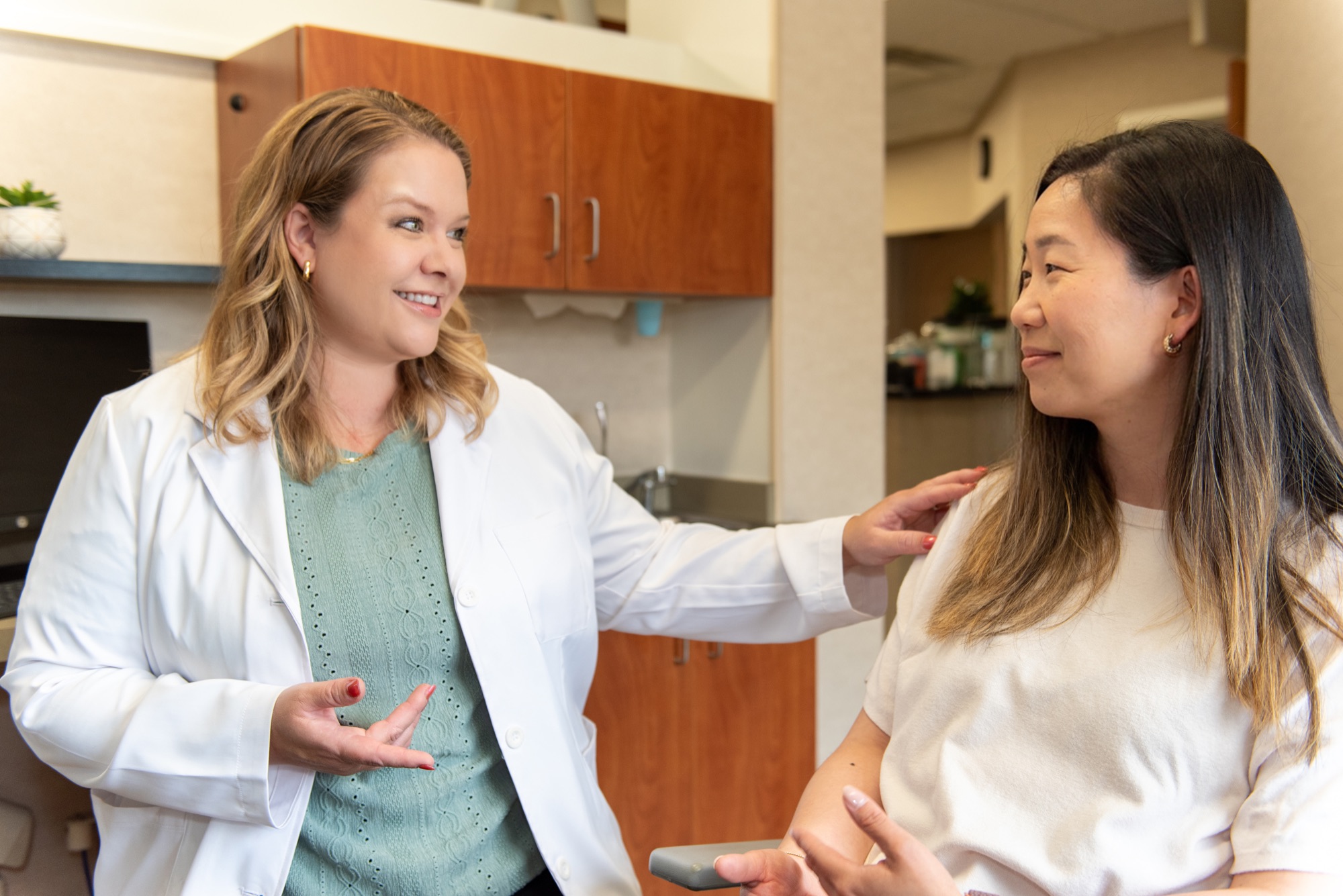
What to expect
Painless and quick — a few minutes, no instruments in the usual sense, nothing to recover from. This is what it consists of.
1. A look at the soft tissues
The lips, the inside of the cheeks, the gums, the roof of the mouth, and the back of the throat. Our hygienists and Dr. Lokitis examine the soft tissue for abnormalities — a patch of white or red, a rough area, a change in texture, anything asymmetrical.
2. The tongue and the floor of the mouth
You will be asked to put your tongue out, then move it side to side, and it will be held briefly in gauze so the sides and underside can be seen properly. The floor of the mouth underneath is checked too. These are the areas people never see themselves, and they matter more than the surfaces that are easy to look at.
3. Neck and jaw
A gentle feel along the jawline, under the chin, and down the sides of the neck, checking the lymph nodes for anything firm or enlarged. It takes about thirty seconds and is entirely painless.
4. Fluorescence and imaging
A pass with the Oral ID light, described below, and where relevant a look at your X-rays, which assist in detecting changes deeper in the bone that no visual examination could reach.
5. What she found
Usually nothing of note, and you will be told that plainly. If there is something, you will hear what it is, what she thinks it most likely is, and what happens next — typically a recheck in two weeks or a referral to your physician.
Oral ID by Forward Science
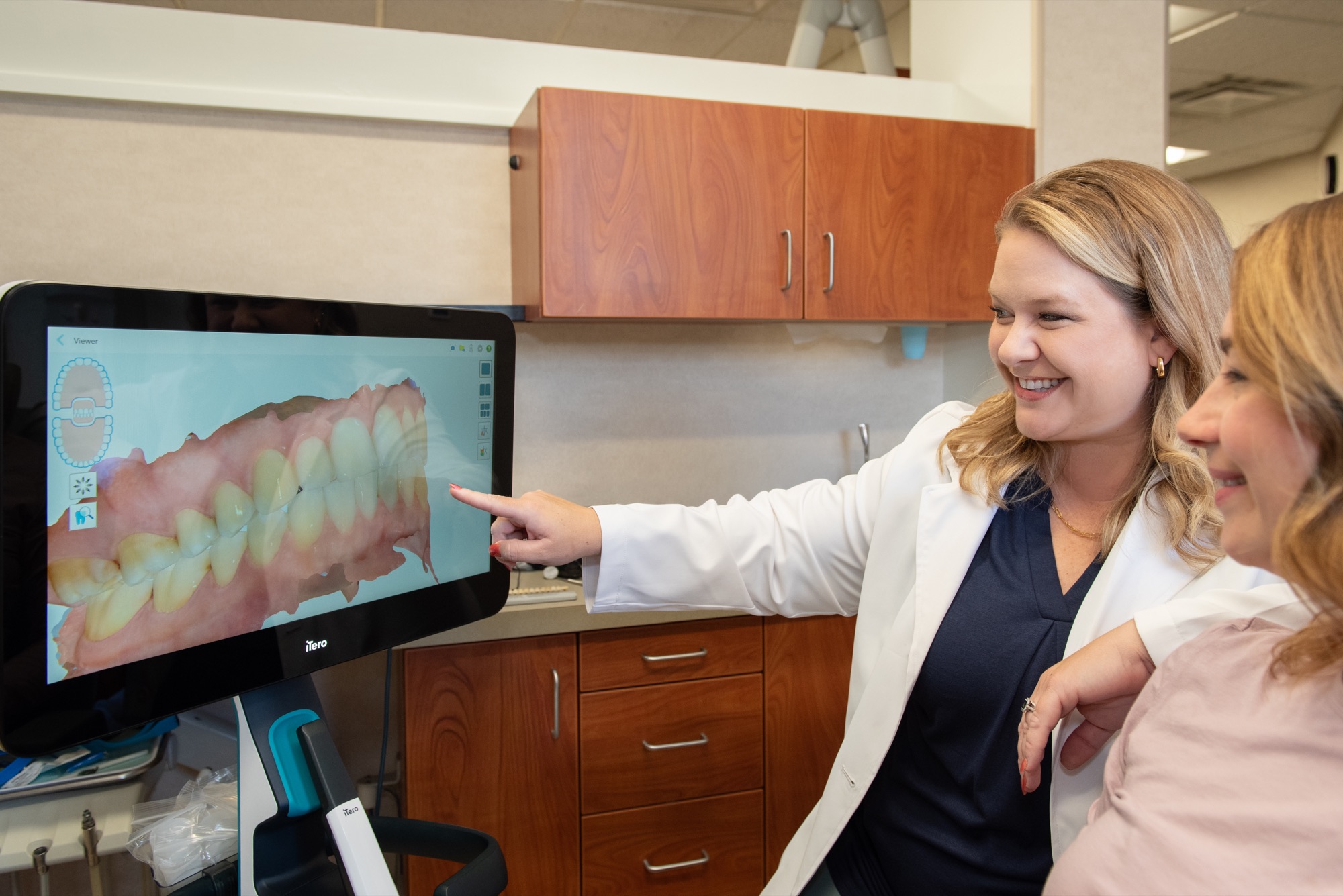
Alongside the visual examination we use Oral ID, which applies fluorescence technology to help detect oral mucosal abnormalities. In practice it is a handheld light and a pair of tinted glasses. Healthy tissue and altered tissue fluoresce differently under it, so an area that looks unremarkable in ordinary light can stand out as worth a second look.
It adds perhaps a minute, and involves no dye, no rinse, and no discomfort. It widens the net a little — a second way of looking at the same tissue. What it does not do is give an answer: fluorescence flags areas, and people and pathology reports diagnose them. An area that lights up is far more often an ordinary irritation than anything else, which is why the next step is a recheck rather than alarm.
Risk factors, and the reason we screen everyone
Some things are known to raise risk. They are worth knowing without being worth worrying over.
Here is the figure that explains our approach: nearly 27 percent of people diagnosed with the disease are not alcohol or tobacco users. More than a quarter of cases sit outside the classic risk profile entirely. Screening only the people who look high-risk would therefore miss a substantial share of what there is to find, which is why the check is part of every routine exam here rather than something offered selectively.
If you do smoke or chew tobacco, or drink regularly, it is worth telling us plainly rather than rounding down. It does not change how you are treated. It changes how closely we look and how often.
What to notice between visits
Six months is a long time, and you look in your own mouth more often than we do. The thing to hold on to is the two-week rule: ordinary irritations — a bitten cheek, a sore from a sharp edge, a burn — settle within about two weeks. Anything that has not is worth a phone call, not because it is likely to be serious but because that is when looking becomes worthwhile.
Things worth mentioning: a sore or ulcer that has not healed in two weeks, a white or red patch that stays put, a lump or thickened area anywhere in the mouth or neck, persistent hoarseness or a changed voice, difficulty or discomfort swallowing, numbness in the lip or tongue, a tooth that has become loose with no obvious reason, or bleeding that has no cause you can identify. Most of these turn out to be something ordinary. Say so anyway.
You do not need to wait for a scheduled cleaning, and a check of this kind is a short appointment. Call (703) 893-1603 or get in touch and describe it on the phone rather than in a form. We are on Old Courthouse Road in Vienna, minutes from Tysons Corner, open Monday through Thursday.

Frequently Asked Questions
Is an oral cancer screening included in a regular checkup? expand_more
Yes. It is part of a routine examination here rather than something you have to request or pay extra for. Dr. Lokitis carries it out alongside the rest of the exam, and it adds only a few minutes.
Does the screening hurt? expand_more
No. Screenings are painless and quick. You will be asked to move your tongue about, your tongue will be held briefly in gauze so its sides and underside can be seen, and there is some gentle pressure along the jaw and neck. Nothing is injected, cut, or scraped.
How long does it take? expand_more
A few minutes as part of a longer appointment. The Oral ID fluorescence pass adds about a minute to that.
What is Oral ID? expand_more
Oral ID by Forward Science uses fluorescence technology to help detect oral mucosal abnormalities. In practice it is a handheld light and tinted glasses: healthy and altered tissue fluoresce differently, so an area that looks unremarkable in ordinary light may stand out. There is no dye and no rinse, and it does not diagnose anything on its own — it flags areas for a closer look.
I do not smoke or drink. Do I still need screening? expand_more
Yes, and this is the reason we screen everyone. Nearly 27 percent of people diagnosed with the disease are not alcohol or tobacco users, so more than a quarter of cases fall outside the classic risk profile. Screening only those who look high-risk would miss a substantial share of what is there to find.
What happens if you find something? expand_more
You will be told what she has seen and what she thinks it most likely is. Because the great majority of findings are ordinary irritations that resolve on their own, the usual next step is a recheck in about two weeks. If it has not changed, Dr. Lokitis will refer you to a physician. A screening identifies things worth investigating; it does not diagnose them.
What should I do if I notice a sore that is not healing? expand_more
Call us rather than wait for your next cleaning. The rule of thumb is two weeks: ordinary sores settle within that time, so anything still there afterwards is worth looking at. It is a short appointment, and the answer is usually reassuring.
Related Services
Ready to Get Started?
Contact our Vienna office to schedule your appointment with Dr. Julia Lokitis.