Inlays & Onlays
An inlay or onlay is a custom-made restoration that fits into or over the chewing surface of a back tooth — the middle ground between a filling and a crown, and the option that keeps more of your own tooth. Made for us by a dental laboratory and fitted at our Vienna office, minutes from Tysons Corner.
The middle ground between a filling and a crown
An inlay or an onlay is a custom-made restoration, made outside the mouth and cemented into place as one solid piece. It is the answer for a tooth where too much has been lost for a filling to be reliable, but where a crown would mean sacrificing sound tooth that does not need to go.
The difference between the two is simply how much they cover. An inlay repairs decay within the ridges of the chewing surface, filling the valley between the cusps. An onlay extends over one or more of the cusps themselves, which is why it is sometimes called a partial crown.
Both are made from a record of your own tooth by a dental laboratory, and both are cemented in as a single unit rather than built up inside the tooth. That is the structural difference from a large filling, and it is why they hold up better in a heavily loaded back tooth.
Materials
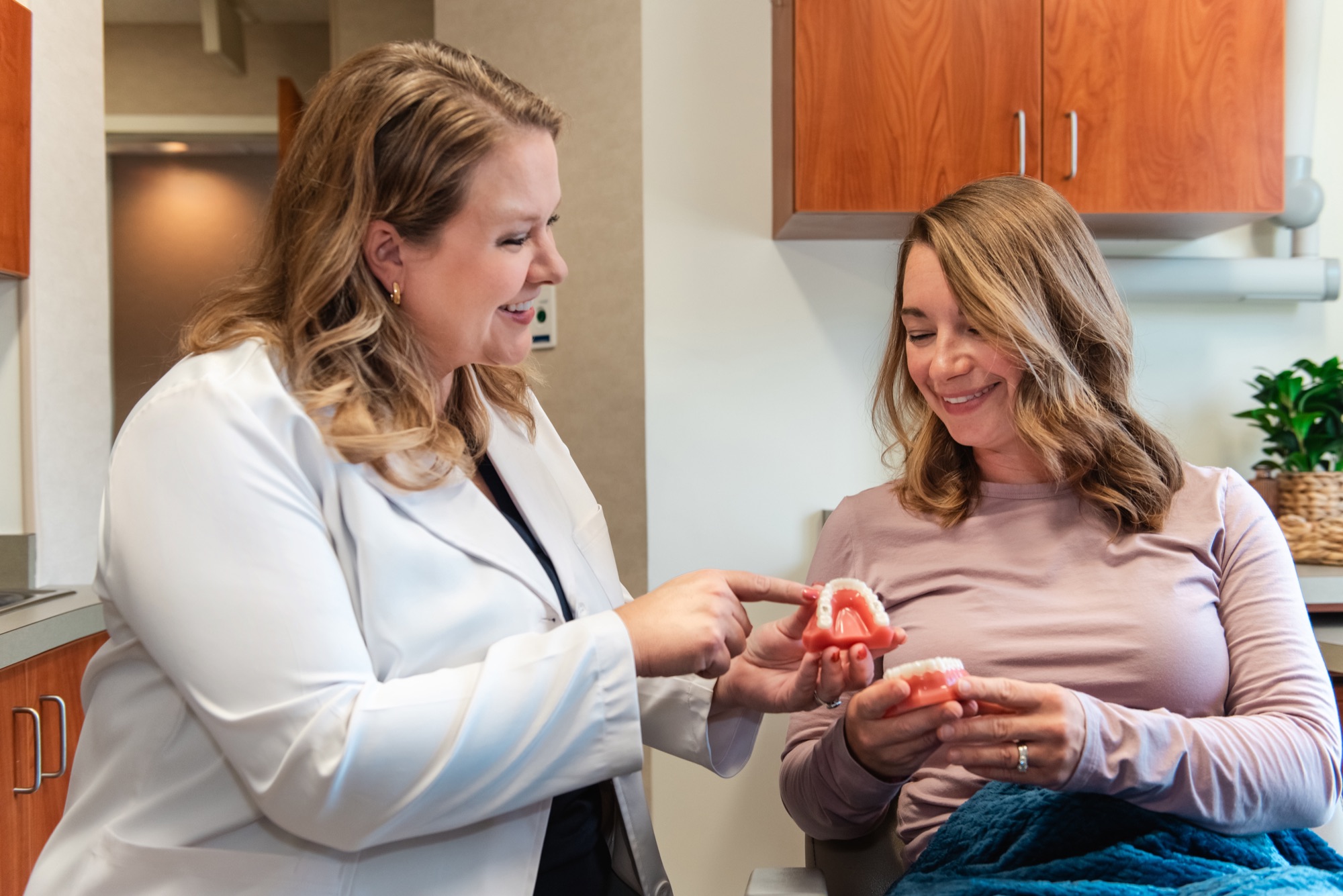
Inlays and onlays are made from tooth-colored porcelain, composite resin, or even gold. The practice describes them as looking very natural and as strong and durable, which is what makes them well suited to back molars.
Porcelain
The usual choice. It is shade-matched to the tooth, holds its color, and is hard-wearing. In a molar it gives you the strength of a laboratory-made restoration without the appearance of one.
Composite resin
Tooth-colored and slightly more forgiving to adjust. A sensible option in the right case, though it is generally less hard-wearing than porcelain over the long run in a heavily loaded tooth.
Gold
Still used, and for good reason. It is kind to the opposing tooth, seals well, and is exceptionally durable. What it is not is invisible, which is why it is confined to teeth nobody sees.
Which material suits you depends on where the tooth sits, how heavily you bite, and whether appearance matters at that position. If you grind, say so before the choice is made, and read teeth grinding alongside this page.
Why conserving tooth structure matters
Tooth enamel is the hardest substance in the body, harder even than bone. It is also one of the few things the body does not replace. Every part of it that survives is a part that never needs substituting with something manufactured, and that is the whole argument for an onlay over a crown where an onlay will do the job.
A crown requires the whole outside of the tooth to be reduced so the cover can seat over it. An onlay replaces only what is missing and leaves the rest of the tooth intact. Where both would work, the more conservative option keeps more of your own tooth in reserve for whatever the next thirty years bring.
There is a point past which that logic reverses. A tooth with cracks running through it, or with thin walls left after a large old filling, is safer under a crown that holds it together from the outside. Dr. Lokitis will tell you which side of that line your tooth is on and why.

How the visits run
Like a crown, an inlay or onlay takes two appointments, because the restoration is made in a laboratory between them.
1. Examination
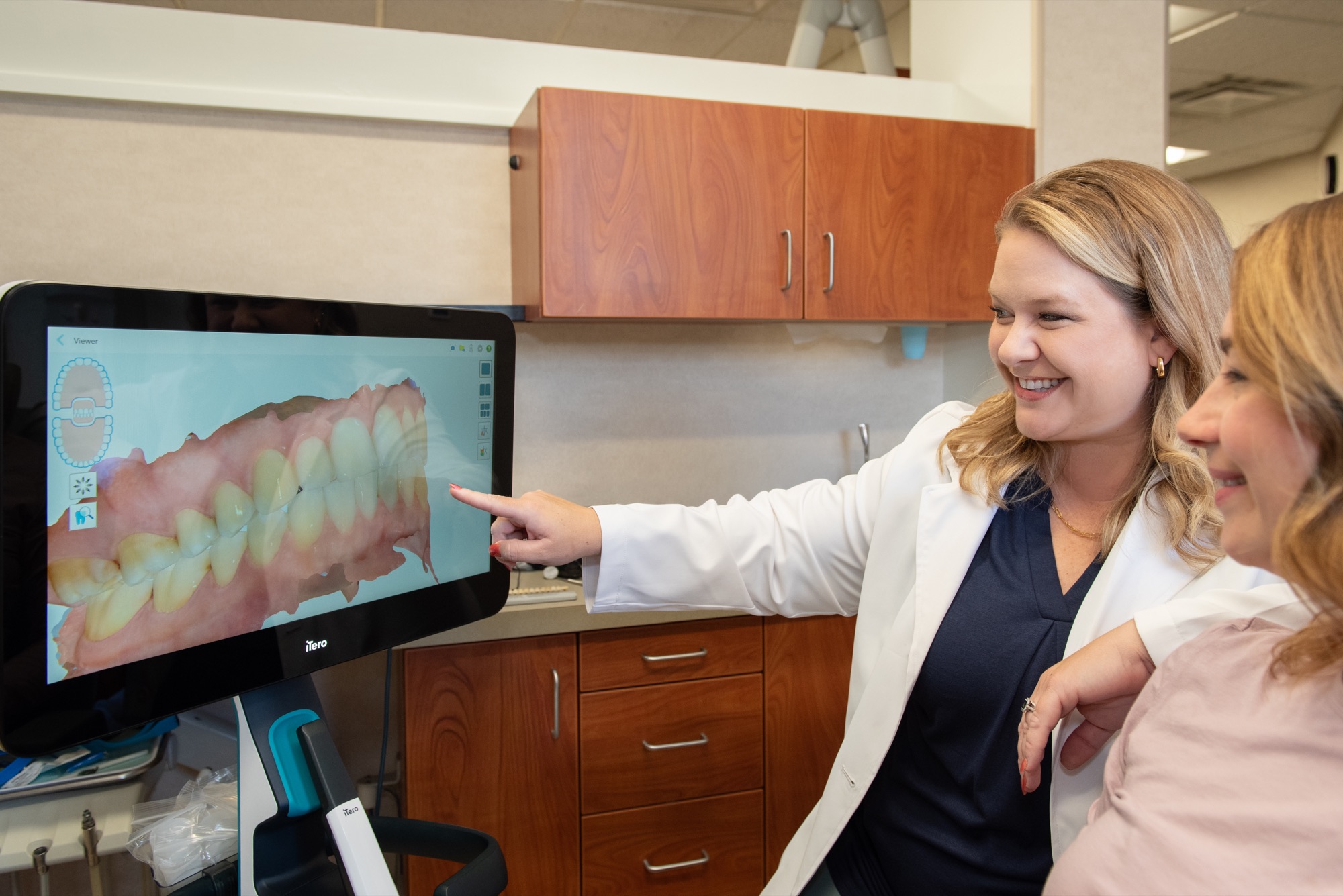
An exam and X-rays to see how much sound tooth there is and whether an inlay, an onlay, or a crown is the right answer. Our intraoral scanner can put a model of the tooth on the screen beside you.
2. Preparing the tooth
Under local anesthetic, decay and any failing old filling are removed and the tooth is shaped so the restoration will seat cleanly. Less tooth is removed than a crown would require.
3. Taking the record
A digital scan or impression of the prepared tooth and how your bite comes together. That is what the laboratory builds from, and the accuracy of it is what decides the fit.
4. A temporary
A temporary restoration is placed so the tooth is protected and you can eat normally, though it is worth going gently with hard and sticky food on that side.
5. Fitting and cementing
The temporary comes off, the inlay or onlay is tried in and checked for fit, shade and contour, then bonded in place and adjusted until the bite feels like your own tooth again.
Living with one
There is no special routine. Brush and floss as normal and keep your regular checkups and cleanings. The margin where the restoration meets the tooth is the place decay is most likely to start, so that is the part worth being thorough about.
The practice says inlays and onlays can last decades with proper care, and the two things most likely to cut that short are trauma and biting hard objects. Ice, popcorn kernels, olive stones, and pen lids are the usual culprits. If you grind at night, a guard protects a laboratory-made restoration the same way it protects natural enamel.
If one comes loose or comes out, keep it, avoid chewing on that side, and call us. It can often be recemented, and the prepared tooth underneath should not be left uncovered for long. That is worth a phone call rather than a wait-and-see.
Who does the work
Dr. Julia Lokitis earned her DDS from the University of Maryland, Baltimore with special honors in prosthodontics, the discipline concerned with restoring teeth and with how a bite fits together, and completed a one-year general practice residency at York Hospital in Pennsylvania with advanced training in restorative work. She has spent over 15 years in general practice.
That background is relevant to this particular decision, because choosing between a filling, an onlay and a crown is a judgement about how much tooth is left and how the bite loads it. We explain procedures thoroughly and build treatment plans that suit your individual needs, with no upselling and no overtreatment. Our office is on Old Courthouse Road in Vienna, a few minutes from Tysons Corner and convenient to McLean, Dunn Loring, Merrifield, Oakton, and Falls Church.
Frequently Asked Questions
What is the difference between an inlay and an onlay? expand_more
How much of the tooth they cover. An inlay repairs decay within the ridges of the chewing surface, sitting in the valley between the cusps. An onlay extends over one or more of the cusps themselves, which is why it is sometimes called a partial crown. Both are made outside the mouth and cemented in as one piece.
Should I have an onlay or a crown? expand_more
It comes down to how much sound tooth is left. Where the walls of the tooth are healthy and only the chewing surface has been lost, an onlay does the job and keeps more of your own enamel. Where the tooth has cracks running through it, or thin walls left by a large old filling, a crown that holds the whole tooth together is the safer choice.
How long do inlays and onlays last? expand_more
The practice says they can last decades with proper care, and the honest qualifier is that this depends on the tooth, the bite, and how well the margin is kept clean. Trauma and biting hard objects are the two things most likely to cut that short. If you grind at night, a guard is worth having.
Is the procedure uncomfortable? expand_more
The practice describes it as extremely tolerable with local anesthetic, and that matches what most people report. The preparation appointment is comparable to having a filling done. Expect the tooth to be a little tender for a few days afterwards, and tell us if the tenderness is increasing rather than settling.
Can an inlay or onlay come out? expand_more
It can, usually after trauma or after biting something hard. If it happens, keep it, avoid chewing on that side, and call us. It can often be recemented, and the prepared tooth underneath should not be left uncovered for long. Coming loose is not usually an emergency, but it is not something to leave for weeks either.
Are they tooth-colored? expand_more
Porcelain and composite are, and they are shade-matched to the tooth they go into, so a well-made onlay in a molar is not something anyone will notice. Gold is still used where strength and a kind bite against the opposing tooth matter more than appearance, which in practice means teeth right at the back.
How many appointments does it take? expand_more
Two. The first prepares the tooth and captures the record the laboratory works from, and you leave with a temporary in place. The second fits and bonds the finished restoration and adjusts the bite. There is no stage at which the prepared tooth is left uncovered.
Sometimes a crown is more than the tooth needs.
If you have been told a back tooth needs a crown, an onlay may do the same job while keeping more of your own tooth. It is worth a second look. Contact our Vienna office, minutes from Tysons Corner.